Admin
Admin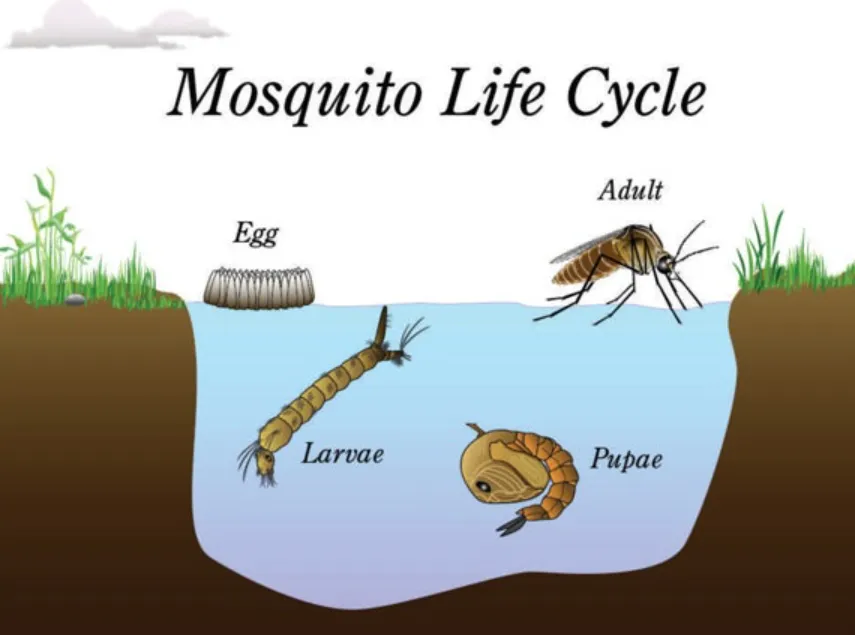
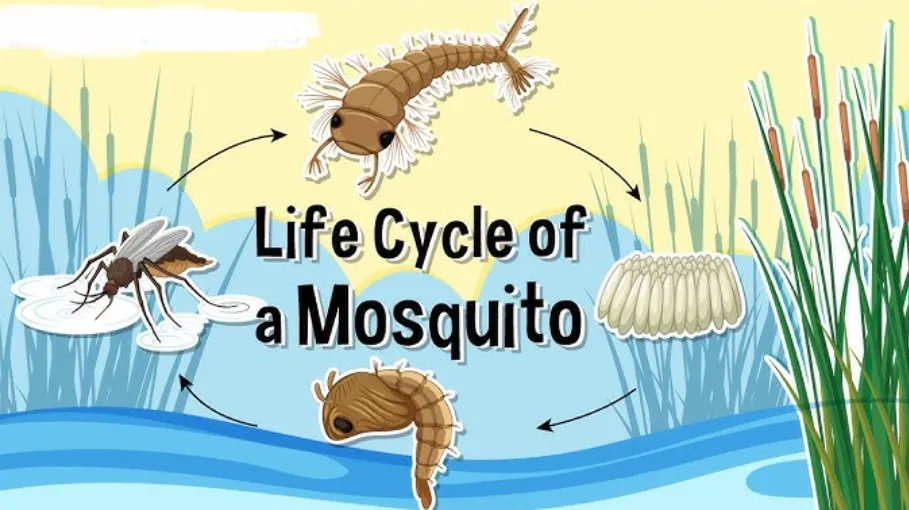
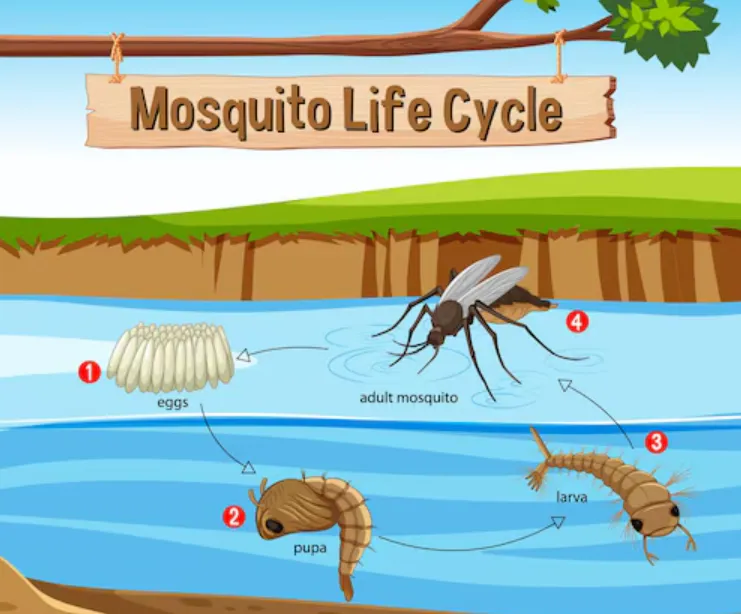
The life cycle of mosquitoes is one of the most important topics to understand if you want to learn how mosquitoes grow, survive, reproduce, and affect human life. A mosquito may look like a tiny flying insect, but its development is highly organised. Every mosquito passes through four main stages: egg, larva, pupa, and adult. The first three stages happen in water, while the adult stage happens in the air. This is why even a small amount of standing water can become a breeding place for mosquitoes.
Mosquitoes are known not only for their bites. They are also important in ecosystems as food for fish, birds, bats, dragonflies, and other insects. However, some mosquito species can spread diseases, which is why mosquito control is necessary in homes, gardens, farms, and urban areas. Scientists estimate there are about 3,500 mosquito species worldwide, but fewer than 10 percent are major human disease vectors.
Q: What are the four stages in the life cycle of a mosquito?
A: The four stages are egg, larva, pupa, and adult.
Q: Where do mosquitoes lay their eggs?
A: Most mosquitoes lay eggs in or near standing water, such as containers, ponds, puddles, drains, tires, and water tanks.
Q: Why do female mosquitoes bite humans and animals?
A: Female mosquitoes need blood to help produce eggs, while both male and female mosquitoes also feed on plant sugars for energy.
Quick Life Cycle Table
| Stage | Where It Happens | Main Activity | Typical Duration | Key Notes |
| Egg | On water or near water | Waiting to hatch | A few days to months, depending on species and water | Some eggs survive dry conditions until water returns |
| Larva | Water | Feeding and growing | Often several days | Larvae are called wigglers and must breathe air |
| Pupa | Water | Transformation into an adult | Usually 2–3 days in many species | Pupae do not feed and are called tumblers |
| Adult | Air, vegetation, human spaces | Flying, feeding, mating, egg-laying | Days to weeks, depending on species and environment | Female mosquitoes bite to produce eggs |
The full life cycle for mosquitoes can be very fast in warm weather. For some Aedes mosquitoes, the entire cycle from egg to adult may take about 8–10 days, while some Anopheles mosquitoes may complete development in about 10–14 days under suitable conditions.
The History of Their Scientific Naming
The scientific classification of mosquitoes helps researchers identify species, study disease transmission, and develop more effective mosquito control methods. Mosquitoes belong to the family Culicidae, under the order Diptera, the same order that includes flies and gnats.
Important naming points:
- The family Culicidae is the scientific family name for mosquitoes.
- The word Culex comes from Latin and means a gnat or small biting fly.
- Culex was used by Carl Linnaeus in 1758 as one of the early formal mosquito genus names.
- The family-group name Culicidae is linked to Meigen, 1818, according to modern mosquito taxonomy records.
- Common mosquito genera include Aedes, Anopheles, and Culex.
This scientific naming system is important because not all mosquitoes behave the same way. Some lay eggs directly on water, others on damp surfaces, and some are more associated with disease transmission than others. Proper naming helps scientists understand which mosquito species need urgent control and which species play more limited roles in human health.
Their Evolution And Their Origin
Mosquitoes have a long evolutionary history. They are ancient insects that likely evolved from fly-like ancestors. Like other members of Diptera, mosquitoes have one pair of functional wings and another pair of small balancing organs called halteres. These features help them fly, hover, and locate hosts.
Modern research suggests that mosquitoes were already present during the Cretaceous Period. Fossil evidence from amber shows mosquito relatives dating back around 99 million years. A 2025 scientific report described the first known fossil mosquito larva preserved in amber from the Mesozoic Era, giving researchers a clearer view of early mosquito development.
Their origin is closely tied to water. The early stages of mosquitoes depend on aquatic environments, including ponds, wetlands, tree holes, marshes, and temporary pools, which shaped their evolution. Over millions of years, mosquitoes adapted to many habitats, from tropical forests to cities.
The life cycle of mosquitoes also exemplifies complete metamorphosis. This means the early stage looks completely different from the adult stage. The larva lives in water and feeds actively; the pupa undergoes internal transformation; and the adult becomes a flying insect.
This life strategy gives mosquitoes a survival advantage. Larvae can use water-based food sources, while adults can fly to find mates, nectar, shelter, and blood meals. This habitat separation reduces competition between young and adult mosquitoes.
Their main food and its collection process
Mosquito feeding habits are often misunderstood. Many people think mosquitoes live only on blood, but that is not fully correct. In reality, both male and female mosquitoes feed on plant nectar, flower sugars, and other natural sweet liquids for energy. Blood is mainly required by many female mosquitoes for egg production.
Main food sources and collection process:
- Plant nectar: Adult mosquitoes use their mouthparts to sip nectar from flowers. This gives them the energy to fly and survive.
- Plant juices: Some mosquitoes feed on sugary plant fluids from leaves, fruits, or damaged plant tissues.
- Blood meal: Female mosquitoes of many species feed on the blood of humans, birds, mammals, reptiles, or amphibians to develop eggs.
- Larval food: Mosquito larvae feed on microorganisms, algae, bacteria, organic particles, and small debris in water.
- Energy storage: Sugar meals help adults survive, while blood meals help females reproduce.
The feeding process is different between males and females. Male mosquitoes do not bite humans because their mouthparts are not adapted for piercing skin. Female mosquitoes have specialised piercing mouthparts that allow them to insert their proboscis into the skin and draw blood.
During a mosquito bite, the female injects saliva that helps keep the blood flowing. This saliva is the reason many people experience itching, swelling, or redness after being bitten. Because some mosquitoes can carry pathogens, preventing bites with mosquito repellent, protective clothing, window screens, and habitat control is important.
Larvae collect food differently. They live in water and use mouth brushes to filter tiny organic materials. This makes the larval stage highly dependent on water quality, temperature, and available nutrients.
Important Things That You Need To Know
Understanding mosquitoes is not only about learning their life cycle. It also helps people prevent mosquito bites, choose the right mosquito repellent, and apply proper mosquito control methods around the home.
First, mosquitoes need water to reproduce. Even small containers, plant saucers, old tires, roof gutters, buckets, and open tanks can support mosquito larvae. Removing standing water is one of the most effective ways to break the mosquito life cycle.
Second, mosquito dunks are commonly used in water that cannot be removed. Many mosquito dunks contain Bacillus thuringiensis israelensis (Bti), which targets mosquito larvae in standing water. The EPA states that Bti is applied to water where mosquito larvae are found and can be used around homes in containers where water collects.
Third, searching for mosquito control near me can help when mosquito problems are severe, especially in areas with heavy rainfall, poor drainage, ponds, or disease risk. Professional services may inspect breeding sites, apply larvicides, and recommend long-term prevention.
Finally, mosquitoes are part of nature, but uncontrolled mosquito growth can harm public health. A balanced approach is best: reduce breeding sites, protect yourself from bites, and avoid unnecessary harm to beneficial insects.
Their life cycle and ability to survive in nature
Egg Stage
The egg stage begins when a female mosquito lays eggs in or near water. Different species use different egg-laying strategies. Some Aedes mosquitoes lay eggs on the inner walls of containers that may later fill with water, while Anopheles mosquitoes often lay eggs directly on water.
Mosquito eggs are highly adapted for survival. Some eggs can remain inactive for weeks or months until water covers them. This allows mosquitoes to survive dry periods and hatch quickly when rainfall returns.
Larva Stage
The larva stage happens in water. Mosquito larvae are often called wigglers because they move with a wiggling motion. They feed on microorganisms and organic matter.
Most larvae come to the water surface to breathe air. This makes them vulnerable to surface treatments, predators, and environmental changes.
Pupa Stage
The pupa stage is a transformation stage. Pupae do not feed. They are sometimes called tumblers because they tumble through water when disturbed.
Inside the pupa, the mosquito changes from an aquatic larva into a flying adult. This stage is short but very important.
Adult Stage
The adult mosquito emerges from the pupal case and rests briefly while its body hardens. After that, it flies away to find sugar, shelter, mates, and, in the case of females, blood meals.
This complete transformation helps mosquitoes survive in many environments. Their aquatic young stages and flying adult stage allow them to spread quickly when conditions are favourable.
Their Reproductive Process and raising their children
Mosquito reproduction is fast and efficient. This is one reason mosquito populations can grow rapidly after rain or in areas with poor drainage.
Key points about reproduction:
- Mating: Adult male and female mosquitoes mate after emergence. In many species, mating happens near breeding areas or in flight swarms.
- Blood meal: Female mosquitoes often need a blood meal before producing eggs.
- Egg development: After feeding, the female digests the blood and uses the nutrients to develop eggs.
- Egg laying: The female lays eggs in suitable water-based habitats.
- Repeated cycles: Many female mosquitoes can take multiple blood meals and lay several batches of eggs during their lifetime.
- No parental care: Mosquitoes do not care for their young as birds or mammals do. Once eggs are laid, the young develop independently.
- Habitat selection: The female’s choice of egg-laying site is the closest form of parental investment.
- Rapid population growth: Warm temperature, standing water, and organic matter help larvae grow quickly.
Although mosquitoes do not care for their offspring after egg-laying, they still have high reproductive success. A female mosquito can produce many eggs, and because the early stages are small, they can develop in hidden places.
This is why mosquito control must focus on water. Killing only adult mosquitoes may temporarily reduce bites, but removing breeding sites prevents the next generation from emerging.
The importance of them in this Ecosystem
Food for Other Animals
Mosquitoes are part of many food chains. Fish, aquatic insects, tadpoles, and other small water animals eat their larvae. Birds, bats, spiders, frogs, dragonflies, and other insects eat adult mosquitoes.
This makes mosquitoes a food source in both aquatic and land-based ecosystems.
Role in Aquatic Systems
Mosquito larvae feed on organic matter, microorganisms, algae, and bacteria. By doing this, they help move nutrients through small water habitats.
In ponds, wetlands, and temporary pools, larvae become part of the nutrient cycle. They convert tiny organic particles into insect biomass that other animals can eat.
Pollination Support
Many adult mosquitoes feed on nectar. While they are not as famous as bees or butterflies, some mosquitoes may contribute to pollination when they visit flowers.
Their role in pollination is usually small, but it is still part of the broader ecological system.
Population Balance
Mosquitoes also influence animal behaviour. Animals that feed on mosquitoes may depend on seasonal mosquito abundance. At the same time, mosquito-borne diseases can affect wildlife populations.
This does not mean mosquito overpopulation is good. It means mosquitoes have ecological roles, but their numbers must remain balanced.
Scientific and Medical Importance
Mosquitoes are also important in scientific research. Studying them helps scientists understand disease transmission, insect behaviour, climate effects, and public health risks.
What to do to protect them in nature and save the system for the future
A balanced approach is important. Mosquitoes should not be allowed to overpopulate near humans, but nature should also be protected from harmful chemical misuse.
- Protect natural wetlands where mosquito predators, such as fish, dragonflies, frogs, and birds, can naturally control populations.
- Avoid spraying strong chemicals unnecessarily, especially in areas where beneficial insects live.
- Use targeted mosquito control rather than broad insecticide spraying.
- Remove artificial standing water near homes, but preserve healthy natural water systems.
- Use Bti mosquito dunks only where needed and follow label directions carefully.
- Encourage natural predators by protecting ponds, native plants, and clean habitats.
- Keep gutters, drains, and containers clean to stop artificial mosquito breeding.
- Use personal protection, such as mosquito repellent, instead of relying solely on pesticides.
- Support community education about mosquito breeding and disease prevention.
- Choose eco-friendly control methods that reduce mosquito risk without damaging the wider Ecosystem.
The goal is not to protect against dangerous mosquito outbreaks. The goal is to protect ecological balance while reducing health risks for humans and animals.
Frequently Asked Questions (FAQs)
Q: What is the life cycle of a mosquito?
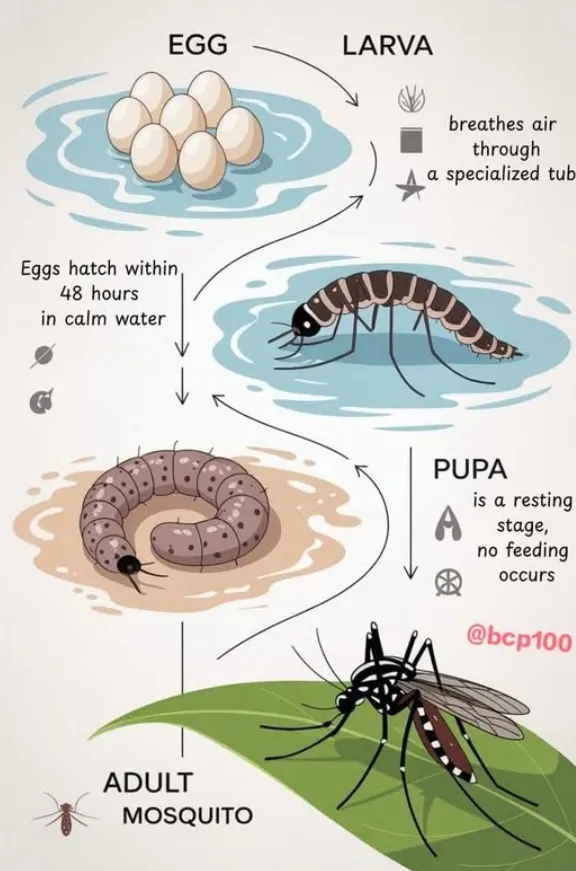
A: The life cycle for mosquitoes includes four stages: egg, larva, pupa, and adult. The first three stages happen in water, while the adult stage happens in the air.
Q: How long does a mosquito’s life cycle take?
A: It depends on species, temperature, and habitat. Some mosquitoes can develop from egg to adult in about 8–10 days under warm and favourable conditions.
Q: Where do mosquitoes breed?
A: Mosquitoes breed in standing water. Common places include buckets, tires, ponds, drains, flowerpots, roof gutters, bird baths, and water tanks.
Q: Why do mosquito bites itch?
A: Mosquito bites itch because the female mosquito injects saliva into the skin while feeding. The body reacts to the saliva, causing redness, swelling, and itching.
Q: Do all mosquitoes bite humans?
A: No. Male mosquitoes do not bite. Female mosquitoes of many species bite humans or animals because they need blood to develop eggs.
Q: What is the best way to control mosquitoes at home?
A: The best method is to remove standing water, cover water containers, clean gutters, use screens, apply mosquito repellent, and use larval control where water cannot be removed.
Q: Are mosquito dunks useful?
A: Yes, mosquito dunks can be useful in standing water that cannot be drained. Many contain Bti, which targets mosquito larvae before they become adults.
Q: When should I search for mosquito control near me?
A: You may search for mosquito control near me when there are too many mosquitoes, repeated bites, standing water problems, nearby drains, or local disease concerns.
Conclusion
The life cycle for mosquitoes is a complete transformation from egg to larva, pupa, and finally adult. This cycle is closely connected to water, which is why standing water is the main driver of rapid mosquito population growth. Understanding this cycle helps people prevent mosquito bites, use mosquito repellent properly, and apply effective mosquito control methods.
Mosquitoes are not only pests. They also play roles in food chains, aquatic ecosystems, and scientific research. However, uncontrolled mosquito growth can create serious health risks. The best solution is a balanced one: remove artificial breeding places, protect natural predators, use targeted tools like mosquito dunks when needed, and avoid unnecessary chemical use.
By understanding their biology, reproduction, feeding habits, and ecological value, we can manage mosquitoes wisely while protecting nature for the future.
Also Read: earwig life cycle