Admin
Admin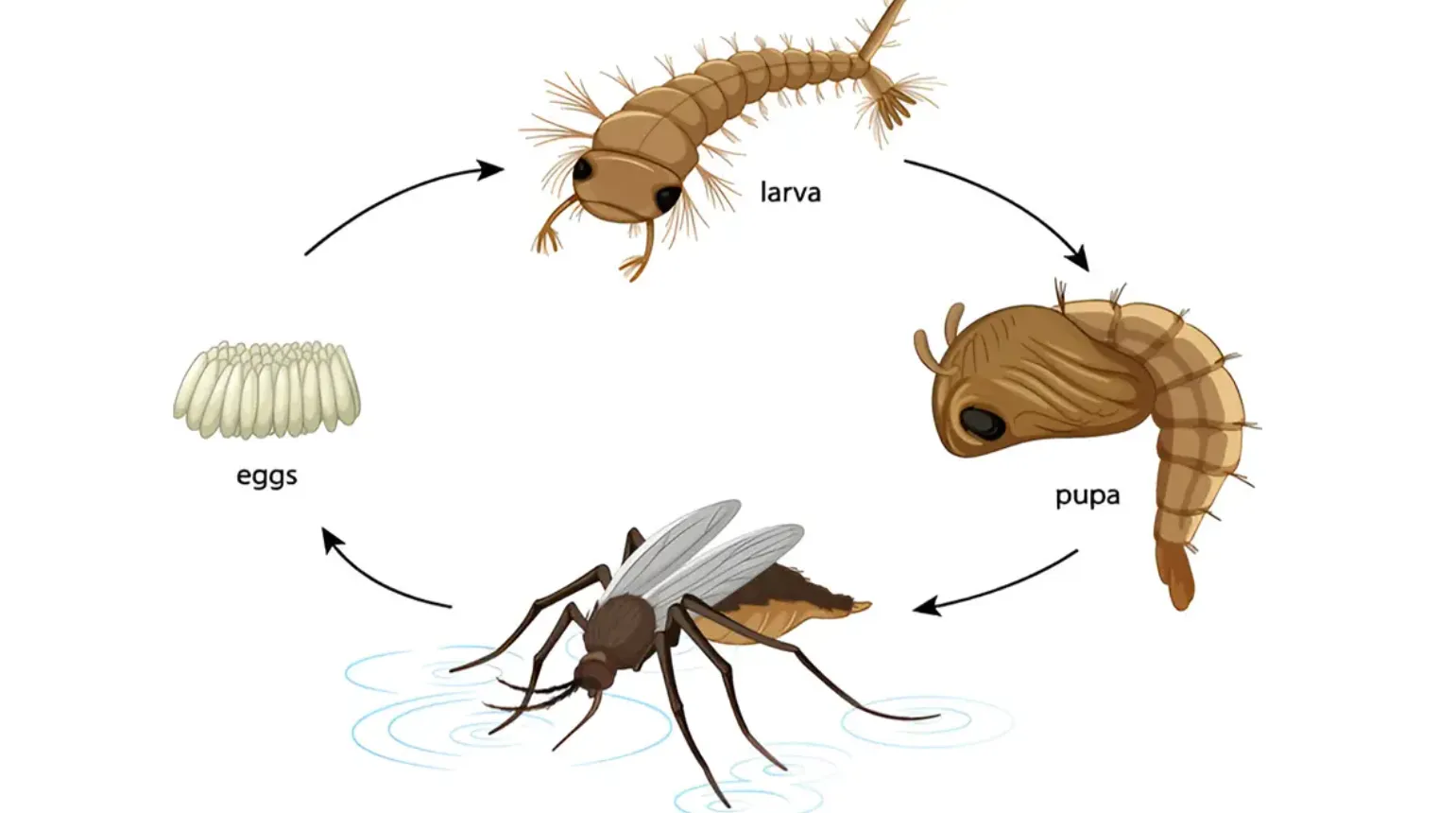
The life cycle of a mosquito is one of the most interesting and misunderstood processes in nature. Many people only notice mosquitoes when they hear a buzzing sound at night or feel itchy mosquito bites on their skin. But behind that tiny insect is a complete biological journey that begins in water and ends as a flying adult capable of feeding, mating, laying eggs, and continuing the cycle.
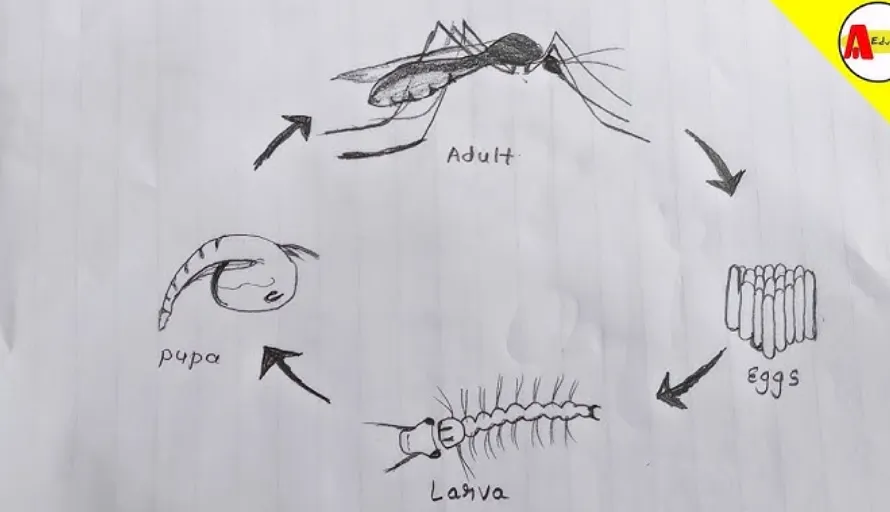
A mosquito passes through four main life stages: egg, larva, pupa, and adult. The first three stages occur in or near water, which is why standing water around homes, gardens, drains, buckets, plant pots, and ponds can quickly become breeding sites. According to the CDC and EPA, mosquito eggs hatch in water, larvae live and feed in water, pupae also remain aquatic, and the adult mosquito finally emerges as a flying insect.
Understanding the life cycle of a mosquito helps people control mosquitoes without harming the wider Ecosystem. It also explains why proper water management, safe repellents, biological controls such as mosquito dunks, and awareness of natural methods matter so much.
Q: How many stages are in the life cycle of a mosquito?
A: A mosquito has four life stages: egg, larva, pupa, and adult.
Q: Where do mosquito larvae live?
A: Mosquito larvae live in water. They feed, breathe, grow, and molt there before becoming pupae.
Q: Why do female mosquitoes bite humans and animals?
A: Female mosquitoes usually need blood to produce eggs. Male mosquitoes do not bite people because they mainly feed on nectar and plant sugars.
Quick Life Cycle Table
| Life Stage | Where It Happens | Main Activity | Why It Matters |
| Egg | On the water surface or near water holding areas | A female mosquito lays eggs after mating and feeding | Some eggs survive dry conditions and hatch later when water returns |
| Larva | In water | Feeds on tiny organic particles, algae, bacteria, and microbes | This is the best stage for mosquito control because larvae cannot fly away |
| Pupa | In water | Transforms into an adult mosquito | The pupa does not feed but remains active and can move in water |
| Adult | Air, plants, homes, gardens, wet areas | Mates, feeds, rests, and lays eggs | Adult females may bite people and animals and can spread diseases in some regions. |
The History of Their Scientific Naming
Mosquitoes are named in the insect family Culicidae. This family name comes from Culex, a Latin word historically used for gnat or mosquito-like insects. In modern taxonomy, mosquitoes belong to the order Diptera, meaning true flies with one pair of wings.
• Culicidae is the family name used for all mosquitoes. Britannica describes mosquitoes as insects in the family Culicidae, with about 3,500 known species worldwide.
• The genus Culex was formally published by Carl Linnaeus in 1758 in Systema Naturae, one of the most important works in biological classification.
• Other major mosquito genera include Aedes, Anopheles, and Culex. These names are important because different genera have different habits, breeding sites, biting times, and disease connections.
• The Mosquito Taxonomic Inventory works as an updated reference for mosquito diversity and classification. It tracks valid species, fossil species, and naming changes in the family Culicidae.
Their naming history shows that mosquitoes are not just one kind of insect. They are a large, complex family with many species, each shaped by habitat, climate, host preference, and evolutionary history.
Their Evolution And Their Origin
The origin of mosquitoes dates back deep into insect evolution. Scientists classify mosquitoes in the order Diptera, which includes flies, midges, and gnats. Over millions of years, mosquitoes developed a special body structure, aquatic larval stages, long legs, delicate wings, and a needle-like mouthpart called the proboscis.
Current fossil evidence shows that mosquitoes were already present during the Cretaceous Period. A major fossil discovery described a 99-million-year-old mosquito larva preserved in amber. This fossil, named Cretosabethes primaevus, is important because it is the first known mosquito larva preserved in amber and the first immature mosquito from the Mesozoic Era.
Some research suggests that the mosquito family may have deeper roots, possibly dating back to the Jurassic Period, but direct fossil evidence from that early time remains limited. The oldest confirmed mosquito fossils are from Cretaceous amber deposits, dating to about 99 million years ago.
Their evolution was shaped by water. The early stages of mosquitoes depend on aquatic habitats, so natural pools, tree holes, marshes, ponds, floodwater, and later human-made containers all became useful breeding places.
Over time, different mosquito groups adapted to different environments. Aedes mosquitoes often use small containers and temporary water sources. Culex mosquitoes can breed in polluted water and urban drains. Anopheles mosquitoes often prefer cleaner water and play a role in malaria transmission in some regions.
Mosquito evolution also shaped their feeding behavior. Both male and female mosquitoes can feed on plant nectar. Females of many species have evolved blood-feeding because blood provides the proteins needed for egg production. This adaptation made them successful, but it also made some species important disease vectors.
Their main food and its collection process
Mosquito food changes by life stage and sex. A young mosquito larva eats very different food from an adult female mosquito. This is one reason the mosquito life cycle is so interesting.
• Larval food in water
Mosquito larvae feed on tiny organic material in water. This can include algae, bacteria, fungi, microscopic life, and decaying plant particles. They use brush-like mouthparts to collect small food particles from the water.
• Pupal stage does not feed
The pupa is a transition stage. It moves in water and breathes near the surface, but it does not actively eat. Its energy is focused on transforming into an adult mosquito.
• Adult male food
Male mosquitoes feed mostly on nectar and plant sugars. They do not bite humans or animals. Their main roles are mating and obtaining energy from plants.
• Adult female food
Female mosquitoes also feed on nectar for energy. However, females of many species need blood to produce eggs. CDC explains that adult female mosquitoes bite people and animals because blood helps them make eggs.
• How females collect blood
A female mosquito lands on a host, uses sensory cues such as body heat, carbon dioxide, smell, and moisture, then inserts her proboscis into the skin. Her saliva helps keep blood flowing, and the human immune reaction to that saliva causes the common itchy bump.
• Why food matters for control
Since larvae feed in water, mosquito control often works best before they become adults. Products like Bti target larvae in water before they can complete the life cycle. EPA says Bacillus thuringiensis subspecies israelensis, known as Bti, is a naturally occurring soil bacterium that targets mosquito, blackfly, and fungus gnat larvae.
Important Things That You Need To Know
To understand the life cycle of a mosquito, you also need to know how common mosquito-related terms connect to real life. These terms are often searched for by people seeking prevention, control, or natural solutions.
Mosquitoes are not a single species. It is a common name for many insects in the family Culicidae. Around 3,500 species are known worldwide, but only some are major pests or disease carriers.
Mosquito bites usually come from female mosquitoes. The bite itself is not just a skin puncture. The itching often comes from the body reacting to mosquito saliva. Preventing bites means using EPA-registered repellents, wearing protective clothing, and reducing mosquito breeding sites. CDC recommends EPA-registered repellents and loose-fitting, long-sleeved shirts and pants for bite prevention.
Mosquito dunks are a common control option for standing water that cannot be removed. Many mosquito dunks use Bti, which targets mosquito larvae before they become flying adults. EPA states that Bti is used in residential, commercial, and agricultural settings for mosquito larval control.
Mosquito control near me is a useful search when local mosquito problems are heavy, especially after rain or flooding. Local control teams may inspect breeding sites, apply larvicides, and manage adult mosquitoes when public health risk is high.
Mosquito larvae are the easiest stage to control because they remain in water. Removing standing water breaks the life cycle before adults appear.
Terms like mosquito hawk and mosquito repellent plants are also popular, but people should understand them carefully. “Mosquito hawk” is often used for crane flies or dragonflies, depending on location. Many so-called repellent plants are not strong enough on their own unless their active oils are properly released or used in tested products.
Their life cycle and ability to survive in nature
Egg stage
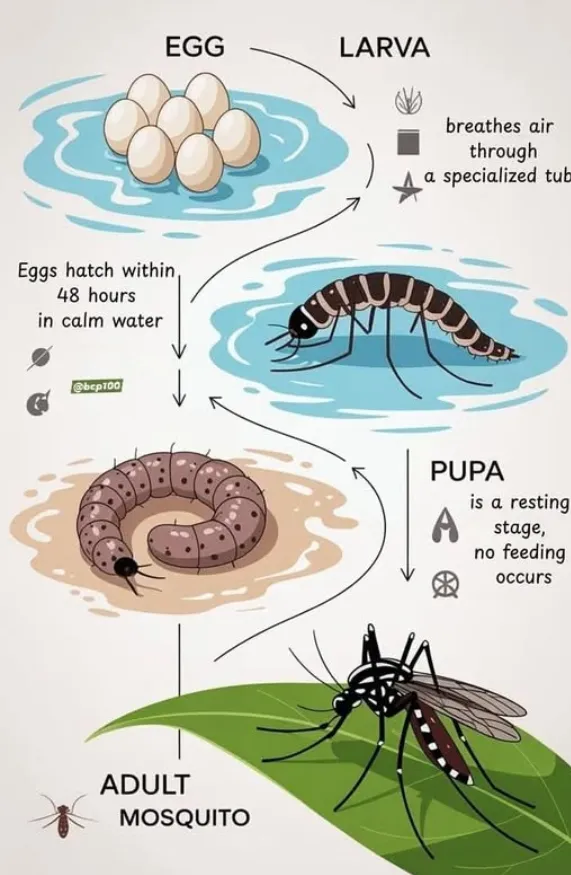
The life cycle begins when a female mosquito lays eggs. Some mosquitoes lay eggs directly on water, while others lay them on damp surfaces that may later flood. Aedes mosquitoes often lay eggs on the inside walls of water-containing containers. These eggs can wait until water covers them.
Larva stage
When eggs hatch, mosquito larvae emerge. Larvae are often called wrigglers because of their movement in water. They feed on tiny organic matter and come to the surface to breathe. This stage is very important because larvae grow quickly when the water is warm and food is available.
Pupa stage
After several molts, larvae become pupae. The pupa is sometimes called a tumbler because it moves with a tumbling motion. It does not feed. Inside the pupal case, the mosquito changes into an adult. EPA notes that the adult can emerge after about two days to a week in the pupal stage, depending on conditions.
Adult stage
The adult mosquito leaves the water and rests until its body and wings harden. Males usually emerge first and wait for females. Adults survive by feeding on nectar, resting in sheltered places, mating, and finding suitable water for egg laying.
Their survival ability is strong because some eggs resist dryness, larvae grow in small water bodies, and adults can hide in vegetation, homes, drains, and shaded areas.
Their Reproductive Process and raising their children
Mosquito reproduction is simple, fast, and highly efficient. They do not raise their young like birds or mammals, but they prepare the right conditions for the next generation.
• Mating begins after adulthood
Adult mosquitoes mate soon after emerging. Males often locate females by wing-beat sounds and scent signals.
• Female needs nutrients for eggs
After mating, females of many species seek a blood meal. The protein from blood supports egg development. Females also feed on nectar for energy.
• Egg laying depends on water
A female searches for water or damp places near water. Some species choose clean water, while others tolerate dirty water, drains, or containers.
• One female can lay many eggs
Depending on the species and conditions, a female may lay dozens or even hundreds of eggs during one reproductive cycle.
• No parental care after laying eggs
Mosquitoes do not guard eggs or feed larvae. Once eggs are placed in a suitable habitat, the young survive on their own.
• Water quality affects survival
Larvae need water, food, oxygen, and protection from predators. Fish, dragonfly nymphs, beetle larvae, and other aquatic animals may eat them.
• Fast generation time
In warm conditions, the full cycle from egg to adult can happen quickly. This is why mosquito populations may rise suddenly after rain.
This reproductive process explains why small water sources matter. A forgotten bucket, tire, plant saucer, roof gutter, or birdbath can support the next generation if water stays long enough.
The importance of them in this Ecosystem
Mosquitoes as food for other animals
Mosquitoes are part of many food webs. Fish, aquatic insects, tadpoles, and other small water predators eat mosquito larvae. Birds, bats, spiders, dragonflies, and other insects eat adult mosquitoes.
Even though mosquitoes can be annoying to humans, they provide food for many species. In wetlands, ponds, forests, and floodplains, their larvae can become part of the energy flow between water and land.
Mosquitoes as pollinators
Many people do not know that mosquitoes feed on nectar. Since both male and female mosquitoes visit flowers for sugar, some species may help with pollination. They are not as famous as bees or butterflies, but they still interact with flowering plants.
Mosquitoes as part of nutrient cycling
Larvae feed on organic particles in water. By consuming microbes and decomposing material, they help move nutrients through aquatic systems. Then, when adults emerge, they carry some of that water-based energy into the air and land ecosystems.
Mosquitoes and population balance
Mosquitoes can influence animal behavior and population movement. In some wild regions, heavy mosquito pressure can affect where animals feed, rest, and migrate. This makes them part of the larger balance of nature.
A difficult but important truth
Mosquitoes can spread diseases, and human protection is important. Still, nature does not judge them only by human discomfort. Their ecological role shows why smart control is better than careless destruction.
What to do to protect them in nature and save the system for the future
Protecting the Ecosystem does not mean allowing mosquitoes to overbreed near homes. The better goal is balance. We should reduce disease risk and painful mosquito bites while protecting wetlands, predators, pollinators, and clean water systems.
• Protect natural wetlands instead of destroying them
Wetlands support birds, fish, frogs, dragonflies, and many predators of mosquitoes. Healthy wetlands often control mosquito populations more effectively than polluted, stagnant water.
• Remove artificial standing water near homes
Empty buckets, tires, cans, plant saucers, and clogged gutters. This breaks the life cycle without harming natural ecosystems.
• Use biological control carefully
For water that cannot be drained, mosquito dunks with Bti may help control larvae. Use products as directed on the label and avoid overuse in sensitive habitats.
• Support natural predators
Keep ponds healthy for fish and aquatic insects. Avoid unnecessary pesticide spraying that kills dragonflies, bees, butterflies, and other beneficial species.
• Use personal protection first
Wear long clothing and use EPA-registered repellents when needed. This protects humans without damaging the wider environment.
• Avoid broad chemical spraying unless necessary
Adult mosquito spraying may be needed during disease outbreaks, but routine careless spraying can affect other insects.
• Plant diverse native vegetation
Native plants support birds, bats, dragonflies, and other wildlife that help keep ecosystems balanced.
• Educate local communities
People searching for mosquito control near me should learn the difference between safe larval control, personal protection, and harmful overuse of chemicals.
• Keep water clean and moving
Mosquitoes prefer still water. Clean water systems with movement and predator life are less likely to become severe breeding zones.
Frequently Asked Questions (FAQs)
Q: What is the life cycle of a mosquito?
A: The life cycle of a mosquito includes four stages: egg, larva, pupa, and adult. Eggs hatch in water, larvae grow in water, pupae transform in water, and adults fly away to feed and reproduce.
Q: How long does it take for a mosquito to become an adult?
A: The timing depends on species, temperature, food, and water conditions. In warm weather, development can be fast. EPA notes that the pupal stage may last about two days to a week before the adult emerges.
Q: Why are mosquito larvae found in standing water?
A: Mosquito larvae need water to live, feed, breathe, and grow. Standing water gives them a protected place where they can develop before becoming pupae.
Q: Do all mosquitoes bite humans?
A: No. Male mosquitoes do not bite. Females of many species bite humans or animals because blood helps them produce eggs, but not every mosquito species strongly prefers humans.
Q: Are mosquito bites dangerous?
A: Many mosquito bites only cause itching and swelling, but some mosquitoes can spread diseases in certain regions. This is why bite prevention and mosquito control are important.
Q: What are mosquito dunks used for?
A: Mosquito dunks are used in standing water to kill larvae before they become adults. Many contain Bti, a bacterium that targets mosquito larvae. EPA recognizes Bti as a larval control tool.
Q: What does mosquito hawk mean?
A: The term mosquito hawk can mean different insects depending on the location. Some people use it for crane flies, while others use it for dragonflies. Dragonflies do eat mosquitoes, but crane flies usually do not control mosquito populations in a major way.
Q: Do mosquito repellent plants really work?
A: Mosquito repellent plants may smell pleasant, and some contain aromatic oils, but simply planting them is usually not enough for strong protection. Tested repellents and removing standing water are more reliable.
Conclusion
The life cycle of a mosquito is a small but powerful example of how nature works through stages, adaptation, and survival. A mosquito begins as an egg, grows as a larva, transforms as a pupa, and finally becomes an adult that can feed, mate, and lay eggs. This cycle depends heavily on water, which is why standing water around homes can quickly create mosquito problems.
At the same time, mosquitoes are not only pests. They are part of food webs, nutrient movement, and natural balance. The best approach is not fear or careless chemical use. It is smart control. Remove artificial standing water, protect yourself from mosquito bites, use safe larval tools like Bti when needed, and support healthy ecosystems filled with natural predators.
Also Read: ticks life cycle