Admin
Admin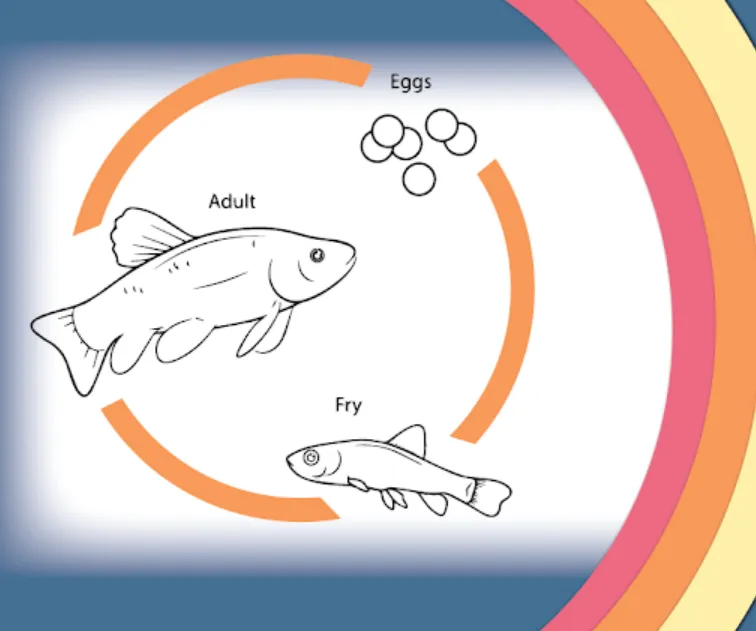
The fish life cycle is one of the most fascinating natural processes in aquatic ecosystems. From a tiny transparent egg to a free-swimming larva, then a growing juvenile, and finally a mature adult fish, each stage plays an important role in survival, reproduction, and maintaining balance in water environments. Fish live in rivers, lakes, oceans, ponds, wetlands, and even deep-sea zones where sunlight never reaches.
Understanding the life cycle of fish helps us learn how species like goldfish, pufferfish, anglerfish, and many other freshwater and marine fish survive in nature. Some fish lay thousands or even millions of eggs, while others protect fewer young with strong parental care. Their survival depends on water temperature, oxygen level, food availability, predators, habitat quality, and human activities.
Fish are not only important as food for humans and animals; they also control insect populations, recycle nutrients, support aquatic food chains, and indicate the health of water systems. A healthy fish population usually means a healthy ecosystem.
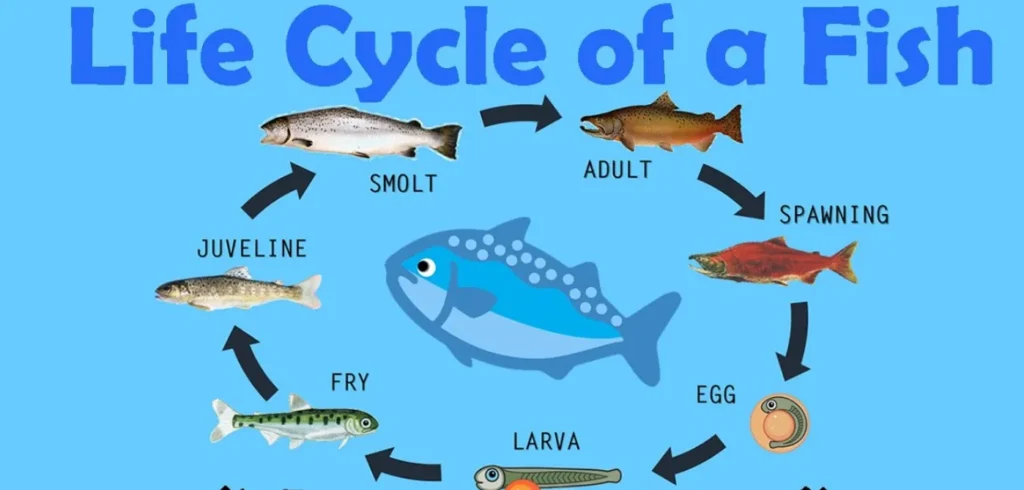
Q: What are the main stages of the fish life cycle?
A: The main stages are egg, embryo, larva, fry, juvenile, adult, and spawning adult.
Q: How long does a fish’s life cycle take?
A: It depends on the species. Some small fish mature within months, while larger species may take several years.
Q: Do all fish lay eggs?
A: Most fish lay eggs, but some species give birth to live young, including certain sharks and livebearing freshwater fish.
Quick Life Cycle Table
| Life Cycle Stage | Main Features | Survival Needs |
| Egg | A fertilized egg develops in water | Clean water, oxygen, and a safe nesting area |
| Embryo | Baby fish develop inside an egg | Stable temperature and protection |
| Larva | Newly hatched fish with a yolk sac | Oxygen, calm water, low predators |
| Fry | Starts swimming and feeding independently | Small plankton, shelter, vegetation |
| Juvenile | Young fish develop body shape and strength | Balanced food, safe habitat |
| Adult Fish | Fully developed and able to reproduce | Suitable food, territory, and healthy water |
| Spawning Adult | Produces eggs or sperm for the next generation | Breeding season, mating site, environmental signals |
The History of Their Scientific Naming
The scientific naming of fish has a long history, closely linked to the development of biological classification. In early natural history, fish were often grouped simply as cold-blooded aquatic animals with fins and gills. However, as science advanced, researchers found that fish are not a single, simple group.
The word fish is a common name, not a single scientific class. Historically, many fish were placed under the old group Pisces, but modern taxonomy uses more accurate classifications.
Important points about their scientific naming:
- Carl Linnaeus, the father of modern taxonomy, helped organize animals using a two-part scientific naming system.
- The old group Pisces included many aquatic vertebrates, but it is now considered too broad.
- Most bony fish belong to Actinopterygii, meaning ray-finned fishes.
- Sharks and rays belong to Chondrichthyes, meaning cartilaginous fishes.
- Some ancient fish-like groups belong to Agnatha, which includes jawless fish such as lampreys.
- Scientific names help avoid confusion because common names vary by region.
For example, the goldfish is scientifically known as Carassius auratus. The puffer fish includes many species, mostly under the family Tetraodontidae. Scientific naming makes fish identification clearer, especially for research, conservation, farming, and ecosystem management.
Their Evolution And Their Origin
The origin of fish goes back hundreds of millions of years, making them among the earliest vertebrates on Earth. Long before mammals, birds, reptiles, and amphibians appeared, ancient fish-like animals were already living in water. These early aquatic vertebrates shaped the future of animal life by introducing key features, including a backbone, a skull, muscles, and advanced sensory systems.
The earliest fish-like organisms were jawless. They had simple bodies, lacked paired fins, and had limited biting and chewing ability. Over time, evolution produced fish with jaws, stronger swimming muscles, better eyesight, and more efficient gills. These changes helped fish become powerful hunters, fast swimmers, and successful survivors in different aquatic habitats.
One major evolutionary step was the development of bony fish and cartilaginous fish. Bony fish developed skeletons made mostly of bone and became the most diverse group of fish in the world. Cartilaginous fish, such as sharks and rays, developed skeletons made of cartilage, which made them flexible and efficient swimmers.
Fish also played an important role in the origin of land animals. Some ancient lobe-finned fish developed strong fin bones that later contributed to the evolution of limbs. These evolutionary changes eventually gave rise to early amphibians.
Today, fish live in almost every aquatic environment. From colorful coral reef fish to deep-sea angler fish, from pond-dwelling goldfish to defensive pufferfish, their diversity shows how successful they have been through evolution. Their long history proves that adaptation, reproduction, and environmental balance are central to the fish life cycle.
Their main food and its collection process
Fish have different food habits depending on their species, age, habitat, and body structure. Some fish are herbivores, some are carnivores, some are omnivores, and some are filter feeders. Their feeding process is closely linked to their survival and growth throughout their life cycle.
Main food sources of fish include:
- Plankton: Many young fish and small adult fish feed on microscopic plants and animals called plankton. Larvae and fry often depend on plankton during early growth.
- Aquatic plants: Herbivorous fish eat algae, soft plants, and plant particles from rocks, mud, or water surfaces.
- Small insects: Freshwater fish often eat mosquito larvae, flies, worms, and other aquatic insects.
- Small fish: Larger carnivorous fish hunt smaller fish for protein and energy.
- Crustaceans: Shrimp, crabs, copepods, and other small, shell-covered organisms are common foods for many species.
- Mollusks: Some fish eat snails, clams, and soft-bodied aquatic animals.
- Organic matter: Bottom-feeding fish collect decaying plant and animal material from mud or sand.
Fish collect food in many ways. Some chase prey using speed, while others hide and wait. Deep-sea angler fish use a glowing lure to attract prey in dark water. Puffer fish use strong beak-like teeth to crush shells and hard food. Filter-feeding fish open their mouths and strain tiny organisms from the water.
Young fish usually need soft and tiny food, while adults can eat larger prey. Food availability controls growth, body size, reproduction, and survival. When water becomes polluted or habitats are destroyed, natural food sources decline, directly affecting fish populations.
Important Things That You Need To Know
The life cycle of every species is different. A small aquarium goldfish and a deep-sea anglerfish both belong to the broad world of fish, but their habitats, feeding styles, reproduction, and survival methods are very different. This is why understanding fish requires looking at species, environment, and behavior together.
A goldfish is commonly known as an ornamental freshwater fish. It can live in ponds and aquariums, but it still needs clean water, oxygen, proper food, and enough space. Poor water quality can damage its gills and shorten its life.
An angler fish is famous for its unusual deep-sea hunting method. Many species live in dark ocean zones and use a light-producing structure to attract prey. This shows how fish can adapt to extreme environments.
A puffer fish is known for its ability to inflate its body when threatened. Some species also contain powerful toxins, making them dangerous to predators. This defense system helps them survive in nature.
The phrase “plenty of fish” is often used in everyday language to mean “many options,” but in biology, real fish populations are not unlimited. Overfishing, pollution, climate change, and habitat destruction can quickly reduce fish numbers.
The term big fish may refer to large species such as tuna, sturgeon, grouper, or sharks. Large fish often play top predator roles and help control smaller animal populations.
In short, fish are diverse, useful, and sensitive to environmental change. Protecting them means protecting rivers, oceans, wetlands, and the future of aquatic life.
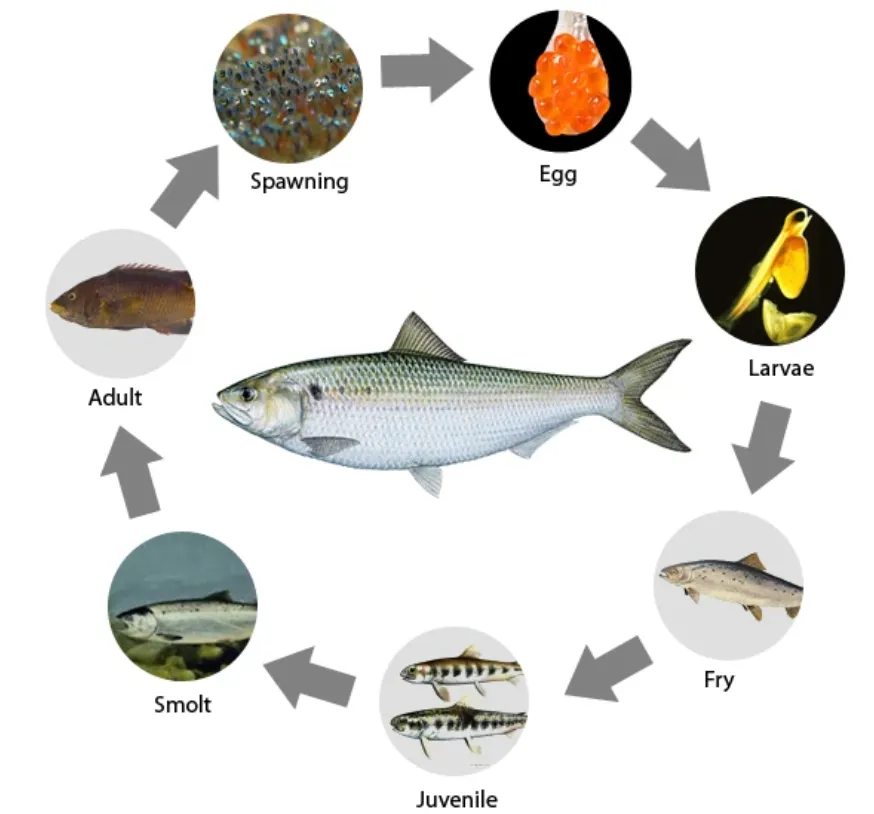
Their life cycle and ability to survive in nature
Egg Stage
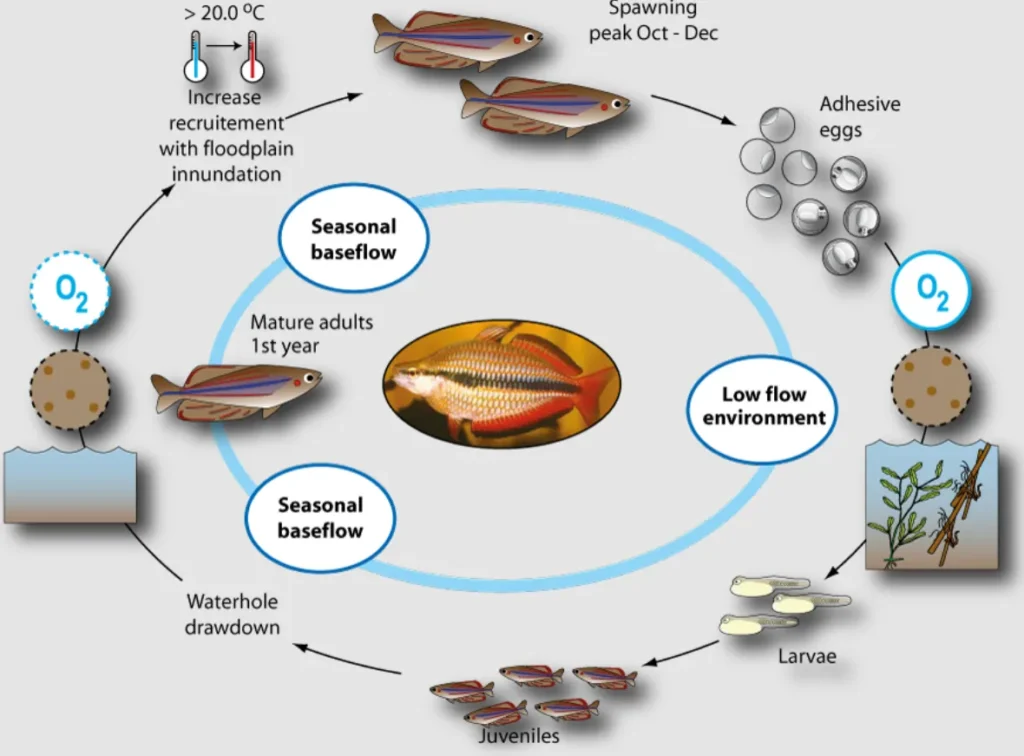
The egg stage is the beginning of the fish life cycle. Most fish release eggs into water during the breeding season. Some eggs float freely, while others attach to plants, stones, sand, or nests. The egg contains nutrients that support the developing embryo.
Clean water and enough oxygen are essential at this stage. If water becomes polluted or too warm, many eggs may fail to hatch.
Larva and Fry Stage
After hatching, the young fish is called a larva. At first, it may carry a yolk sac, which provides food for a short time. When the yolk is absorbed, the larva begins to search for tiny food such as plankton.
As it grows stronger and starts swimming better, it becomes a fry. This stage is dangerous because many predators eat small fish.
Juvenile Stage
The juvenile fish looks more like an adult but is not yet ready to reproduce. It grows fins, scales, muscles, and stronger body systems. Juvenile fish need safe shelter such as aquatic plants, rocks, coral reefs, or shallow water.
Adult Stage
An adult fish can reproduce and continue the life cycle. Adults survive through swimming ability, camouflage, schooling behavior, sharp senses, and suitable feeding habits. Some fish migrate long distances to find food or breeding areas.
Their ability to survive depends on their ability to adapt. Some live in freshwater, some in saltwater, and some can move between both.
Their Reproductive Process and raising their children
Fish reproduction is highly diverse. Most species reproduce through external fertilization, where females release eggs and males release sperm into the water. However, some species use internal fertilization, especially certain sharks, rays, and livebearing fish.
Important points about fish reproduction:
- Spawning: Many fish reproduce by spawning. During spawning, eggs and sperm are released into the water at the right time.
- Seasonal signals: Temperature, rainfall, moon phase, water flow, and daylight can trigger breeding behavior.
- Nest building: Some fish prepare nests in sand, gravel, plants, or protected spaces.
- Egg guarding: Certain species guard their eggs from predators until they hatch.
- Mouthbrooding: Some fish carry eggs or young inside their mouth for protection.
- Live birth: A few fish give birth to live young instead of laying eggs.
- Mass egg production: Many marine fish release thousands or millions of eggs because only a small number survive.
- Parental care: Some fish provide no care after spawning, while others carefully protect their young.
Raising young fish depends on the species. Many fish leave their eggs after spawning, allowing nature to decide survival. Others, such as some cichlids and catfish, actively defend eggs and fry.
The early life of fish is full of risk. Eggs can be eaten, washed away, or damaged by poor water quality. Insects, birds, larger fish, and amphibians can eat fry. Because survival is difficult, many fish produce large numbers of eggs to ensure that at least some reach adulthood.
The importance of them in this Ecosystem
Maintaining Food Chains
Fish are a major part of aquatic food chains. Small fish eat plankton and insects, while larger fish eat smaller fish. Birds, reptiles, mammals, and humans also depend on fish as a food source. Without fish, many animals would lose an important food source.
Controlling Insect Populations
Many freshwater fish eat mosquito larvae and other aquatic insects. This helps control insect populations naturally. In ponds, wetlands, and rice fields, fish can reduce the number of harmful insects.
Supporting Nutrient Cycling
Fish help recycle nutrients in aquatic ecosystems. Their waste adds nutrients to water and supports plant and plankton growth. When fish move between habitats, they transfer nutrients.
Improving Ecosystem Balance
Predatory fish control smaller fish and invertebrate populations. Herbivorous fish control algae growth. Bottom-feeding fish clean organic material from sediments. Each group has a different role that helps maintain balance.
Supporting Human Life
Fish provide food, income, employment, and cultural value. Many communities depend on fishing, aquaculture, and fish markets. Healthy fish populations support both nature and human society.
Acting as Environmental Indicators
Fish are sensitive to pollution, oxygen shortage, temperature change, and habitat damage. A decline in fish health often indicates that the water system is under stress. Therefore, fish help scientists understand environmental quality.
What to do to protect them in nature and save the system for the future
Protecting fish means protecting the whole aquatic environment. Rivers, lakes, ponds, wetlands, mangroves, coral reefs, and oceans must remain healthy for the fish life cycle to continue naturally.
- Reduce water pollution by preventing chemicals, plastic, oil, and untreated waste from entering rivers and oceans.
- Protect breeding areas such as wetlands, shallow waters, coral reefs, mangroves, and riverbanks.
- Avoid overfishing so adult fish get enough time to reproduce and maintain population balance.
- Follow the fishing seasons, as many fish need safe breeding periods.
- Use legal fishing gear and avoid destructive methods such as poison, explosives, and fine-mesh nets.
- Protect young fish by avoiding the capture of fry and juvenile fish before they grow.
- Restore natural habitats by planting aquatic vegetation and protecting river flow.
- Reduce plastic waste because fish may eat plastic particles or become trapped in plastic materials.
- Support sustainable aquaculture that uses clean water, balanced feed, and disease control.
- Control invasive species because they may attack native fish or compete for food.
- Maintain oxygen levels in ponds and lakes by preventing excessive waste and algae blooms.
- Educate local communities about the value of fish in food chains and ecosystems.
- Support conservation laws that protect endangered fish species.
- Reduce climate change impacts by protecting forests, wetlands, and natural carbon sinks.
- Choose responsibly sourced fish to support sustainable fisheries and reduce pressure on wild populations.
Fish cannot survive alone without healthy water. Protecting them is a long-term responsibility for governments, communities, farmers, fishers, and consumers.
Frequently Asked Questions (FAQs)
Q1: What is the fish life cycle?
A: The fish life cycle is the natural development process of fish from egg to egg, embryo, larva, fry, juvenile, adult, and spawning adult. This cycle allows fish to grow, reproduce, and continue their species.
Q2: What is the first stage of a fish’s life cycle?
A: The first stage is the egg stage. Most fish begin life as fertilized eggs laid in water. The embryo grows inside the egg until it is ready to hatch.
Q3: What comes after the egg stage in fish?
A: After the egg stage, the fish becomes an embryo and then hatches as a larva. The larva later develops into fry, then into a juvenile fish.
Q4: How do fish reproduce?
A: Most fish reproduce by spawning. Females release eggs and males release sperm into the water. Some fish use internal fertilization, and a few species give birth to live young.
Q5: Do fish take care of their babies?
A: Some fish take care of their eggs and young, but many do not. Species with parental care may guard eggs, build nests, or carry young in their mouths.
Q6: How long do fish live?
A: Fish lifespan varies widely. Some small fish live only one or two years, while larger species can live for decades. A well-cared-for goldfish can live many years in a healthy environment.
Q7: Why do fish lay so many eggs?
A: Fish lay many eggs because only a small number survive. Eggs and young fish face predators, pollution, water changes, and food shortages.
Q8: Why are fish important to the Ecosystem?
A: Fish support food chains, control insects, recycle nutrients, maintain balance, and provide food for humans and animals. They also indicate the health of aquatic ecosystems.
Conclusion
The fish life cycle is a powerful example of how nature creates, protects, and renews life in water. From tiny eggs to active adults, every stage has a purpose. Fish must survive predators, changing water conditions, food shortages, pollution, and habitat loss. Yet through adaptation, reproduction, migration, camouflage, schooling, and specialized feeding habits, they continue to thrive in many aquatic environments.
Species such as goldfish, anglerfish, pufferfish, and other large fish showcase the incredible diversity of the fish world. Some live in ponds, some in rivers, some in coral reefs, and some in the deep ocean.
Protecting fish is not only about saving one group of animals. It is about protecting clean water, balanced ecosystems, food security, and future biodiversity. When fish populations remain healthy, the entire aquatic system becomes stronger, more productive, and more sustainable for future generations.
Also Read: spider life cycle