Admin
Admin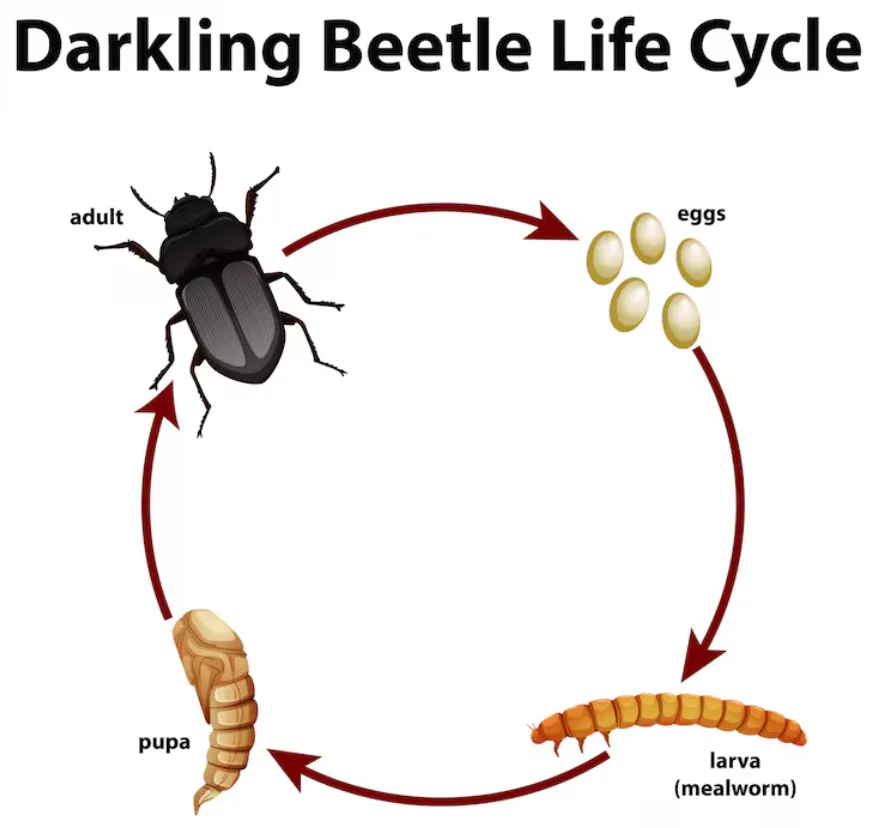
The life cycle of a beetle is one of the most fascinating examples of complete metamorphosis in the insect world. Beetles belong to the order Coleoptera, the largest order of insects, with more than 400,000 described species worldwide. This huge diversity includes tiny carpet beetles, colorful lady beetles, powerful stag beetles, giant Hercules beetles, and plant-feeding Japanese beetles.
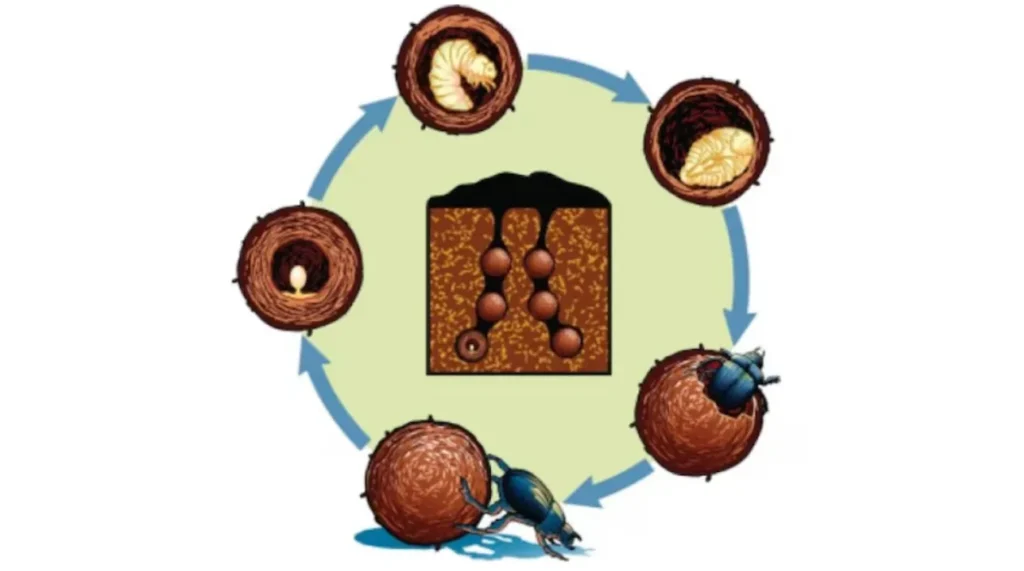
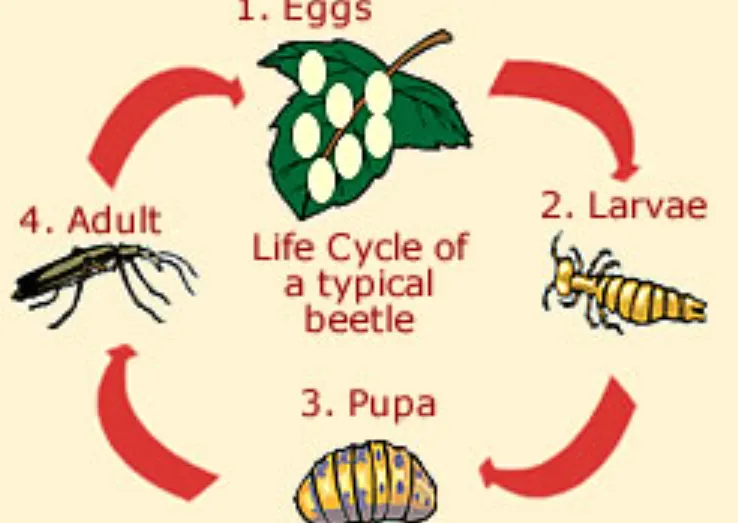
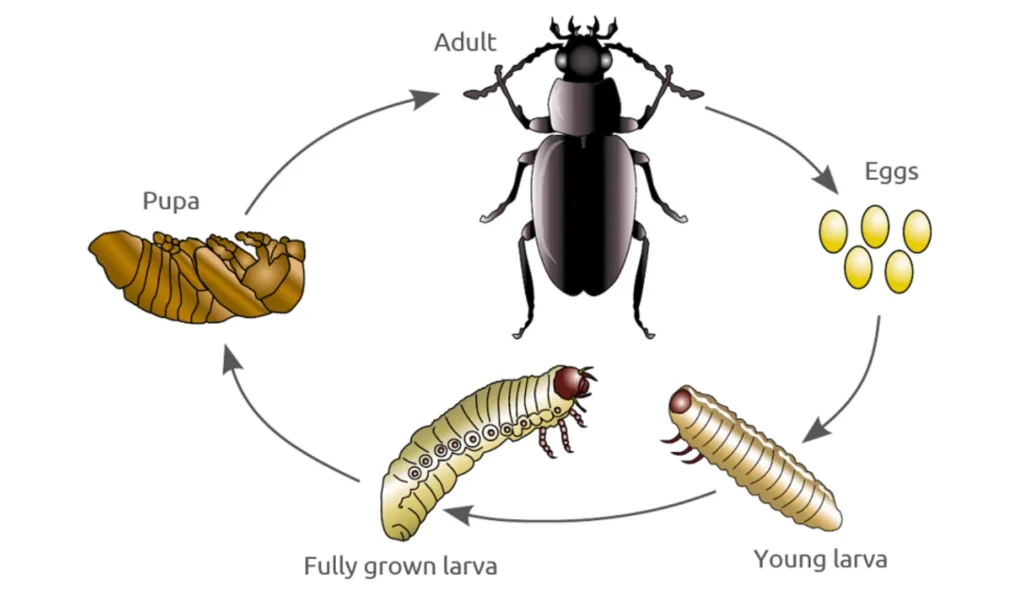
A beetle does not grow like a baby mammal. Instead, it passes through four very different stages: egg, larva, pupa, and adult. The larval stage is often the longest and most active feeding stage. In many species, beetle larvae look nothing like adult beetles. They may appear as white grubs, worm-like borers, or hairy larvae such as carpet beetle larvae.
Beetles live in soil, forests, stored food, gardens, freshwater, dead wood, animal dung, flowers, crops, and even inside homes. Some beetles are pests, but many are extremely beneficial. They help with decomposition, pollination, pest control, soil health, and nutrient recycling.
Q: What are the four stages in the life cycle of a beetle?
A: The four stages are egg, larva, pupa, and adult. This is called complete metamorphosis.
Q: How long does a beetle take to become an adult?
A: It depends on the species. Some beetles complete their development in a few weeks, while others, such as stag beetles, may spend several years as larvae.
Q: Are beetle larvae and adult beetles the same?
A: No. Beetle larvae often look completely different from adults and may eat different foods. For example, Japanese beetle grubs feed on roots, while adults feed on leaves and flowers.
Quick Life Cycle Table
| Stage | What Happens | Common Duration | Key Purpose |
| Egg | Female beetle lays eggs in soil, wood, leaves, food sources, or hidden places. | Days to weeks | Start of life |
| Larva | Young beetle hatches and feeds heavily | Weeks to years | Growth and energy storage |
| Pupa | Larva transforms inside a protected case or chamber | Days to months | Body rebuilding |
| Adult | Beetle emerges, mates, disperses, and lays eggs | Weeks to years | Reproduction |
Important Things That You Need To Know
The keyword “beetle” covers a wide range of insects, so not every beetle has the same life cycle, diet, or habitat. A Japanese beetle usually has a one-year life cycle in many regions, with grubs feeding underground and adults feeding above ground on plants. Adult Japanese beetles can feed on more than 300 plant species, while their grubs mainly damage grass roots.
The Asian lady beetle is different. It is a predator, especially of aphids and soft-bodied insects. Its eggs hatch quickly, larvae feed actively, and the pupa changes into the familiar adult lady beetle form.
The stag beetle is famous for its large jaws and long larval life. Its larvae live in rotting wood for several years before becoming adults. This makes dead wood very important for its survival.
The Hercules beetle is one of the largest beetles. Its larval stage can last many months, and captive observations show that its full life span can approach several years under suitable conditions.
Some LSI keywords can confuse readers. Blue Beetle may refer to blue-colored beetles or a fictional superhero. Volkswagen Beetle is a car, not an insect. Carpet beetle larvae, however, are real beetle larvae and are important household pests because they feed on animal-based fibers such as wool, feathers, lint, and stored organic materials.
The History Of Their Scientific Naming, Evolution, and Their Origin
Scientific Name: Coleoptera
The scientific order name Coleoptera comes from Greek words meaning “sheath wings.” This refers to the beetle’s hardened front wings, called elytra, which protect the delicate flying wings underneath. North Carolina State University explains that “koleos” means sheath and “ptera” means wings.
Why Beetles Became So Successful
Beetles evolved into one of Earth’s most successful animal groups partly because of their protective elytra, chewing mouthparts, diverse diets, and ability to live in many habitats. Their hard forewings protect them from injury, dryness, predators, and rough environments.
Origin and Evolution
Beetles are ancient insects with a long evolutionary history. Over time, they spread into forests, grasslands, deserts, wetlands, farms, and human homes. Their larvae and adults often feed on different foods, reducing competition between young and mature beetles.
Taxonomic Diversity
Modern references list more than 400,000 described beetle species, making Coleoptera the largest insect order and one of the largest animal groups on Earth.
Their Reproductive Process, Giving Birth And Rising Their Children
Mating and Courtship
Most beetles reproduce sexually. Adult males and females usually find each other through scent, movement, sound, or habitat signals. In some species, males fight for females. Male stag beetles and rhinoceros beetles use large jaws or horns during competition.
Egg Laying
Beetles do not give birth to live young in the way mammals do. Most females lay eggs in places where larvae can find food immediately after hatching. Eggs may be placed in soil, rotting wood, leaves, stored products, animal nests, carpets, cracks, or near prey insects.
For example, Japanese beetle females lay eggs in soil, while carpet beetles may lay eggs in lint, cracks, baseboards, or near natural fibers. Carpet beetle females may lay dozens of eggs, depending on the species.
Larval Survival Strategy
Most beetles do not raise their young after eggs are laid. Instead, the female chooses a safe, food-rich place. The larva survives by feeding, molting, hiding, and growing.
Parental Care
True parental care is uncommon in beetles, but it exists in some groups. Some burying beetles prepare food for larvae, and some wood-boring species choose protected nesting sites. Still, for most beetles, survival depends on egg placement, larval feeding ability, camouflage, and environmental conditions.
Stages of the Beetle Life Cycle
Stage 1: Egg
The egg stage begins after mating. Female beetles lay eggs in a location suited to the species. Soil beetles may lay eggs underground. Wood beetles lay eggs near dead or weakened wood. Leaf beetles place eggs on host plants. Carpet beetles lay eggs near materials their larvae can eat.
Eggs are usually tiny, soft, and hidden. Depending on temperature, humidity, and species, eggs may hatch in a few days or several weeks.
Stage 2: Larva
The larval stage is the main growth stage. Beetle larvae may be called grubs, borers, or larvae, depending on their appearance and habitat.
Larvae eat heavily and molt several times. A Japanese beetle grub feeds on roots. A stag beetle larva feeds on rotting wood. A lady beetle larva hunts aphids. A carpet beetle larva feeds on organic fibers and debris.
This stage can be short or very long. Some lady beetles develop quickly, while stag beetles can spend years as larvae.
Stage 3: Pupa
The pupal stage is a resting and transformation stage. Inside the pupa, the larval body changes into the adult beetle form.
The beetle develops adult legs, wings, antennae, eyes, reproductive organs, and hardened body structures. Although the pupa often looks inactive, major biological rebuilding is happening inside.
Stage 4: Adult
The adult beetle emerges from the pupa with a soft body. Its exoskeleton later hardens and darkens.
Adults focus on feeding, dispersal, defense, mating, and egg laying. Some adults live only a few weeks, while others may survive for months or even years, depending on the species and conditions.
Their Main Diet, Food Sources, And Collection Process Explained
Beetles are successful because they can use many food sources. Their diet depends heavily on species, life stage, and habitat.
Some beetles are herbivores. They eat leaves, roots, flowers, fruit, seeds, stems, bark, or pollen. Japanese beetles are a good example because adults feed on leaves and flowers, while grubs feed mainly on grass roots.
Some beetles are predators. Lady beetles, ground beetles, and many water beetles hunt smaller insects, mites, eggs, larvae, or soft-bodied pests. This makes them valuable for natural pest control.
Some beetles are decomposers. Dung beetles, carrion beetles, and wood-boring larvae recycle dead plants, animal waste, and decaying organic matter. This returns nutrients to the soil.
Some beetles are fungus feeders. They eat mold, fungi, or fungus-rich wood. Others feed on stored grain, dried food, wool, feathers, hides, museum specimens, or household debris.
How Beetles Collect Food
Beetles use chewing mouthparts. Larvae scrape, tunnel, chew, or bore into food. Adults may climb, fly, dig, or follow chemical signals to find food.
Their feeding behavior is practical and efficient. A larva usually stays close to food, while an adult can move farther to find mates, host plants, prey, or egg-laying sites.
How Long Does A Beetle Live
The lifespan of a beetle varies greatly. There is no single lifespan for all beetles because Coleoptera includes hundreds of thousands of species.
A beetle’s total life includes the egg, larval, pupal, and adult stages. In many species, the larva lives much longer than the adult.
- Small household beetles may complete development in a few months if food and warmth are available.
- Carpet beetles can vary widely. Some carpet beetle larvae develop for months, while other species may remain larvae much longer under poor conditions. Virginia Tech notes that larval development in carpet beetles can range from 3 to 36 months, depending on species and conditions.
- Japanese beetles often complete one generation per year in many climates. They spend much of the year underground as grubs, then emerge as adults during the warm season.
- Asian lady beetles develop faster. Their eggs can hatch in a few days, larvae feed for days to weeks, and adults may live for months. Some adults overwinter in protected places.
- Stag beetles spend most of their lives as larvae inside or near decaying wood. Their larval stage may last several years, while adults often live only a few weeks after emergence.
- Hercules beetles can have a long juvenile period. Animal Diversity Web reports captive-based data showing about one month as an egg, 12–18 months as a larva, 2–3 months as a pupa, and 8–12 months as an adult.
- Food quality matters. Poor food can slow larval growth, reduce adult size, and lower reproductive success.
- Temperature matters. Warm conditions often speed development, while cold conditions can delay growth or trigger dormancy.
- Predators matter. Birds, reptiles, amphibians, mammals, spiders, wasps, ants, and other insects eat beetles at different stages.
- Habitat protection matters. Beetles living in stable, food-rich habitats usually have a better chance of completing their life cycle.
Beetle Lifespan in the Wild vs. in Captivity
Lifespan in the Wild
In the wild, beetles face predators, drought, floods, parasites, disease, pesticides, habitat loss, and food shortages. Many eggs and larvae never become adults.
Wild beetles may also experience seasonal limits. For example, adults of some species emerge only during certain months, mate quickly, lay eggs, and die soon after.
Lifespan in Captivity
In captivity, beetles may live longer if they receive proper food, moisture, temperature, substrate, and protection from predators. Large beetles such as Hercules beetles, stag beetles, and rhinoceros beetles are often raised by insect keepers because their larval development can be observed safely.
Why Captivity Can Extend Life
Captivity removes many natural threats. However, it does not always increase lifespan. Poor humidity, wrong food, mold, overcrowding, and stress can shorten life.
Most Important Difference
In the wild, the beetle’s life is shaped by survival pressure. In captivity, its life is shaped by the quality of care it receives. The biological stages remain the same, but survival rates can vary widely.
Importance of Beetles in This Ecosystem
Beetles Recycle Nutrients
Many beetles break down dead plants, dung, fungi, and animal remains. This helps return nutrients to the soil. Dung beetles are especially important because they bury and process animal waste, improving nutrient cycling and soil structure.
Beetles Support Soil Health
Larvae and adults that tunnel through soil, wood, and dung help aerate material and speed decomposition. This improves the movement of air, water, and microbes.
Beetles Control Pests
Predatory beetles eat aphids, caterpillars, mites, fly larvae, slugs, and other pests. Lady beetles and ground beetles are valuable natural enemies in gardens and farms.
Beetles Feed Other Animals
Birds, bats, frogs, lizards, fish, spiders, and small mammals rely on beetles and beetle larvae as food. A decline in beetles can affect the wider food web.
Beetles Help Pollination
Some beetles visit flowers for pollen, nectar, or plant tissue. While bees are better known, beetles also pollinate many plant species, especially ancient flowering plant groups and some tropical plants.
What To Do To Protect Them In Nature And Save The System For The Future
Protect Dead Wood and Leaf Litter
- Leave some fallen branches, logs, and leaf litter in safe garden or woodland areas.
- Many beetle larvae, including stag beetle larvae, need rotting wood.
- Avoid over-cleaning every natural space.
Reduce Pesticide Use
- Use pesticides only when necessary.
- Choose targeted methods instead of broad sprays.
- Avoid spraying flowers where pollinators and beneficial beetles feed.
Plant Native Flowers and Trees
- Native plants support native beetles, prey insects, pollen sources, and shelter.
- A diverse garden provides food for both larvae and adults.
Protect Soil and Moisture
- Avoid compacting soil.
- Use mulch carefully.
- Keep microhabitats moist where beetles naturally develop.
Control Invasive Pests Responsibly
- Some beetles, such as Japanese beetles, can damage crops and gardens.
- Manage pest beetles with integrated methods that protect beneficial insects.
- Hand-picking, habitat balance, resistant plants, and biological controls are often safer than heavy chemical use.
Fun & Interesting Facts About Beetles
- Beetles are the largest insect order, with more than 400,000 described species.
- The scientific name Coleoptera means sheath wings, referring to their hardened wing covers.
- A beetle’s front wings are called elytra. They protect the soft flying wings underneath.
- Beetle larvae often look nothing like adult beetles.
- Carpet beetle larvae are the damaging stage in homes, not usually the adults.
- Lady beetle larvae can look like tiny alligators and are strong predators of aphids.
- Stag beetle larvae may live in rotting wood for years before becoming adults.
- Hercules beetles are among the largest beetles and can have a long larval stage.
- Some beetles glow, including fireflies, which are actually beetles.
- Dung beetles can move animal waste and help improve soil fertility.
- Some beetles play dead to avoid predators.
- Some beetles release foul-smelling chemicals or other defensive substances when threatened.
Frequently Asked Questions (FAQs)
Q: What is the life cycle of a beetle?
A: The life cycle of a beetle has four stages: egg, larva, pupa, and adult. This process is called complete metamorphosis.
Q: How long is the larval stage of a beetle?
A: It depends on the species. Some beetle larvae develop in weeks, while others, such as stag beetles, may remain larvae for several years.
Q: Do all beetles live for one year?
A: No. Some beetles live only a few months, while others may live several years when all stages are counted.
Q: What do beetle larvae eat?
A: Beetle larvae may eat roots, wood, leaves, fungi, dung, dead animals, stored food, fibers, or prey insects, depending on the species.
Q: Are beetles harmful or helpful?
A: Both. Some beetles are pests, but many are helpful because they pollinate plants, recycle nutrients, control pests, and feed wildlife.
Final Word
The life cycle of a beetle is a powerful example of nature’s design. From a tiny egg to a hungry larva, then a transforming pupa, and finally a reproductive adult, every stage has a clear purpose. Beetles are not just small insects crawling under leaves or flying near lights. They are soil builders, recyclers, pollinators, predators, pests, prey, and important members of the ecosystem.
Understanding beetle development also helps people manage gardens, farms, homes, and natural habitats more wisely. Some beetles, such as Japanese beetles and carpet beetle larvae, need careful control. Others, such as lady beetles, stag beetles, and decomposer beetles, deserve protection.
By learning how beetles live, feed, reproduce, and support the environment, we can better protect biodiversity and maintain healthier ecosystems for the future.
Also Read: ladybeetle life cycle