Admin
Admin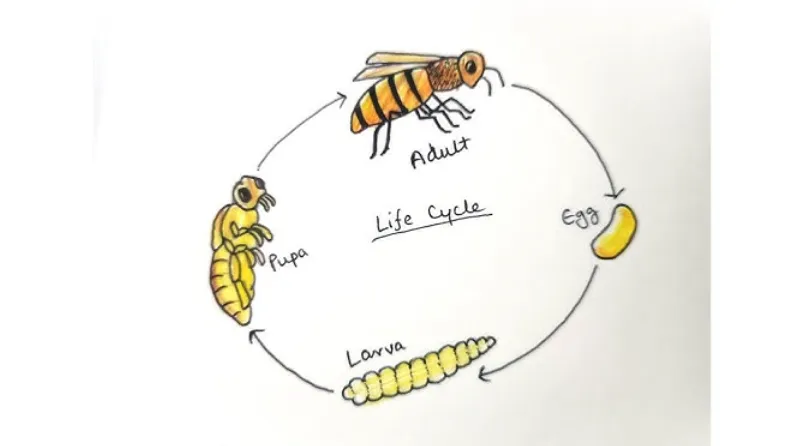
The life cycle of a beehive is really the life cycle of a living honey bee colony. A beehive is not just a box, tree hollow, or wax structure; it is a complete social system where queen bees, worker bees, and drone bees work together to survive, reproduce, store food, and protect the next generation.
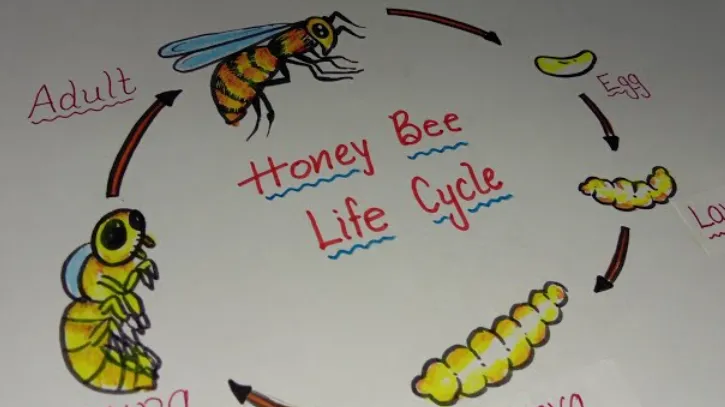
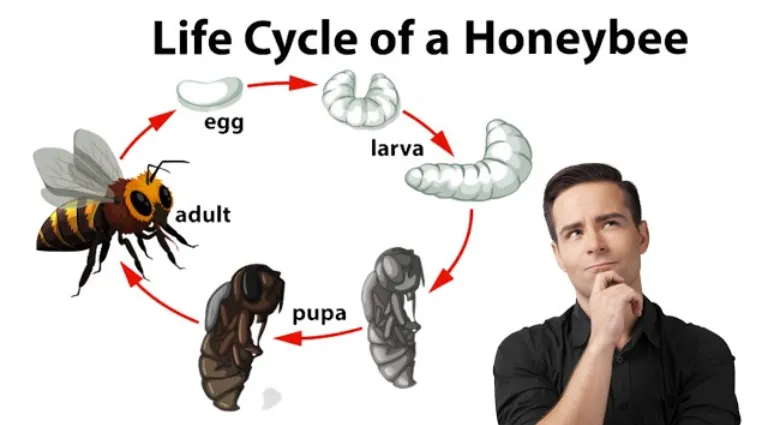
Inside a healthy beehive, the colony grows through four main bee-development stages: egg, larva, pupa, and adult. The queen lays eggs in wax cells, worker bees feed the young, and adult bees take on jobs such as cleaning, nursing, comb building, guarding, foraging, and honey production. Honey bees undergo complete metamorphosis, and their development time depends on caste: queens develop fastest, workers take longer, and drones take the longest.
A strong hive can contain tens of thousands of workers during the active season. A managed or domestic colony can reach up to about 60,000 members, while wild colonies are often smaller.
Q: What are the 4 stages of the life cycle of a beehive?
A: The four stages are egg, larva, pupa, and adult bee. These stages happen inside wax comb cells before the adult bee emerges.
Q: How long does it take for bees to develop in a beehive?
A: A queen usually develops in about 15–16 days, a worker in about 21 days, and a drone in about 24 days.
Q: Does a beehive itself have a life cycle?
A: Yes, but not like a single animal. The colony grows, reproduces by swarming, stores food, survives winter, replaces queens, and may live for many years if disease, starvation, pesticides, or weather do not destroy it.
Quick Life Cycle Table
| Stage | What Happens | Typical Time |
| Egg | Queen lays one egg in a wax cell | About 3 days |
| Larva | Nurse bees feed the growing grub | About 5.5–6.5 days |
| Pupa | The body changes into an adult bee under a wax cap | Queen: 8 days, worker: 12 days, drone: 14.5 days |
| Adult | The bee emerges and begins colony work | Queen: 15–16 days, worker: 21 days, drone: 24 days total development |
Important Things That You Need To Know
When people search for a beehive, they may not always mean a real honey bee colony. The word “beehive” has several meanings online, so understanding search intent helps keep this article focused and useful.
A biological beehive is the home of a honey bee colony. It may be a natural tree cavity, a wall void, or a managed wooden hive used by beekeepers. This article focuses on the natural and managed colony system where honey bees live, reproduce, and store honey.
However, some LSI keywords refer to completely different topics. For example, a beehive hairstyle or beehive hairdo describes a tall, rounded hairstyle inspired by the shape of a hive. These fashion terms are not related to bee biology, but they share the same root keyword.
The phrase beehive trail Acadia ” usually points to a hiking trail in Acadia National Park, not to honey bees. Beehive meals and beehive farmacy are also brand-style or local-search phrases, so they should not be confused with the life cycle of honey bees.
Finally, the beehive state refers to Utah’s nickname, which symbolizes industry, work, and community. In this article, the word beehive means the living home and social structure of Apis mellifera, the western honey bee.
The History Of Their Scientific Naming, Evolution, and Their Origin
Scientific Name: Apis mellifera
The best-known honey bee species in managed hives is the western honey bee, scientifically named Apis mellifera Linnaeus. The name appears in scientific and extension resources as European honey bee Apis mellifera Linnaeus, placing it in the order Hymenoptera and family Apidae.
Origin and Natural Range
The western honey bee naturally occurs in Europe, the Middle East, and Africa. It has many recognized subspecies, none of which are native to the Americas. Honey bees were widely spread beyond their original range because humans valued them for honey, wax, and pollination.
Evolution as a Social Insect
Honey bees evolved as eusocial insects, meaning they live with reproductive division of labor, overlapping generations, and cooperative care of young. A beehive works like a “superorganism,” in which the whole colony serves as the main survival unit.
Arrival in North America
European honey bees were introduced to North America by early settlers in the 1600s. Their spread changed farming practices, pollination, and beekeeping history across the continent.
Their Reproductive Process, Giving Birth And Rising Their Children
Honey Bees Do Not Give Birth
Honey bees do not give live birth. The queen bee lays eggs inside individual hexagonal wax cells. Each egg is tiny, pale, and shaped like a grain of rice. After about three days, the egg hatches into a larva.
Fertilized and Unfertilized Eggs
The queen controls whether an egg is fertilized. Fertilized eggs develop into females, which may become workers or queens. Unfertilized eggs become male drones. Nutrition decides whether a female larva becomes a worker or a queen. Larvae fed a richer queen diet become queens, while most female larvae become workers.
Mating Flight of the Queen
A young queen leaves the hive for mating flights and mates with multiple drones outside the colony. After mating, she stores sperm and can lay fertilized eggs for a long period. Missouri Extension notes that this mating is typically the only mating period of the queen’s life.
Raising the Young
Nurse bees raise young bees. Workers feed larvae, regulate brood temperature, clean cells, cap mature larvae, and protect the brood nest. The brood includes eggs, larvae, and pupae. In a strong colony, thousands of young bees are developing at the same time.
Colony Reproduction by Swarming
A beehive reproduces at the colony level through swarming. When conditions are favorable, the old queen may leave with many workers while new queens develop in the original hive. This creates one colony from another.
Stages of the Life Cycle of a Beehive
Stage 1: Egg
The life cycle begins when the queen bee lays an egg in a clean wax cell. Worker bees prepare and polish the cell before the queen inspects it. A healthy queen usually lays one egg per cell, placed at the bottom.
The egg stage lasts about three days. During this short period, the egg slowly changes position before hatching into a larva. Fresh eggs are an important sign for beekeepers because they indicate that the hive has a laying queen.
Stage 2: Larva
After the egg hatches, the bee becomes a soft, white, C-shaped larva. This stage is often called open brood because the cell is not yet capped. Nurse bees feed the larvae many times a day.
Larval time varies by caste. Workers spend about 6 days as larvae, drones about 6.5 days, and queens about 5.5 days. As the larva grows, it molts and fills more of the cell.
Stage 3: Pupa
When the larva is ready to transform, worker bees seal the cell with a wax cap. Inside the capped cell, the bee enters the pupal stage. This is where the body changes dramatically: eyes, wings, legs, antennae, and adult body segments develop.
Pupal time also depends on caste. Workers spend about 12 days, drones about 14.5 days, and queens about 8 days in the pupal stage.
Stage 4: Adult Bee
The adult bee chews through the wax cap and emerges into the colony. A new worker does not immediately fly outside. She usually starts with indoor jobs such as cleaning cells and feeding brood.
As workers age, they shift duties. Young workers tend the brood, middle-aged workers build the comb and handle food, and older workers become guards and foragers. This age-based work system keeps the beehive organized and efficient.
Their Main Diet, Food Sources, And Collection Process Explained
The diet of a beehive is built around nectar, pollen, honey, water, and plant resins. Each food source has a different role in colony survival.
- Nectar is the main carbohydrate source. Forager bees collect nectar from flowers and bring it back in their honey stomach. Inside the hive, workers process nectar into honey by reducing moisture and adding enzymes.
- Pollen is the main protein, fat, vitamin, and mineral source. Workers pack pollen into their hind-leg pollen baskets and carry it back to the hive. Pollen is especially important for feeding larvae and young nurse bees.
- Honey is stored energy. Bees make and store honey to survive periods when flowers are not blooming, especially winter. Missouri Extension explains that honey bees remain active inside the nest during winter and depend on stored honey for survival.
- Water helps cool the hive, dilute honey, and support brood care. Honey bees need a nearby water source, and Missouri Extension notes that water within about half a mile is important for colonies.
- Propolis is made from plant resins and used as a sealant. Bees use it to seal cracks, smooth surfaces, and strengthen hive defenses.
Good forage matters. Trees and shrubs often provide early pollen and nectar, while herbs, clover, goldenrod, asters, and other flowering plants support colonies later in the season.
How Long Does A Beehive Live
A single bee lives for weeks, months, or years, depending on its caste. A beehive colony, however, can live much longer if it keeps a healthy queen, enough workers, food stores, and disease control.
- A queen bee can live the longest. Scientific literature commonly reports that queen honey bees may live for years, while workers live much shorter lives. One research summary notes that queen honey bees live about 1–2 years, while workers live 15–38 days in summer and 150–200 days in winter.
- Summer worker bees live short, intense lives. During warm months, workers forage, build comb, feed brood, guard the entrance, and process nectar. Foraging is dangerous and physically demanding, so many summer workers live only a few weeks.
- Winter worker bees live longer. Winter bees are not flying daily to forage. They cluster, conserve energy, and help keep the colony warm. Penn State Extension notes that winter bees can live much longer than summer bees, up to about six months, compared with about six weeks for summer bees.
- Drone bees usually live only until mating season ends. Drones exist mainly to mate with virgin queens. If a drone mates successfully, it dies soon after. If it does not mate, workers may remove drones from the hive before winter to conserve food.
- A colony can survive for many years. The colony continues by replacing workers, raising new brood, and sometimes replacing the queen. If the queen fails, workers may raise a new queen if young larvae are available.
- A beehive can die quickly under pressure. Starvation, pesticide exposure, poor nutrition, queen failure, extreme weather, and pests such as Varroa mites can weaken or kill colonies. USDA’s 2025 report listed Varroa mites as the top colony stressor for operations with five or more colonies during all surveyed quarters in 2024.
- Recent U.S. colony loss data show the risk is serious. The 2024–2025 U.S. Beekeeping Survey estimated annual managed honey bee colony losses at 55.6%, the highest reported since annual losses began being tracked in 2010–2011.
Beehive Lifespan in the Wild vs. in Captivity
Wild Beehive Lifespan
A wild beehive usually forms in a protected cavity such as a hollow tree, log, cliff space, or wall void. Wild colonies may survive for several years if they have enough forage, a healthy queen, dry shelter, and low parasite pressure.
However, wild colonies face high natural risks. They may die from starvation, winter cold, predators, disease, wax moths, or mites. Since no beekeeper is monitoring them, small problems can become fatal.
Managed Beehive Lifespan
A managed hive is cared for by a beekeeper. Managed colonies often receive inspections, mite monitoring, supplemental feeding, queen replacement, and weather protection. This can improve survival when management is careful and science-based.
But managed colonies also face stress. They may be moved for crop pollination, exposed to agricultural pesticides, or crowded near other colonies where pests and diseases spread more easily.
Main Difference
The biggest difference is human support. Wild colonies depend fully on natural conditions. Managed colonies may survive longer with proper care, but poor management can also shorten colony life.
Importance of the Beehive In This Ecosystem
Pollination Support
Honey bees are powerful pollinators. As they move from flower to flower collecting nectar and pollen, they transfer pollen that helps plants produce fruits, seeds, and new generations. USDA reports that about three-fourths of the world’s flowering plants and around 35% of the world’s food crops depend on animal pollinators to reproduce.
Food Production
A healthy beehive supports crops such as apples, blueberries, melons, almonds, coffee, and many vegetables. Pollination increases fruit set, seed quality, and crop yield. This makes honey bees important not only for nature but also for agriculture and food security.
Biodiversity Connection
Honey bees are not the only pollinators. Native bees, butterflies, moths, beetles, bats, and birds also pollinate plants. Still, managed honey bees can provide large-scale pollination services where crops bloom heavily for a short time.
Ecosystem Balance
Beehives help flowering plants reproduce. Those plants feed birds, mammals, insects, and soil organisms. When pollinator health declines, the impact can move through the whole ecosystem.
Economic Value
Modern beekeeping is not only about honey. Many beekeepers earn income from pollination services, and Missouri Extension notes that pollination services can bring more income to the beekeeping industry than honey itself.
What To Do To Protect Them In Nature And Save The System For The Future
1. Plant Diverse Flowers
- Grow native flowering plants that bloom in different seasons.
- Include early spring flowers, summer herbs, and late-season plants such as asters and goldenrod.
- More bloom time means more nectar and pollen.
2. Reduce Harmful Pesticide Use
- Avoid spraying flowers when bees are active.
- Use integrated pest management before choosing chemicals.
- Never treat blooming plants with products that may harm pollinators.
3. Protect Natural Nesting and Forage Areas
- Keep hedgerows, wildflower strips, field edges, and flowering trees.
- Avoid removing every “weed,” because some wild plants provide valuable bee food.
- USDA notes that a lack of enough pollinator-friendly plantings is a major challenge for pollinators.
4. Support Responsible Beekeeping
- Beekeepers should monitor Varroa mites, queen health, food stores, and brood patterns.
- Weak colonies should be managed before they spread disease to nearby hives.
- Clean equipment and a healthy diet help reduce stress.
5. Provide Clean Water and Safe Space
- Bees need clean water for cooling and brood care.
- A shallow water dish with stones can help prevent drowning.
- Keep hives away from heavy disturbance, smoke, and unnecessary human contact.
Fun & Interesting Facts About the Life Cycle of a Beehive
- Honey bees are superorganisms. The colony functions as a single living body, with each bee acting as a specialized cell.
- A queen can lay huge numbers of eggs. Extension resources note that one queen may produce hundreds of thousands of eggs in a year under strong conditions.
- Workers are all female. Most bees you see on flowers are female worker bees.
- Drones do not have stingers. Their main role is reproduction, not defense or foraging.
- A worker’s job changes with age. Young workers clean and nurse; older workers guard and forage.
- Bees make wax from their own bodies. Worker bees produce wax scales from glands on the underside of the abdomen and use them to build comb.
- Honey is a winter survival food. Bees store honey because they remain alive and somewhat active in winter rather than fully hibernating.
- Swarming is natural reproduction. A swarm is not simply “bees going crazy”; it is how a strong colony creates a new colony.
- Beehives are temperature-managed homes. Workers fan, cluster, collect water, and care for brood to keep conditions suitable.
- A hive depends on teamwork. No single worker survives alone for long, but together the colony can build, defend, reproduce, and survive.
Frequently Asked Questions (FAQs)
Q: What is the life cycle of a beehive?
A: The life cycle of a beehive describes how the colony grows and renews itself. Individual bees develop through egg, larva, pupa, and adult stages, while the colony expands, stores food, raises queens, swarms, survives winter, and replaces old bees with new ones.
Q: How many days does a honey bee take to become an adult?
A: It depends on the caste. A queen develops in about 15–16 days, a worker in about 21 days, and a drone in about 24 days.
Q: What is the role of the queen in a beehive?
A: The queen is the main egg layer of the colony. She produces fertilized eggs that develop into female workers or queens, and unfertilized eggs that develop into drones. She also releases pheromones that help maintain colony order.
Q: How does a beehive reproduce?
A: A beehive reproduces by swarming. The old queen leaves with many workers to start a new colony, while the original hive raises a new queen. This is colony-level reproduction, not just individual bee reproduction.
Q: Why do beehives die?
A: Beehives may die from starvation, queen failure, pesticides, poor forage, harsh weather, diseases, and parasites such as Varroa mites. Recent U.S. reports show colony losses remain a major concern for beekeepers and agriculture.
Final Word
The life cycle of a beehive is one of nature’s most organized survival systems. From a tiny egg to a busy adult worker, every honey bee has a role that supports the whole colony. The queen lays eggs, nurse bees raise young, workers gather food, drones support reproduction, and the hive stores honey to survive difficult seasons.
Understanding this cycle helps us see why beehives are more than honey factories. They are pollination centers, supporters of the food system, and examples of cooperation in nature. But they are also vulnerable. Poor nutrition, habitat loss, pesticides, parasites, and climate stress can weaken even strong colonies.
Protecting honey bees means protecting flowering plants, farms, gardens, and future food systems. A healthy beehive is not just good for bees; it is good for the entire ecosystem.
Also Read: life cycle moss