Admin
Admin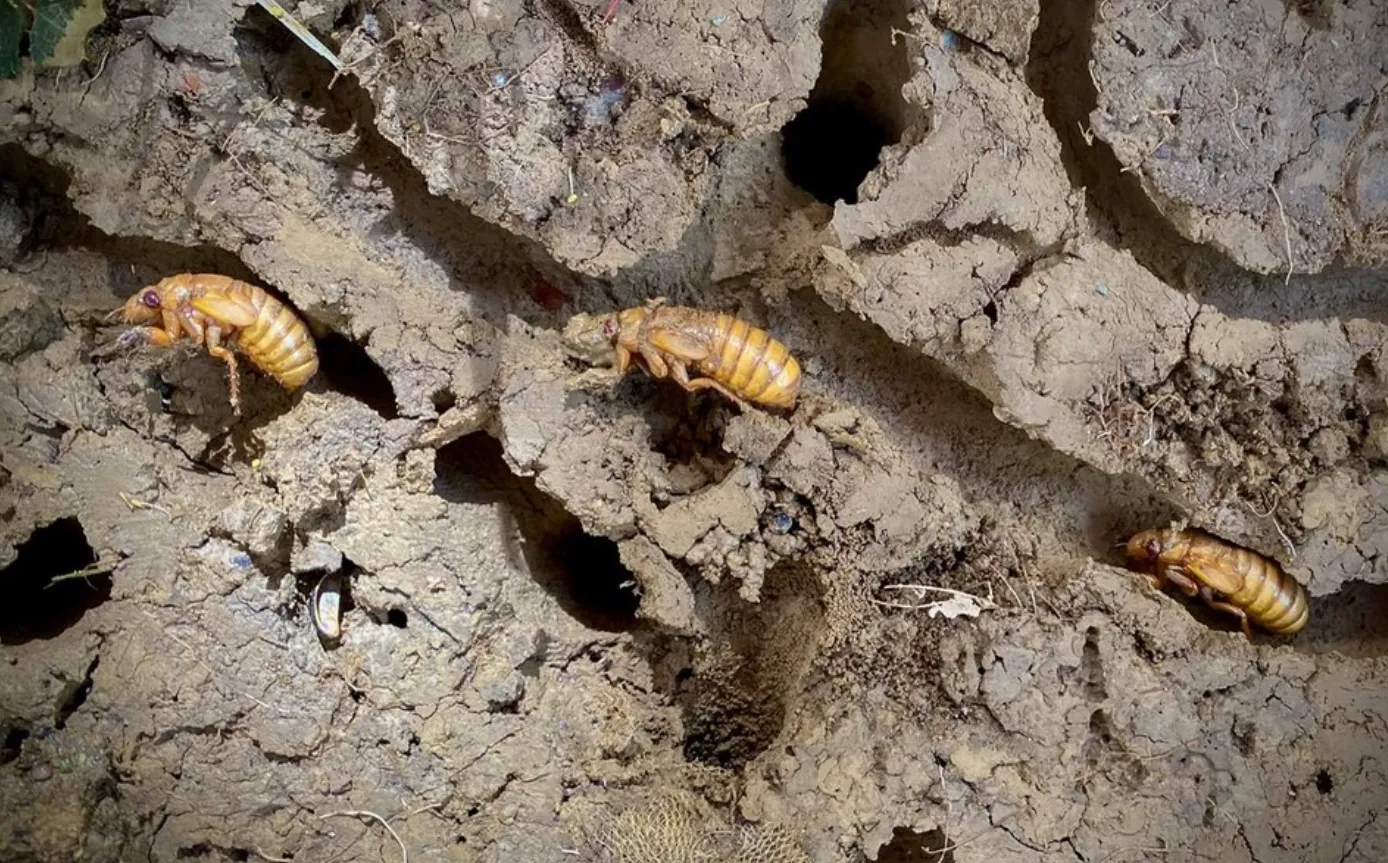
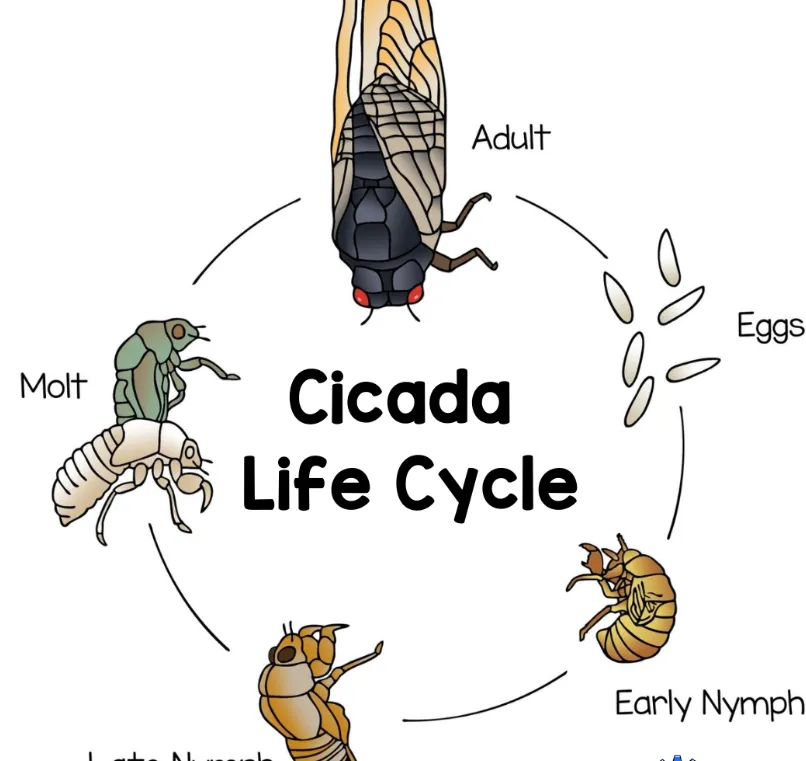
The cicada bug’s life cycle is one of the most fascinating insect life cycles in nature. A cicada bug spends most of its life hidden underground as a nymph, feeding quietly on plant root sap. Then, when the time is right, it emerges from the soil, climbs onto a tree or plant, sheds its outer shell, becomes an adult, makes its famous loud sound, mates, lays eggs, and dies within a short time.
Many people notice cicadas because of their loud buzzing during warm seasons. Male cicadas create this noise to attract females. Some cicadas appear every summer, while famous periodical cicadas emerge in huge numbers every 13 or 17 years.
Q: What is a cicada bug?
A: A cicada bug is a sound-producing insect from the family Cicadidae. It has clear wings, large eyes, sucking mouthparts, and a life cycle with egg, nymph, and adult stages.
Q: How long does a cicada bug live?
A: Some annual cicadas take about 2–5 years to develop, while periodical cicadas stay underground for 13 or 17 years before emerging.
Q: Why is the cicada bug so noisy?
A: Male cicadas make loud calls by vibrating special body parts called tymbals to attract females for mating.
Quick Life Cycle Table
| Life Cycle Stage | What Happens | Main Purpose | Approximate Time |
| Egg | Females lay eggs inside small tree twigs | Start of a new generation | Eggs hatch in about 5–10 weeks |
| Young Nymph | Tiny nymph falls to the ground and enters the soil | Finds roots and begins feeding | Begins after hatching |
| Underground Nymph | Nymph feeds on root sap and molts several times | Growth and survival | 2–5 years in many annual cicadas; 13 or 17 years in periodical cicadas |
| Emerging Nymph | Mature nymph digs upward and climbs to the surface | Final transformation | Usually, the warm season, or spring, is when periodical cicadas emerge. |
| Adult Cicada | Adults sing, mate, lay eggs, and die | Reproduction | Usually, a few weeks |
| Cycle Repeats | Eggs hatch, nymphs drop, and burrow underground | Continuation of species | New generation begins |
Cicadas have a simple but powerful life plan: spend a long time underground, emerge quickly, reproduce, and return nutrients to nature.
Important Things That You Need To Know
A cicada bug is often confused with harmful insects, but cicadas are generally not dangerous to humans, pets, household gardens, or crops. They do not bite or sting, and they are not poisonous. Their adult stage may feel dramatic because of the loud cicada bug noise, but this sound is part of their natural mating behavior.
When people ask what a cicada bug is, the easiest answer is: it is a plant-sap-feeding insect known for its long underground life and loud adult song. The body usually has clear wings, large eyes, short antennae, and a robust body. A green cicada bug is commonly seen among annual cicadas, while many periodical cicadas have dark bodies, red eyes, and orange-veined wings.
People also ask, what does a cicada bug look like? Most cicadas look like strong, winged insects with wide-set eyes, transparent wings, and a thick body. Annual cicadas are often larger and greener, while periodical cicadas are usually smaller, darker, and more red-orange in appearance.
The phrase “Arizona cicada bug” often refers to desert or warm-region cicadas common in places like Arizona. These cicadas are usually heard in hot weather and are adapted to dry conditions. Their presence shows how well cicadas can survive in deserts, forests, grasslands, and urban landscapes.
The most important fact about the cicada bug life cycle is that the adult insect is only a short final chapter. The real story happens underground, where the nymph grows slowly by feeding on plant root fluids.
The History of Their Scientific Naming
The name cicada comes from Latin and was later used in scientific naming. The word has been used for centuries to describe loud, singing insects that appear during warm seasons.
Important scientific naming points:
- Cicada is the common name for insects in the family Cicadidae.
- Cicadas belong to the order Hemiptera, the group of true bugs with sucking mouthparts.
- The family name Cicadidae helps scientists separate true cicadas from other insects.
- The famous periodical cicadas belong to the genus Magicicada.
- Magicicada species are known for synchronized 13-year and 17-year life cycles.
- Their naming is connected to body structure, sound production, and evolutionary grouping.
Scientific naming is important because many insects look similar to casual observers. By using names such as Cicadidae, Hemiptera, and Magicicada, researchers can clearly identify cicadas, study their behavior, track broods, and understand their relationship with other insects.
Their Evolution And Their Origin
The evolution of cicadas is deeply connected to survival, timing, and plant-feeding behavior. Cicadas are part of the order Hemiptera, which includes insects that use specialized mouthparts to suck plant fluids. This feeding method allowed cicadas to survive by using plant sap, especially xylem sap, from roots, stems, and woody plants.
One of the most remarkable evolutionary features of cicadas is their long underground development. Instead of living openly where predators can easily catch them, cicada nymphs spend most of their lives beneath the soil. This underground lifestyle protects them from many surface dangers while allowing them to feed slowly on root fluids.
Periodical cicadas show an even more unusual evolutionary strategy. Magicicada species have long, synchronized mass emergences, and their known species include both 13-year and 17-year life cycles. These periodical cicadas are mainly found in eastern North America and are believed to have evolved from ancient cicada ancestors over millions of years.
This timing may help cicadas survive by overwhelming predators. When millions emerge together, birds, mammals, reptiles, and other predators cannot eat them all. As a result, enough cicadas survive to mate and lay eggs.
In simple words, cicada evolution is a story of patience. They survive by hiding underground, emerging in large numbers, singing loudly, reproducing quickly, and letting the next generation continue the cycle.
Their main food and its collection process
Cicadas do not eat like chewing insects. They do not bite leaves into pieces or chew crops. Instead, they use piercing-sucking mouthparts to drink plant fluids.
Main food sources and collection process:
- Root Sap: Cicada nymphs live underground and feed mainly on sap from plant roots. This is their main food source during the longest part of their life.
- Grass Roots to Tree Roots: After hatching, tiny nymphs drop from twigs to the soil. They first feed near smaller roots and later move toward larger tree roots as they grow.
- Xylem Fluid: The sap they drink is mostly watery and low in nutrients. Because of this, cicadas must feed steadily over a long period.
- Adult Feeding: Adult cicadas may take small amounts of sap from trees and shrubs, but their main adult purpose is reproduction, not heavy feeding.
- No Leaf Chewing: Cicadas do not usually damage leaves, flowers, fruits, or garden vegetables by eating them.
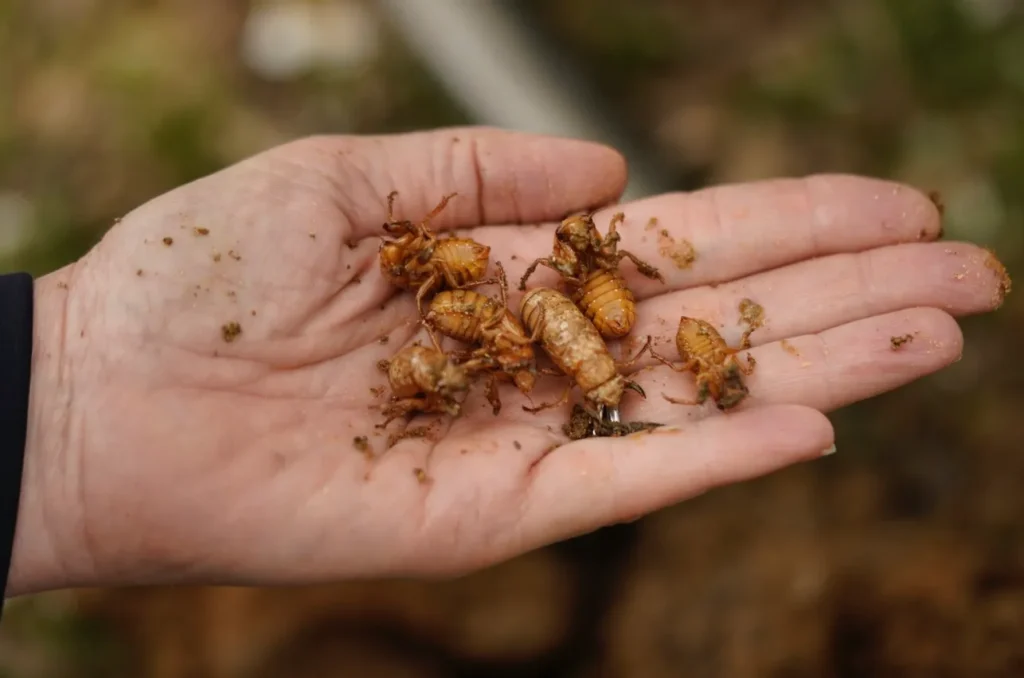
The food collection process is quiet and hidden during the nymph stage. Underground nymphs use their mouthparts like tiny drinking tubes. They attach to roots, absorb fluid, grow slowly, molt several times, and store enough energy to complete their final transformation.
This is why the cicada’s life cycle is so different from that of many other insects. Most of its feeding happens out of sight, under the soil, long before people hear the famous adult sound.
Their life cycle and ability to survive in nature
Egg Stage
The life of a cicada begins when the female cuts small slits into young twigs and places eggs inside. These eggs are protected within woody plant tissue until they hatch. Depending on the species and weather, eggs usually hatch after several weeks.
Nymph Stage
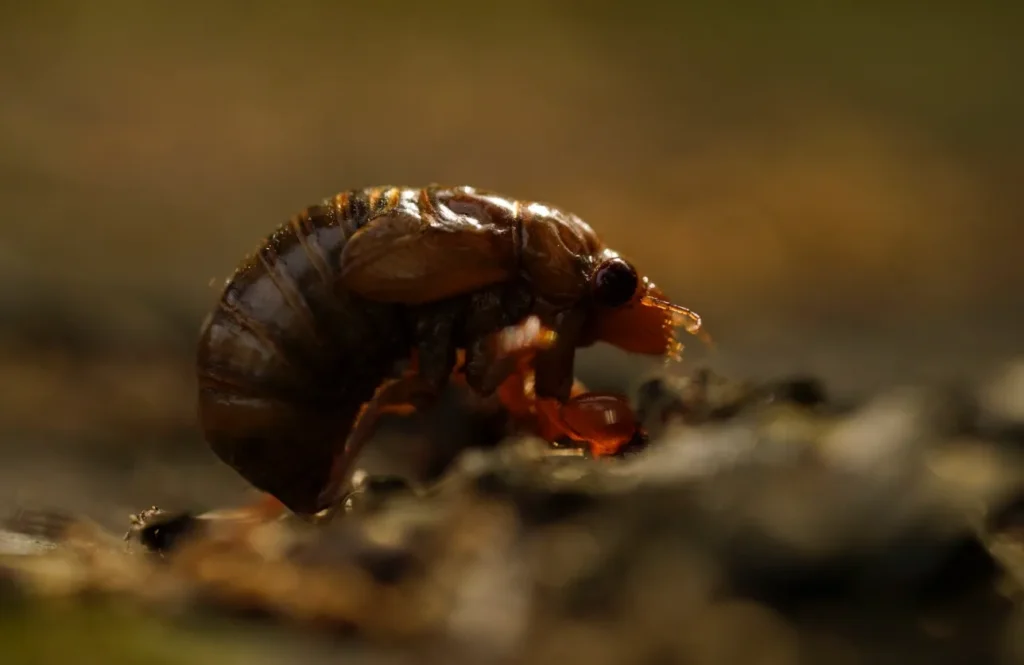
After hatching, the tiny nymphs fall to the ground and burrow into the soil. This is the longest and most important stage of the cicada bug’s life cycle. Nymphs feed on root sap, grow slowly, and molt several times as they develop.
Adult Stage
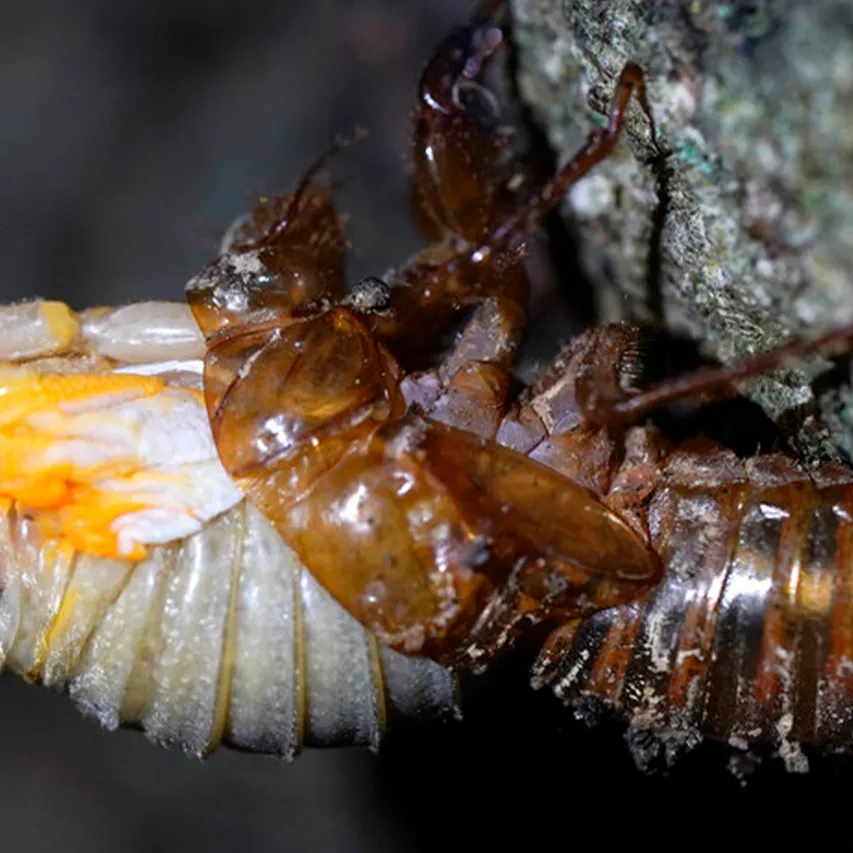
When fully developed, the nymph digs upward, leaves the soil, climbs a tree or plant, and sheds its old outer shell. The winged adult then appears. Adult cicadas live only a short time, often just a few weeks.
Survival Ability
Cicadas survive through patience, timing, and numbers. Their underground life protects them from many predators. Their mass emergence helps them survive because predators cannot consume every cicada at once. Their strong sound helps males attract females quickly, making reproduction efficient.
Natural Protection
Cicadas are not strong fighters, but they are excellent survivors. Their life cycle protects them by combining hiding, synchronized emergence, fast mating, and high egg production.
Their Reproductive Process and raising their children
Cicadas do not “raise their children” like birds or mammals. There is no feeding, guarding, or teaching after eggs are laid. Their reproductive success depends on laying many eggs in safe places and letting nature continue the cycle.
Key steps in the reproductive process:
- Male Calling: Male cicadas produce loud songs to attract females. This is the famous cicada bug sound heard during emergence seasons.
- Female Selection: Females respond to suitable male calls, and mating occurs on trees, shrubs, or nearby vegetation.
- Egg Laying: After mating, the female uses an organ called an ovipositor to cut into small twigs and place eggs inside.
- Multiple Egg Sites: A female may lay eggs on several small branches rather than just one. Some cicadas can lay hundreds of eggs across many twig sites.
- No Parental Care: Once eggs are placed inside twigs, the adult female does not care for them further.
- Nymph Independence: When the eggs hatch, the tiny nymphs drop to the ground, dig into the soil, and begin feeding on roots by themselves.
This reproductive system may seem simple, but it is effective. Instead of protecting a few young, cicadas produce many eggs. Their young survive by quickly entering the soil, where they remain hidden and begin the long underground stage.
The importance of them in this Ecosystem
Food for Wildlife
Cicadas are an important food source for birds, reptiles, mammals, fish, spiders, wasps, and other predators. During mass emergence years, they create a temporary feast for wildlife. Many animals depend on this sudden food supply during the cicada season.
Soil Aeration
When cicada nymphs dig underground tunnels, they help loosen the soil. This improves air movement and water movement through the ground. Their small tunnels help the soil breathe and support underground life.
Nutrient Recycling
After adult cicadas die, their bodies decompose, returning nutrients to the soil. This natural recycling supports plants, microbes, fungi, and other small organisms.
Tree and Forest Connection
Cicadas depend on trees for feeding, molting, mating, and egg laying. Their presence often indicates that an area has long-term tree growth, especially in areas where periodical cicadas spend many years underground.
Natural Balance
Cicadas are not just noisy insects. They are part of a larger natural system. Their emergence affects predators, plants, soil, and nutrient cycles. Even when they cause minor twig damage through egg laying, mature trees usually recover.
In short, cicadas support the Ecosystem by feeding wildlife, improving soil, recycling nutrients, and showing the connection between insects and forests.
What to do to protect them in nature and save the system for the future
Protecting cicadas means protecting trees, soil, and natural habitats. Since cicadas are generally harmless, people should avoid unnecessary killing or chemical control.
- Avoid spraying pesticides: Pesticides are usually not needed for cicadas and may harm birds, pets, beneficial insects, and other organisms.
- Protect young trees with netting: Young trees can be covered with fine-mesh netting with small openings to prevent egg-laying damage.
- Do not remove all leaf litter: Natural ground cover helps maintain healthy soil where cicada nymphs develop.
- Plant native trees: Trees support cicada life cycles by providing roots for nymphs and branches for egg laying.
- Avoid cutting healthy trees unnecessarily: Periodical cicadas depend on long-term tree presence because their life cycle may last 13 or 17 years.
- Teach children about cicadas: Instead of fearing the cicada‘s buzzing, they can learn that the sound is part of insect communication.
- Protect soil from pollution: Healthy soil supports underground nymphs and many other organisms.
- Use physical protection, not chemicals: For gardens and young trees, netting is safer than insecticides.
- Let nature complete the cycle: Adult cicadas live only briefly, so patience is often the best response.
By protecting cicadas, we also protect soil health, wildlife food webs, and the natural rhythm of forests and gardens.
Frequently Asked Questions (FAQs)
Q1: What is a cicada bug?
A: A cicada bug is a plant-sap-feeding insect from the family Cicadidae. It is best known for its loud male song, clear wings, large eyes, and long underground nymph stage.
Q2: What does a cicada bug look like?
A: A cicada usually has a thick body, clear wings, large eyes, short antennae, and strong legs. Some annual cicadas are green, while many periodical cicadas have dark bodies, red eyes, and orange-veined wings.
Q3: Why does a cicada bug make noise?
A: Male cicadas make noise to attract females. They use special vibrating membranes called tymbals to produce their loud calls.
Q4: How long is the cicada bug’s life cycle?
A: It depends on the species. Some annual cicadas take around 2–5 years to develop, while periodical cicadas take 13 or 17 years.
Q5: Are cicadas harmful to humans?
A: No. Cicadas do not bite or sting and are not poisonous or venomous. They may be loud, but they are not dangerous to people.
Q6: Do cicadas damage trees?
A: Adult feeding does not usually cause serious plant damage. However, females may damage small young twigs when laying eggs. Young trees may need mesh protection.
Q7: What do cicada nymphs eat underground?
A: Cicada nymphs feed on sap from roots, especially watery plant fluid called xylem sap. They use sucking mouthparts to collect this fluid from plant roots.
Q8: Are cicadas good for the Ecosystem?
A: Yes. Cicadas feed many animals, help aerate soil, improve water movement in the ground, and return nutrients to the soil when they decompose.
Conclusion
The cicada bug’s life cycle is a powerful example of how nature uses time, sound, soil, and trees to keep life moving. A cicada begins as an egg in a twig, drops to the ground as a tiny nymph, spends years feeding underground, and finally emerges as a winged adult. Its adult life is short, but its purpose is clear: sing, mate, lay eggs, and continue the next generation.
Although the cicada bug sound can be loud, cicadas are not harmful insects. They do not bite, sting, or poison people. Instead, they support wildlife, improve soil, and recycle nutrients. From the green cicada bug seen in summer to the famous periodical cicadas that emerge after 13 or 17 years, these insects demonstrate one of nature’s most amazing survival strategies. Protecting cicadas means protecting trees, soil, and the balance of the Ecosystem.
Also Read: tomato worm life cycle