Admin
Admin
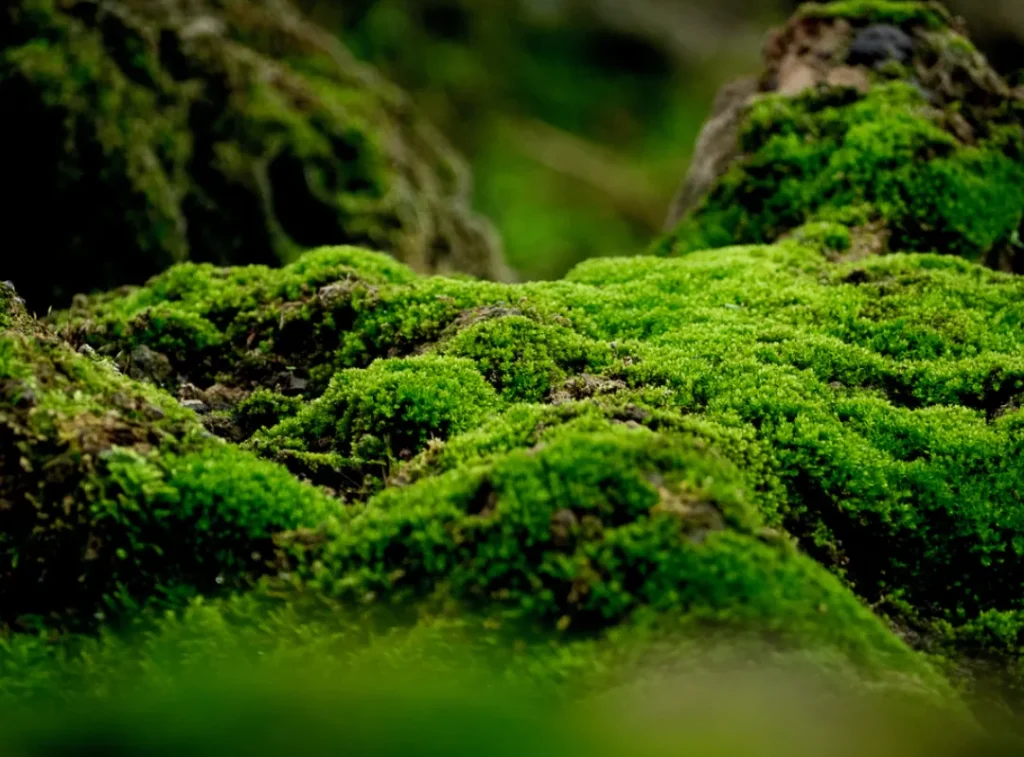
The moss life cycle is one of the most interesting plant life cycles because moss does not grow from seeds like flowering plants. Instead, moss reproduces through spores, needs moisture for fertilization, and spends most of its visible life as a green, leafy gametophyte. Mosses are small, non-flowering, mostly non-vascular plants in the bryophyte group, meaning they do not have true roots, flowers, fruits, or seeds. They usually grow in damp, shaded places such as forest floors, rocks, old walls, tree bark, wetlands, and stream edges.
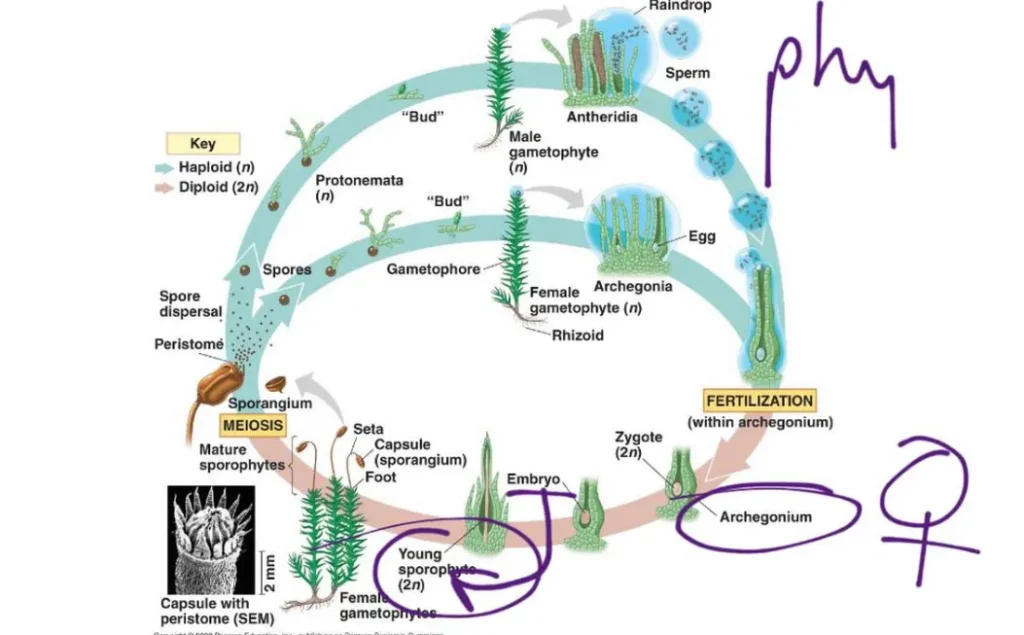
A key feature of the life cycle of moss is “alternation of generations.” This means moss has two main phases: the gametophyte stage, which produces sex cells, and the sporophyte stage, which produces spores. Unlike many familiar plants, the gametophyte is the dominant and longer-lasting stage in mosses.
Q: What is the main stage in the moss life cycle?
A: The main stage is the gametophyte, the green moss plant people usually see.
Q: Does moss grow from seeds?
A: No. Moss grows from tiny spores, not seeds.
Q: Why does moss need water to reproduce?
A: Moss sperm must swim through a thin film of water to reach the egg during fertilization.
Quick Life Cycle Table
| Stage | What Happens | Simple Meaning |
| Spore | Tiny spores are released from a capsule. | Moss begins without seeds. |
| Protonema | Spores germinate into green thread-like growth. | Baby moss starts spreading. |
| Gametophyte | Leafy green moss produces male and female organs. | Main visible moss plant. |
| Sporophyte | A fertilized egg grows into a stalk and a capsule. | New spores are produced. |
| Spore Release | The capsule opens, and the spores disperse by wind or water. | The cycle begins again. |
The History Of Their Scientific Naming, Evolution, and Their Origin
Scientific Naming of Moss
The word moss commonly refers to plants in the division Bryophyta in the strict sense. Mosses belong to the wider bryophyte group, which also includes liverworts and hornworts. The scientific classification of moss has changed over time as botanists learned more about plant structure, reproduction, and genetic relationships.
Evolutionary Origin
Mosses are among the earliest land plant lineages. Modern research shows that land plants evolved from green algal ancestors more than 500 million years ago, while moss-like bryophyte lineages are often described as ancient plants that helped early life adapt to land.
Why Moss Is Evolutionarily Important
Mosses show how early plants survived without deep roots, flowers, seeds, or complex vascular systems. Their ability to absorb water directly, tolerate drying, and reproduce by spores made them successful in habitats where many seed plants struggle. Because of this, moss is often studied to understand early plant evolution, water adaptation, and survival under stress.
Their Reproductive Process, Giving Birth And Rising Their Children
Moss Does Not Give Birth Like Animals
Moss does not give birth to babies. It reproduces through a plant process involving spores, gametes, and a new green plant body. The “young moss” begins as a microscopic spore that grows into a thin, green structure called protonema.
Male and Female Reproductive Organs
Moss gametophytes produce reproductive organs. The male organ, called the antheridium, produces sperm. The female organ, called the archegonium, contains the egg. In some moss species, male and female organs may occur on the same plant; in others, they are found on separate plants.
Water Helps Fertilization
Moisture is very important in the moss life cycle. When water is present, sperm can swim to the egg. After fertilization, the zygote stays attached to the female gametophyte and develops into the sporophyte.
Raising the Next Generation
The sporophyte depends on the green gametophyte for support and nutrients. It develops a stalk called a seta and a capsule where new spores form. When mature, the capsule releases spores that initiate the next generation of moss.
Stages of Moss Life Cycle
1. Spore Stage
The spore stage marks the beginning of the moss life cycle. Spores are tiny reproductive cells produced inside the moss capsule. They are not seeds because they do not contain a fully formed embryo with stored food, as many seeds do.
When the capsule matures, spores are released into the air. Wind, water movement, and sometimes animals help spread them. If the spore lands on a suitable damp surface, it can germinate.
2. Protonema Stage
After germination, the spore develops into a protonema. This looks like a thin green thread or mat. It is an early growth stage that helps moss spread across soil, rock, bark, or other surfaces.
The protonema absorbs water and begins photosynthesis. From this stage, small buds form and develop into leafy moss shoots.
3. Gametophyte Stage
The gametophyte is the soft green moss plant that most people recognize. It has tiny leaf-like structures and stem-like parts, but lacks true roots. Instead, it has rhizoids, which help anchor it to the surface.
This is the dominant stage of the moss life cycle. It produces male and female reproductive structures and can also spread by fragmentation.
4. Sporophyte Stage
After fertilization, the sporophyte grows from the female gametophyte. It usually appears as a stalk with a capsule at the top. Inside the capsule, spores are produced through meiosis.
When conditions are right, the capsule opens and releases spores. This completes the cycle and allows new moss colonies to form.
Important Things That You Need To Know
Many search terms related to moss can be confusing because not everything with “moss” in its name is a true moss. True moss is a bryophyte plant that reproduces by spores and usually grows in damp, shaded places.
True sea moss is not true moss. It usually refers to edible red seaweed such as Chondrus crispus, also known as Irish moss. It is an algae, not a bryophyte. It is often marketed for minerals such as iodine, but experts warn that iodine levels can vary, and too much may be harmful for people with thyroid concerns.
Moss agate is also not moss. It is a gemstone variety of chalcedony with mineral patterns resembling moss. It contains mineral inclusions, not plant material.
Spanish moss is not true moss either. It is an epiphytic flowering plant in the bromeliad family, related to pineapple plants. It grows on trees but does not steal their food.
The benefits of sea moss are often discussed online, but it should not be confused with the ecological benefits of true moss. True moss supports soil moisture, microhabitats, carbon storage, and ecosystem balance.
Their Main Diet, Food Sources, and Collection Process Explained
Moss Makes Its Own Food
Moss does not eat insects, soil, or dead leaves. Like green plants, moss makes its own food through photosynthesis. It uses sunlight, carbon dioxide, and water to produce sugars for growth.
Water Collection
Moss does not have deep, true roots. Instead, many mosses absorb water directly through their leaves and surface cells. Some species can hold water like a sponge, especially Sphagnum moss, which is famous for its high water-holding capacity.
Nutrient Collection
Moss gets minerals from rainwater, dust, surrounding debris, and the surface where it grows. Its rhizoids mainly help attach the plant, although some species may absorb limited nutrients through them.
Light as the Main Energy Source
The most important “food source” for moss is light. Without enough light, moss cannot photosynthesize properly. However, too much direct sunlight can dry out many moss species, so they often prefer moist, shaded environments.
No Hunting or Feeding Behavior
Because moss is a plant, it does not hunt, chew, digest, or feed like animals. Its survival depends on moisture, light, air, minerals, and a stable surface.
How Long Does A Moss Live
There is no single lifespan for all moss species because lifespan depends on species, climate, moisture, disturbance, and habitat. Some moss patches may survive for only a season in harsh or disturbed areas, while established colonies can persist for many years.
- Individual moss shoots may live for months to several years, depending on the species and environment.
- Moss colonies can last much longer than individual shoots because new growth replaces older parts over time.
- Sphagnum moss in bogs can grow upward while older lower parts die and slowly form peat. This makes moss-based wetland systems extremely long-lasting.
- Dormancy helps survival. Many mosses can dry out, slow their metabolism, and revive after rehydration. Desiccation tolerance is one reason mosses survive in difficult environments.
- Moisture controls active growth. Moss grows best when it has enough water. During dry periods, many mosses stop active growth instead of dying immediately.
- Captive moss in terrariums can live for years when humidity, airflow, light, and water quality are balanced.
- Wild moss lifespan is usually limited by drought, pollution, trampling, habitat destruction, competition, or changes in shade and moisture.
- Spores may wait for the right conditions. Even if the visible moss plant disappears, spores may help restart growth when the environment becomes suitable again.
In simple words, moss is not short-lived in the same way many small plants are. Its visible shoots may be delicate, but its colony-based growth and ability to pause during stress make it highly persistent.
Moss Lifespan in the Wild vs. in Captivity
Moss Lifespan in the Wild
In the wild, moss may live for several years or even longer as a colony. Forest moss, rock moss, and wetland moss can remain stable when moisture, shade, and surface conditions stay suitable.
However, wild moss faces many threats. Strong sunlight, long drought, pollution, soil disturbance, grazing, fire, and human trampling can damage or remove it. In urban areas, moss may grow on walls and pavement, but can be removed with cleaning chemicals or surface scraping.
Moss Lifespan in Captivity
In captivity, in terrariums, bonsai displays, moss gardens, or indoor plant setups, moss can live for years if cared for properly. It needs indirect light, clean water, moderate airflow, and the right humidity.
Too much water can cause mold, while too little water can stop growth. Tap water with high minerals may damage sensitive moss over time. Captive moss usually survives best when its natural habitat conditions are copied.
Main Difference
Wild moss depends on the natural balance. Captive moss depends on human care. In both cases, stable moisture is the key to a longer moss lifespan.
Importance of Moss in this Ecosystem
Moss Helps Hold Water
Moss acts like a natural sponge. It absorbs and holds rainwater, helping keep soil and nearby plants moist. This is especially important in forests, wetlands, and cold environments.
Moss Supports Soil Stability
Moss mats protect the soil surface from erosion. In dry and semi-dry ecosystems, moss can be part of biological soil crusts that reduce soil loss, regulate surface temperature, and support soil health.
Moss Creates Microhabitats
Tiny insects, microorganisms, fungi, and small invertebrates live among moss cushions. These small habitats support biodiversity at the ground level.
Moss Helps Carbon Storage
Some moss-rich ecosystems, especially Sphagnum peatlands, store large amounts of carbon over long periods. Healthy peatlands are important in climate regulation because they lock carbon in wet, low-oxygen conditions.
Moss Works as an Environmental Indicator
Because moss absorbs water and nutrients directly from its surroundings, it can be sensitive to pollution and environmental change. In many ecosystems, moss health can reflect habitat quality.
What to Do to Protect Them in Nature and Save the System for the Future
1. Avoid Removing Wild Moss Unnecessarily
- Do not collect moss from forests, wetlands, rocks, or old trees without permission.
- Wild moss grows slowly and may take years to recover.
- Use nursery-grown moss for gardens or terrariums instead.
2. Protect Moist and Shaded Habitats
- Preserve forest floors, wetlands, stream edges, and shaded rock surfaces.
- Avoid clearing too much vegetation because shade helps many moss species survive.
3. Reduce Pollution and Chemical Use
- Avoid spraying harsh chemicals near mossy areas.
- Pollution can damage moss because it absorbs water and minerals directly from the environment.
4. Walk Carefully in Sensitive Areas
- Use marked paths in forests, bogs, and mountain habitats.
- Trampling can crush moss mats and disturb the soil surface.
5. Support Peatland Conservation
- Choose peat-free gardening products where possible.
- Protecting Sphagnum bogs helps conserve biodiversity, water storage, and carbon-rich ecosystems.
Fun & Interesting Facts About Moss
- Moss does not have true roots. It uses tiny rhizoids mainly for anchoring.
- Moss does not produce flowers, fruits, or seeds.
- The green moss you usually see is the gametophyte, not the sporophyte.
- Moss sperm need water to swim to the egg.
- Some mosses can dry out and later revive when water returns.
- Sphagnum moss can hold large amounts of water and helps form peatlands.
- Moss can grow on rocks, bark, soil, rooftops, walls, and even concrete.
- Spanish moss is not true moss; it is a bromeliad.
- Sea moss is not true moss; it is algae.
- Moss agate is not moss; it is a mineral gemstone.
- Mosses are ancient plants and help scientists understand how plants adapted to life on land.
- Moss can create tiny forests for microorganisms and small invertebrates.
Frequently Asked Questions FAQs
Q: What is the life cycle of moss?
A: The moss life cycle includes spore, protonema, gametophyte, sporophyte, and spore release stages. It alternates between sexual and spore-producing generations.
Q: Is moss a plant or a fungus?
A: Moss is a plant, not a fungus. It makes its own food through photosynthesis.
Q: Does moss have seeds?
A: No. Moss reproduces through spores, not seeds.
Q: Why does moss grow in wet places?
A: Moss needs moisture for growth and reproduction. Water also allows sperm to swim to the egg during fertilization.
Q: Is sea moss the same as moss?
A: No. True sea moss is usually red algae, while true moss is a bryophyte land plant.
Conclusion
The moss life cycle is simple in appearance but deeply fascinating in biology. Moss begins as a tiny spore, grows into a thread-like protonema, develops into the green gametophyte, and then produces a sporophyte that releases new spores. This cycle allows moss to survive without flowers, fruits, or seeds.
Beyond reproduction, moss plays a powerful role in nature. It holds water, protects soil, supports small organisms, contributes to peatland carbon storage, and helps maintain ecosystem balance. Although mosses look small and soft, they are among the most resilient and ancient plant groups on Earth.
Understanding the life cycle of moss also helps us protect forests, wetlands, gardens, and natural habitats. By avoiding unnecessary collection, reducing pollution, protecting moist habitats, and choosing sustainable gardening products, we can help preserve moss and the ecosystems that depend on it.
Also Read: elephant life cycle