Admin
Admin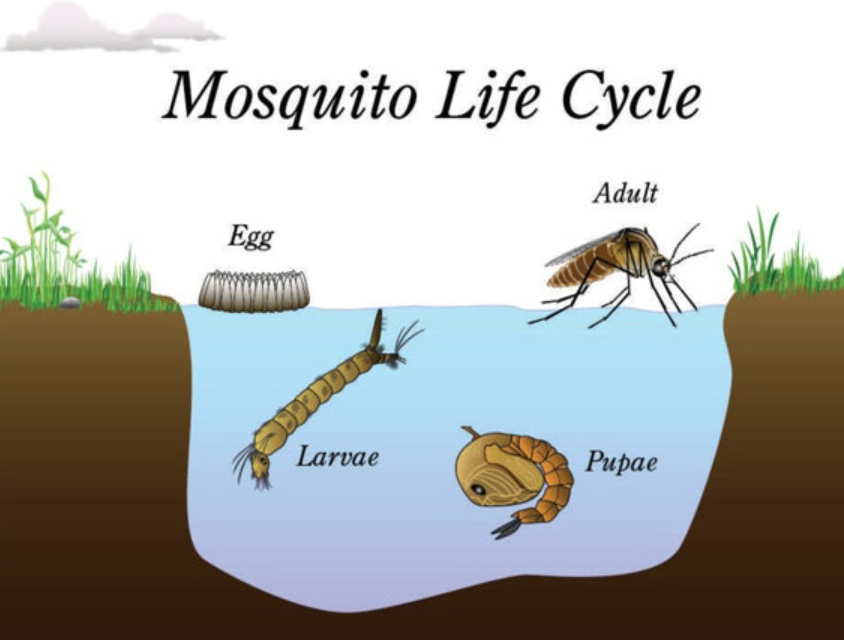
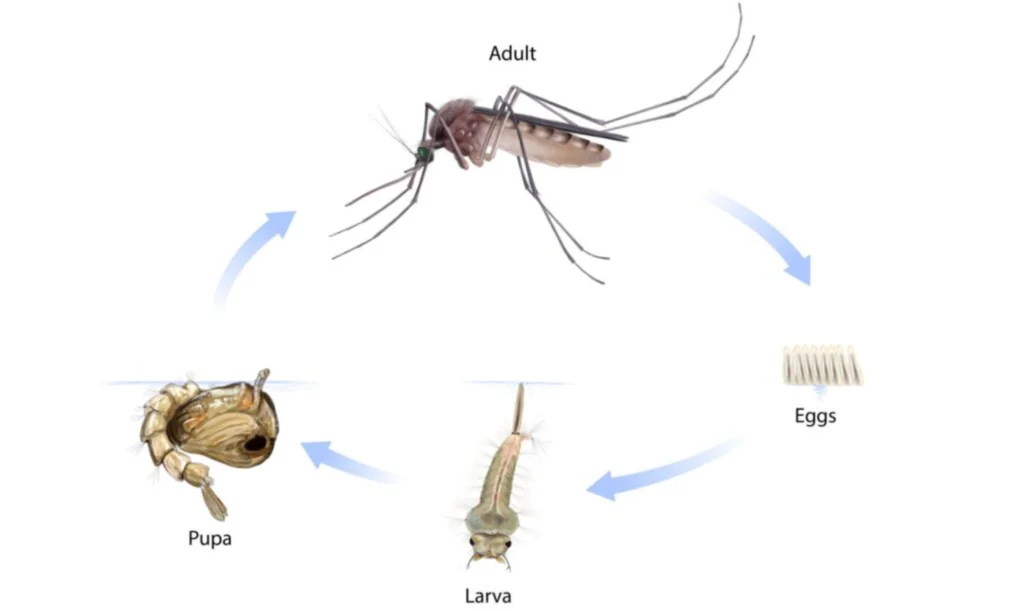
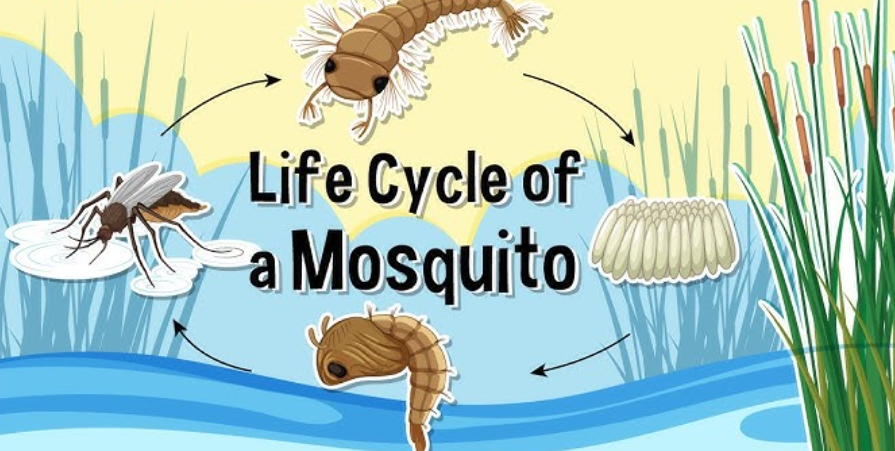
The mosquito life cycle is one of the most important topics to understand if you want to learn about mosquito control, mosquito bites, and how mosquitoes survive in nature. A mosquito does not begin life as a flying insect. It starts as an egg, then becomes a larva, changes into a pupa, and finally emerges as an adult mosquito.
Most mosquito species require standing water to complete the early life stages. This is why even small water containers, old tires, buckets, plant saucers, drains, and water tanks can become breeding places. The first three stages happen in water, while the adult stage happens in the air. The full cycle can be completed quickly in warm weather, sometimes in about one to two weeks, depending on the species and environmental conditions.
Mosquitoes are tiny, but they have a significant impact on humans and the environment. Female mosquitoes can bite humans and animals because they need blood to produce eggs. Male mosquitoes do not bite; they mostly feed on plant nectar. Mosquitoes are also associated with diseases such as malaria, dengue, Zika, and yellow fever, making them among the most studied insects in public health.
Q: How many stages are in the mosquito life cycle?
A: There are four stages: egg, larva, pupa, and adult.
Q: Where do mosquitoes lay eggs?
A: Female mosquitoes lay eggs in or near water, such as containers, ponds, puddles, drains, or damp surfaces that may later flood.
Q: Do all mosquitoes bite humans?
A: No. Only female mosquitoes bite, and not all mosquito species regularly bite humans. Male mosquitoes feed on nectar.
Quick Life Cycle Table
| Stage | Where It Happens | What Happens | Why It Matters |
| Egg | On water, near water, or in containers | Female mosquitoes lay eggs in places where water is present or will collect later. | Removing standing water can stop the cycle early |
| Larva | In water | Larvae, often called wrigglers, feed and grow | This is a key stage for mosquito control |
| Pupa | In water | Pupae, often called tumblers, do not feed but prepare to become adults | Adults emerge soon after this stage |
| Adult | Air, plants, shelters, homes, outdoors | Adult mosquitoes fly, feed, mate, and reproduce | Female adults may cause mosquito bites and spread disease |
The egg, larva, and pupa stages depend on water. The adult mosquito is the only flying stage. This simple fact is the main reason why removing standing water is one of the best ways to reduce mosquitoes around homes and communities.
The History of Their Scientific Naming
The scientific study of mosquitoes developed as scientists began to understand their body structure, life cycles, and their connection to disease. Mosquitoes belong to the family Culicidae and the order Diptera, which includes flies and gnats. The word mosquito comes from Spanish and Portuguese roots meaning “little fly.”
Important points about their scientific naming:
- Family name: Mosquitoes are placed in the family Culicidae.
- Order name: They belong to Diptera, meaning insects with one main pair of wings.
- Common genera: Important mosquito genera include Aedes, Anopheles, and Culex.
- Public health importance: Different genera can spread different diseases. For example, Anopheles mosquitoes are linked with malaria, while Aedes mosquitoes are strongly linked with dengue, Zika, and chikungunya.
- Scientific value: Naming helps scientists identify species, study their behavior, and choose the right control method.
This scientific naming system is not just for classification. It helps health workers understand which mosquito species are present, where they breed, and what risks they may bring.
Their Evolution And Their Origin
Mosquitoes have a very old evolutionary history. They are part of the insect order Diptera, a group that includes many flying insects with one pair of wings. Their long, thin legs, narrow wings, and specialized mouthparts helped them adapt to many habitats worldwide.
Fossil evidence shows that mosquito-like insects existed millions of years ago. Smithsonian reports describe detailed mosquito fossils from the Eocene, around 46 million years old, showing that mosquitoes have changed surprisingly little in some body features over a long period.
The evolution of mosquitoes is closely connected to water, plants, and animals. Their larvae adapted to live in water, feeding on small organic particles and microorganisms. Adults adapted to feed on sugar sources such as nectar. Females of many species also developed the ability to take blood meals, which support egg production.
This does not mean mosquitoes exist only to bite humans. In nature, many mosquitoes feed mainly on plant sugars, and many species do not play a major role in human disease. However, some species became highly successful near humans because cities create ideal breeding places: drains, tanks, buckets, discarded plastic, construction sites, and containers.
Today, mosquitoes are found in many parts of the world, from tropical wetlands to urban neighborhoods. Their success comes from their fast life cycle, small size, high reproductive ability, and strong adaptation to changing environments.
Their main food and its collection process
Mosquitoes’ food changes depending on their stage of life. A mosquito larva eats very differently from an adult mosquito, and a male mosquito eats differently from a female mosquito.
Important food and collection points:
- Larvae feed in water: Mosquito larvae live in water and feed on tiny organic materials, algae, bacteria, and microorganisms. This food provides them with the energy they need to grow and molt.
- Pupae do not feed: The pupa stage is a resting and transformation stage. Pupae do not actively eat, but they still move in water.
- Adult males feed on nectar: Male mosquitoes do not bite humans or animals. They feed on nectar from flowers and other sugar sources for energy.
- Adult females also feed on nectar: Female mosquitoes also use nectar and plant sugars for energy.
- Female mosquitoes may need blood: Many female mosquitoes need a blood meal to develop eggs. Blood provides protein and nutrients for egg production.
- Host finding is complex: female mosquitoes use signals such as carbon dioxide, body heat, moisture, odor, movement, and color to find hosts.
- Not every species prefers humans: Some mosquitoes prefer birds, mammals, reptiles, or amphibians, depending on the species.
So, mosquitoes are not only “blood feeders.” In reality, plant sugar is a major food source for adult mosquitoes, while blood is mainly connected with reproduction in females.
Important Things That You Need To Know
Understanding mosquitoes is useful because it connects biology, health, and daily life. Many people only notice mosquitoes when they bite, but the real problem begins earlier, when eggs and larvae develop in water.
The most important point is that mosquito control should focus on breeding places. Adult mosquitoes are harder to manage because they can fly and hide in dark, humid areas. But eggs, larvae, and pupae stay in water, making them easier to target. This is why removing standing water from buckets, flowerpots, drains, old tires, and roof gutters is a smart prevention step.
Another important tool is mosquito repellent. Repellents do not destroy the mosquito life cycle, but they help protect people from bites. This is especially important in areas where mosquito-borne diseases are common. Public health groups often recommend personal protection, screening, nets, and community-level control measures.
Products such as mosquito dunks are also used in water that cannot be drained. Many mosquito dunks use Bacillus thuringiensis israelensis (Bti), which targets mosquito larvae in standing water. The EPA explains that Bti is applied to water where mosquito larvae develop.
Finally, remember that not all mosquitoes spread disease. Britannica notes that only a portion of mosquito species are important disease vectors, even though mosquitoes as a group are globally important in public health.
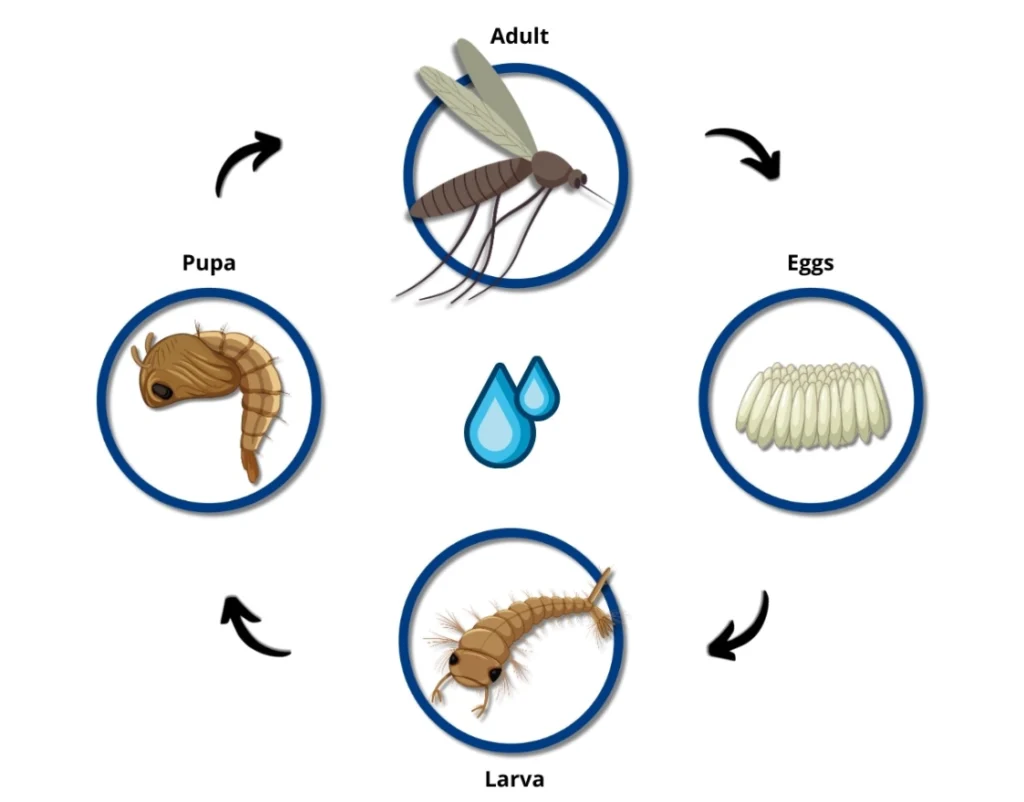
Their life cycle and ability to survive in nature
Egg Stage
The egg stage starts when a female mosquito lays eggs in or near water. Some species lay eggs directly on water, while others lay them on damp surfaces or container walls that may later be covered with water. Aedes mosquitoes often lay eggs on the inner walls of water-holding containers.
Egg survival is one reason mosquitoes are hard to control. In some species, eggs can wait until water becomes available. Once covered with water, they hatch into larvae.
Larva Stage
The larva stage is fully aquatic. Larvae are often called wrigglers because of the way they move. They feed actively and grow quickly. Many larvae come to the surface to breathe, although some species have special adaptations for getting oxygen.
This stage is very important for mosquito control because larvae are concentrated in water and cannot fly away.
Pupa Stage
The pupa stage is also aquatic. Pupae are often called tumblers. They do not feed, but they are active and can move when disturbed. Inside the pupal case, the mosquito changes into an adult.
Adult Stage
The adult mosquito emerges from the water’s surface. After its body hardens, it can fly, feed, mate, and reproduce. Adult mosquitoes can live indoors or outdoors, and their lifespan depends on species, temperature, humidity, and environment.
Their survival depends on water availability, warm temperatures, shelter, food sources, and successful reproduction.
Their Reproductive Process and raising their children
Mosquito reproduction is fast, efficient, and strongly linked to water. They do not raise their young like birds or mammals, but they choose breeding sites that give their offspring a better chance of survival.
Key points in the reproductive process:
- Mating happens after adulthood: Adult male and female mosquitoes mate after emerging from the pupal stage.
- Females need nutrients for eggs: In many species, the female needs a blood meal before producing eggs. This is why female mosquitoes bite humans or animals.
- Blood digestion takes time: After feeding, the female rests while the blood is digested and eggs develop. CDC notes this resting period before egg-laying in mosquitoes such as Anopheles.
- Egg-laying depends on species: Some mosquitoes lay eggs directly on water. Others lay eggs near water or on container walls.
- No parental care: Mosquitoes do not protect larvae after laying eggs.
- High egg numbers increase survival: Because many eggs and larvae may die, mosquitoes produce many eggs to increase the chance that some adults survive.
- Water is essential: without it, eggs cannot complete their life cycle.
In simple terms, mosquitoes “raise” their young by selecting the right breeding site, not by feeding or protecting them. Their reproductive strength comes from speed, numbers, and adaptability.
The importance of them in this Ecosystem
Food for Other Animals
Mosquitoes are part of many food webs. Fish, aquatic insects, tadpoles, and other small water animals can eat mosquito larvae. Spiders, dragonflies, bats, birds, and other insects eat adult mosquitoes.
Although mosquitoes are annoying to humans, they still provide food for many predators. Their presence supports some natural feeding relationships, especially in wetland environments.
Role in Aquatic Systems
During the larval stage, mosquitoes feed on microorganisms and organic matter in water. This connects them to nutrient movement in small aquatic habitats. Larvae can help process tiny particles in stagnant water, though their ecological roles vary by species and location.
Pollination and Plant Connections
Adult mosquitoes feed on nectar, especially males. Because of this, some mosquitoes may contribute only slightly to pollination as they move from flower to flower. They are not as important as bees or butterflies, but they are still connected to plant-based food webs.
Disease and Population Balance
Mosquitoes can influence animal and human populations by spreading pathogens. This is one reason they are important in public health. WHO states that vector-borne diseases account for more than 17% of all infectious diseases and cause more than 700,000 deaths annually, with mosquitoes being major vectors for diseases such as malaria and dengue.
What to do to protect them in nature and save the system for the future
This section needs balance. Mosquitoes are part of nature, but some species create major health risks. The goal should not always be to destroy every insect. The better goal is smart mosquito control that protects people while reducing harm to the wider Ecosystem.
- Protect natural wetlands carefully: Wetlands support many species, not just mosquitoes. Control work should avoid damaging fish, frogs, birds, and beneficial insects.
- Remove artificial breeding sites: Focus on human-made standing water such as buckets, tires, cans, blocked drains, and uncovered tanks. This reduces the growth of dangerous mosquitoes without harming natural ecosystems.
- Use targeted larval control: When water cannot be removed, products such as Bti mosquito dunks can help target larvae. Bti is used in standing water where larvae develop.
- Avoid unnecessary chemical spraying: Broad spraying can affect non-target insects. It should be used carefully and only when needed.
- Encourage natural predators: Fish, dragonflies, birds, bats, and other predators can help control mosquito populations naturally.
- Keep gardens clean but natural: Trim heavy vegetation near sitting areas, but avoid removing all plant diversity.
- Use personal protection: Mosquito repellent, window screens, nets, and proper clothing can reduce bites without harming the Ecosystem.
- Support community awareness: Mosquito control works best when whole communities regularly remove standing water.
The future solution is not blind destruction. It is balanced, science-based control that reduces disease risk while protecting biodiversity.
Frequently Asked Questions (FAQs)
Q1: What is the mosquito life cycle?
A: The mosquito life cycle has four stages: egg, larva, pupa, and adult. The first three stages happen in water, and the adult stage happens in the air.
Q2: How long does the mosquito life cycle take?
A: In warm conditions, some mosquitoes can develop from egg to adult in about one to two weeks. CDC materials note that some mosquitoes can complete development in around 10 to 14 days, depending on conditions.
Q3: Why do mosquito bites itch?
A: A mosquito bite can itch because the female mosquito injects saliva while feeding. The body reacts to that saliva, causing redness, swelling, and itching.
Q4: Do male mosquitoes bite?
A: No. Male mosquitoes do not bite. They feed on nectar and other sources of sugar. Only female mosquitoes bite because they need blood to produce eggs.
Q5: What is the best mosquito control method at home?
A: The best first step is removing standing water. Empty buckets, clean plant saucers, cover water tanks, clear drains, and remove old tires or containers.
Q6: What are mosquito dunks?
A: Mosquito dunks are larval control products often used in standing water. Many contain Bti, a bacterium that kills mosquito larvae before they become biting adults.
Q7: Do mosquitoes have any benefit in nature?
A: Yes. Mosquito larvae and adults are food for fish, birds, bats, spiders, dragonflies, and other animals. Some adult mosquitoes also feed on nectar and may play a small role in pollination.
Q8: Can mosquito repellent stop the mosquito life cycle?
A: No. Mosquito repellent helps prevent bites, but it does not stop eggs, larvae, or pupae from developing. To stop the life cycle, you must remove or treat breeding water.
Conclusion
The mosquito life cycle is simple to understand but powerful. A mosquito begins as an egg, grows into a larva, changes into a pupa, and finally becomes an adult mosquito. Because the first three stages depend on water, standing water is the main place where mosquito problems begin.
Mosquitoes are more than biting insects. They are part of food webs, feed on nectar, and support some predators. At the same time, female mosquitoes can spread serious diseases, underscoring the importance of mosquito control for human safety.
The best approach is balanced action. Remove artificial standing water, use mosquito repellent for protection, apply mosquito dunks where suitable, and avoid careless chemical use. By understanding their life cycle, we can reduce mosquito bites, protect public health, and still respect the natural systems they inhabit.
Also Read: life cycle of a chick