Admin
Admin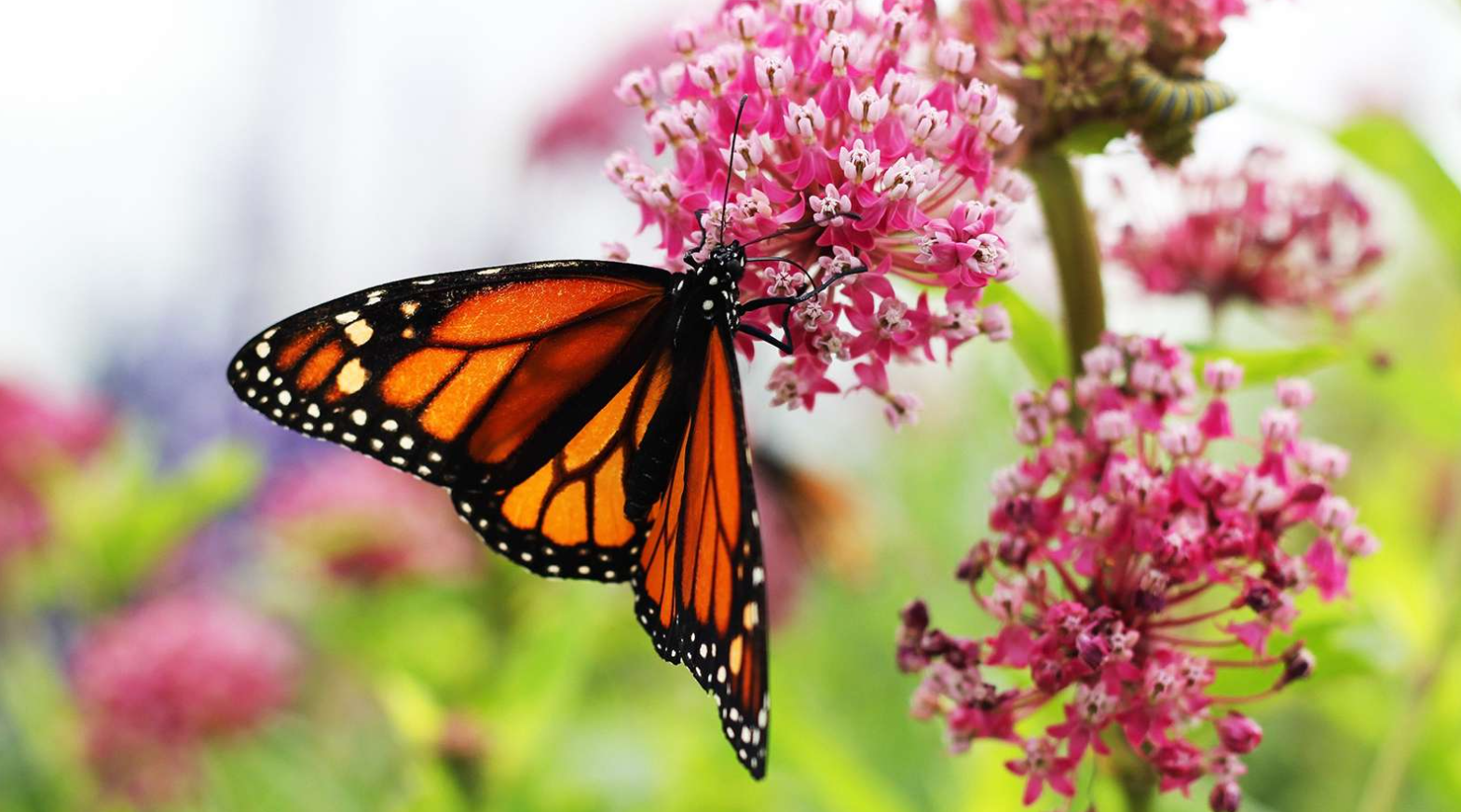
The life cycle of the monarch butterfly is one of the most beautiful examples of complete metamorphosis in nature. A monarch does not simply grow bigger like many animals. It completely changes form, moving through four main stages: egg, larva (caterpillar), pupa (chrysalis), and adult monarch butterfly. Each stage has a clear purpose, and each one depends strongly on the health of the surrounding Ecosystem.
The monarch butterfly is especially famous because its caterpillars feed only on milkweed, while adult monarchs drink nectar from many flowering plants. This makes milkweed the key plant for reproduction, and nectar flowers the key food source for adult energy. Female monarchs lay eggs on milkweed leaves, and the tiny caterpillars hatch and begin eating the plant almost immediately. Monarch Joint Venture explains that monarch caterpillars depend on milkweed and pass through five larval stages before forming a chrysalis.
As of 2026, monarchs remain a major conservation concern. The latest 2025–2026 Mexico overwintering survey reported 2.93 hectares of occupied forest, a 64% increase from the previous winter, but experts still treat this as a fragile recovery rather than a full comeback.
Q: How long does the life cycle of the monarch butterfly take?
A: In warm weather, the full cycle from egg to adult usually takes about one month, though cooler weather can make it longer.
Q: What plant is needed for monarch butterfly eggs and caterpillars?
A: Monarch eggs and caterpillars need milkweed, because it is the only host plant monarch caterpillars can eat.
Q: What are the four stages of the monarch butterfly life cycle?
A: The four stages are egg, caterpillar, chrysalis, and adult monarch butterfly.
Quick Life Cycle Table
| Stage | Approx. Time | What Happens |
| Egg | 3–5 days | A female lays a tiny egg on milkweed leaves. |
| Caterpillar | Around 10–14 days | Larva eats milkweed, grows fast, and molts through five instars. |
| Chrysalis | Around 9–14 days | The caterpillar transforms into a green pupa. |
| Adult Monarch Butterfly | 2–6 weeks, or longer for migratory generation | Adults drink nectar, mate, migrate, and lay eggs. |
The timing can change with temperature, food quality, weather, and season. Warm weather usually speeds development, while cool weather slows it down.
The History of Their Scientific Naming
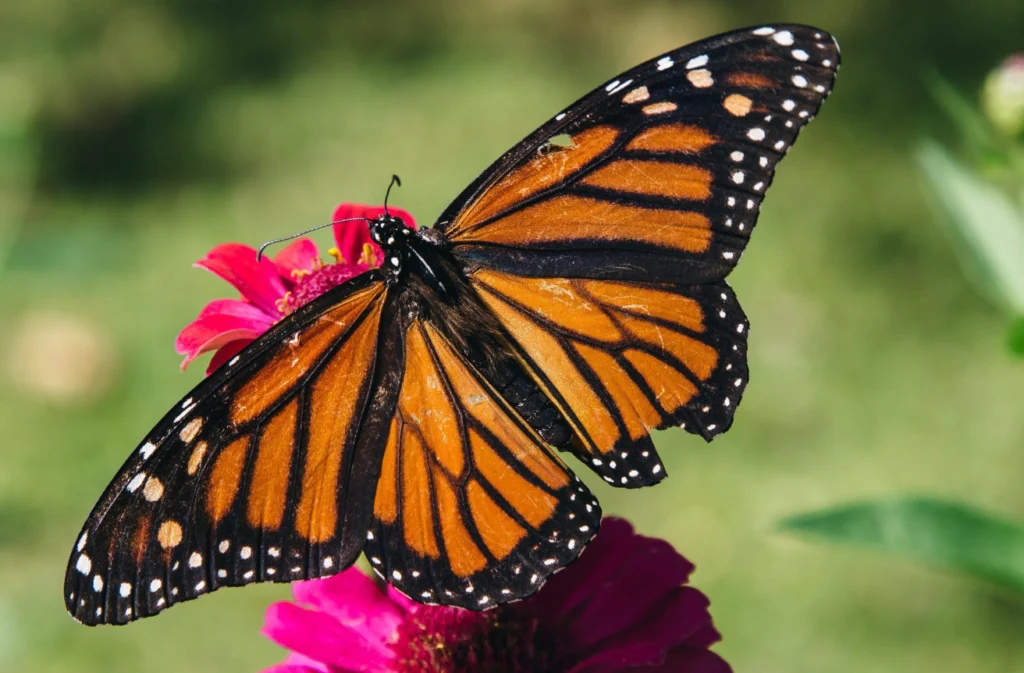
The scientific name of the monarch butterfly is Danaus plexippus. This name helps scientists identify the species clearly across countries, languages, and common names. The accepted taxonomic authority is Danaus plexippus (Linnaeus, 1758), showing that Carl Linnaeus first described the species in the eighteenth century.
Important points about the name include:
- Danaus is the genus name. It groups monarchs with related milkweed butterflies.
- Plexippus is the species name. Together, Danaus plexippus gives the monarch its full scientific identity.
- The butterfly is commonly called the monarch because of its large, bold, royal-looking orange and black wings.
- It belongs to the family Nymphalidae, a large family of butterflies that includes many colorful species.
- The migratory North American form is often discussed as Danaus plexippus plexippus.
Scientific naming matters because common names can vary. Some people call it monarch, milkweed butterfly, or wanderer, but Danaus plexippus always points to the same species.
Their Evolution And Their Origin
The monarch butterfly has a deep evolutionary connection with milkweed plants. This relationship is one of the main reasons monarchs are so special. Milkweed contains chemical compounds called cardenolides, which can be toxic to many animals. Over time, monarch caterpillars evolved the ability to tolerate these compounds and use them as a defense.
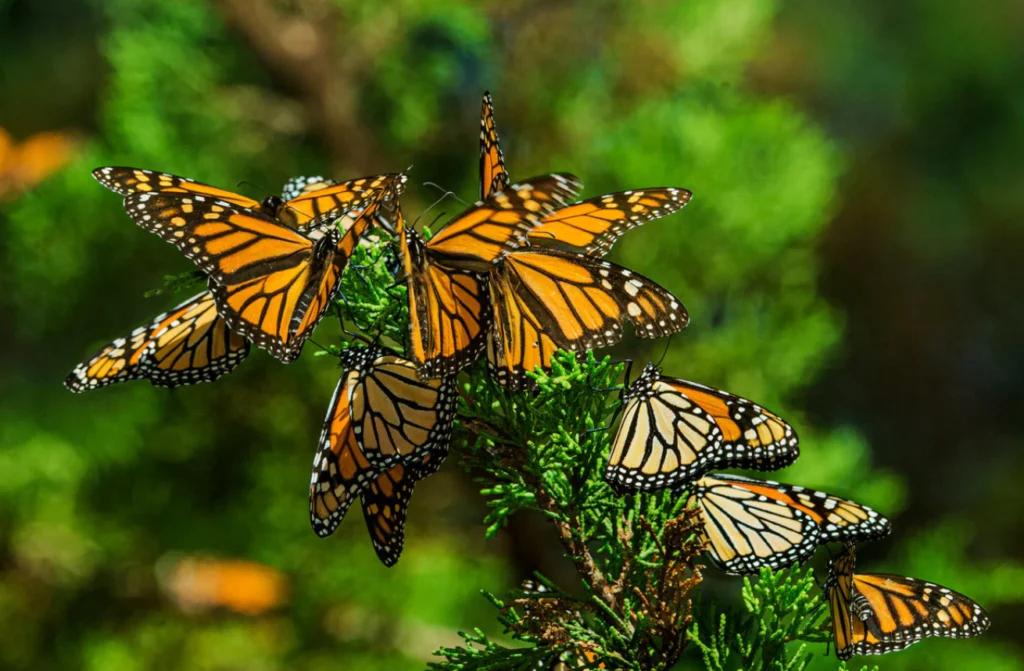
This means that when a caterpillar eats milkweed, it stores some of the plant’s bitter or toxic chemicals in its body. Later, the adult monarch’s bright orange, black, and white pattern works like a warning sign. Birds and other predators learn that eating a monarch may taste bad or make them sick. This is called warning coloration or aposematism.
The origin of monarchs is closely linked to the broader milkweed butterfly group. These butterflies developed special body systems that allowed them to feed on plants that other insects could not easily use. Scientific studies on monarchs and milkweed describe this as a long evolutionary “arms race,” in which milkweed evolved defenses and monarchs evolved ways to overcome them.
Monarchs are most famous in North America, especially because of their long migration between Canada, the United States, and Mexico. However, monarchs and related populations are also found in other warm regions, including parts of the Caribbean, Central America, South America, Australia, New Zealand, and some Pacific islands. Britannica notes that the vulnerable migratory subspecies, Danaus plexippus plexippus, is mainly found in North America.
Their evolution is not only about beauty. It is about survival through plant chemistry, migration, seasonal timing, and adaptation to changing landscapes.
Important Things That You Need To Know
The monarch butterfly is not just another garden insect. It is a powerful symbol of migration, transformation, and environmental health. The most important thing to know is that monarchs need two types of plants: milkweed for eggs and caterpillars, and nectar flowers for adults.
A female monarch butterfly will not choose random leaves for her eggs. She searches for milkweed because newly hatched caterpillars must start feeding almost immediately. Without milkweed, the life cycle of the monarch butterfly cannot continue naturally.
Another key fact is that not every monarch butterfly migrates. Many North American monarchs migrate, but some populations in warmer regions may stay year-round. The famous eastern migration can involve several generations moving north in spring and summer, while the final late-season generation travels south to overwinter.
The current conservation story is mixed. The 2025–2026 Mexico count showed improvement, with monarch colonies occupying 2.93 hectares of forest, but this does not mean the species is fully safe. Monarch numbers can rise or fall sharply from year to year due to weather, habitat loss, pesticide exposure, and climate change.
In simple words, protecting the monarch butterfly means protecting milkweed, clean nectar plants, migration routes, and overwintering forests.
Their main food and its collection process
The monarch butterfly‘s food changes by life stage. The caterpillar and adult do not eat the same thing.
- Egg stage:
- The egg does not feed. It develops on the surface of a milkweed leaf until the tiny larva is ready to hatch.
- Caterpillar stage:
- The main food is milkweed leaves. Monarch caterpillars are specialist feeders, meaning they depend on a narrow range of food sources. They eat constantly because they must grow very fast in a short time.
- How caterpillars collect food:
- The caterpillar does not hunt. It stays on the milkweed plant and chews the leaves with strong mouthparts. Young caterpillars often make small holes, while older ones can eat larger parts of the leaf.
- Why milkweed matters:
- Milkweed gives nutrition and also helps monarchs build chemical defense. This makes the caterpillar and adult less attractive to many predators.
- Adult stage:
- Adult monarchs drink nectar from flowers. They use a long, tube-like mouthpart called a proboscis. It works like a straw.
- How adults collect food:
- The adult lands on flowers, unrolls the proboscis, and drinks liquid nectar. This nectar gives energy for flying, mating, egg-laying, and migration.
Adult monarchs may visit many flowers, but caterpillars still need milkweed. That is why a good monarch habitat should include both native milkweed and seasonal nectar plants.
Their life cycle and ability to survive in nature
Egg Stage: A Small Beginning
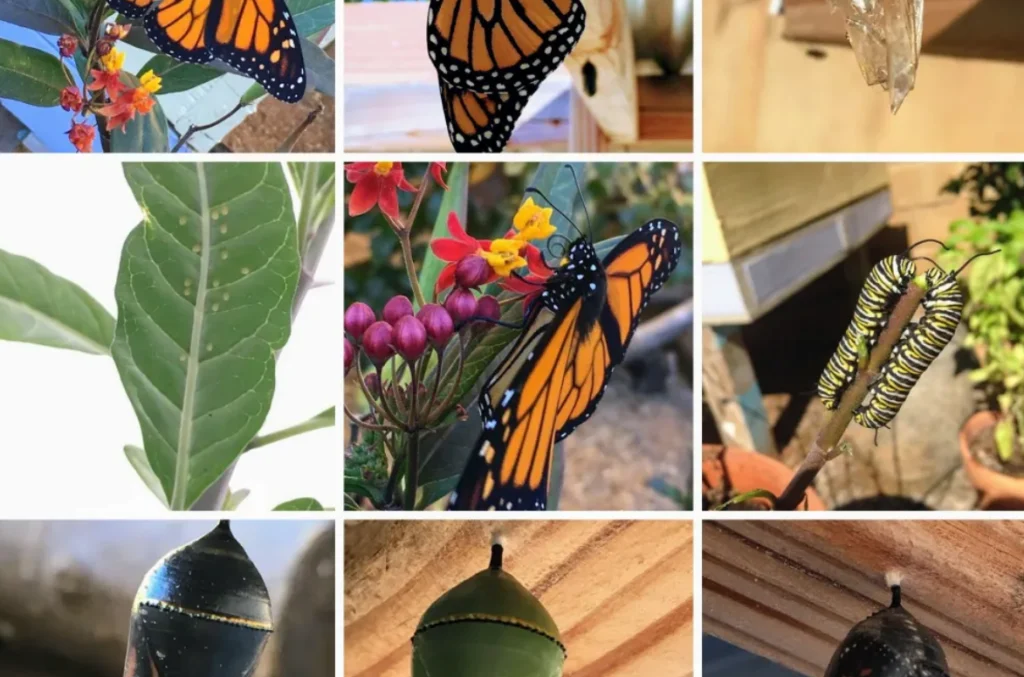
The female monarch lays a single egg, usually on the underside of a milkweed leaf. This keeps the egg close to food and gives it some protection. The egg is tiny, pale, and shaped like a small dome.
Caterpillar Stage: Fast Growth
After hatching, the caterpillar starts eating milkweed. It grows through five stages called instars. During this time, it sheds its skin several times because its body grows too large for the old outer layer. Monarch caterpillars can increase their body size very quickly.
Chrysalis Stage: Hidden Transformation
When the caterpillar is fully grown, it forms a chrysalis. Inside, the body changes completely. The chewing caterpillar becomes a winged adult butterfly. This is the most dramatic part of the complete metamorphosis.
Adult Stage: Flight, Feeding, and Migration
The adult emerges with soft wings. It hangs for a while as the wings expand, dry, and harden. Then it begins feeding, flying, mating, and sometimes migrating. The migratory generation can survive much longer than summer adults because it delays reproduction until after winter. This special survival ability helps monarchs complete their long seasonal journey.
Their Reproductive Process and raising their children
Monarch butterflies reproduce through mating, egg-laying, and the development of young on milkweed. However, they do not raise their children as birds or mammals do. Their “parental care” is mainly the female’s careful choice of egg-laying plant.
- Mating:
- Male and female monarchs mate as adults. During mating, the male transfers sperm to the female.
- Egg production:
- After mating, the female looks for healthy milkweed plants. This step is very important because the caterpillars cannot survive on most other plants.
- Egg laying:
- The female lays eggs one by one, often on the underside of leaves. Laying single eggs can reduce crowding and competition among caterpillars.
- No direct child care:
- Once the egg is laid, the adult does not feed or protect the young. The caterpillar must survive using its own instincts.
- Built-in survival support:
- The mother’s best support is choosing the right plant. Milkweed gives the young caterpillar food, shelter, and chemical protection.
- New generation:
- When the adult emerges, it may mate and lay eggs within a few days during the breeding season. This keeps the cycle moving.
So, monarchs do not “raise children” directly. Instead, their reproductive success depends on milkweed selection, healthy habitat, and correct seasonal timing.
The importance of them in this Ecosystem
They Support Flower Pollination
Adult monarchs visit flowers for nectar. While they are not the strongest pollinators compared with bees, they still move pollen between flowers as they feed. Their visits support plant reproduction in gardens, meadows, and wild habitats.
They Are Part of the Food Web
Monarch eggs, caterpillars, chrysalides, and adults all become food for different animals. Ants, spiders, wasps, birds, and other predators may feed on them. Their milkweed-based defense helps, but it does not make them completely safe.
They Show Ecosystem Health
A healthy monarch population often points to a healthy landscape with native plants, clean habitat, and seasonal flowers. When monarch numbers decline, it can signal bigger problems such as habitat loss, pesticide pressure, and climate stress.
They Connect Countries Through Migration
The North American monarch migration connects Canada, the United States, and Mexico. This makes the monarch an international conservation species. Protecting it requires cooperation across borders, not just action in one garden or one country.
They Help People Care About Nature
The monarch butterfly is easy to recognize and loved by many people. Because of this, it helps teach children and adults about insects, migration, native plants, and conservation.
What to do to protect them in nature and save the system for the future
- Plant native milkweed that matches your region. This gives female monarchs a safe place to lay eggs.
- Grow nectar-rich flowers that bloom in different seasons, especially during spring and fall migration.
- Avoid spraying pesticides, herbicides, and insecticides in butterfly gardens and natural areas.
- Protect wild meadows, roadsides, field edges, and open habitats where milkweed and nectar plants grow.
- Choose native plants over invasive ornamentals when creating a pollinator garden.
- Keep gardens chemical-free, especially when caterpillars are feeding on milkweed leaves.
- Support conservation groups and local habitat restoration projects.
- Protect overwintering forests and migration corridors, because monarchs need safe resting and wintering places.
- Learn the difference between native milkweed and tropical milkweed. In some warm regions, tropical milkweed can encourage year-round breeding and may increase the risk of parasites.
- Teach children and communities about the monarch butterfly‘s life cycle so more people understand why milkweed matters.
- Leave some leaf litter and natural garden edges where insects can shelter.
- Report monarch sightings to citizen science programs when possible, because tracking helps researchers understand population changes.
- Buy plants from nurseries that do not use harmful systemic pesticides.
- Think beyond one garden. Monarch protection works best when neighborhoods, farms, schools, parks, and cities create connected habitats.
Frequently Asked Questions (FAQs)
Q: What is the life cycle of the monarch butterfly?
A: The life cycle includes four stages: egg, caterpillar, chrysalis, and adult monarch butterfly.
Q: How long does it take for a monarch butterfly to grow?
A: It usually takes about 25 to 32 days from egg to adult in warm conditions. Cooler weather can lengthen the process.
Q: What does a monarch caterpillar eat?
A: A monarch caterpillar eats milkweed leaves. It cannot normally survive on ordinary garden leaves.
Q: What does an adult monarch butterfly eat?
A: Adult monarchs drink nectar from flowers using a straw-like mouthpart called a proboscis.
Q: Why is milkweed important for monarch butterflies?
A: Milkweed is the only host plant for monarch caterpillars. Without milkweed, females cannot successfully reproduce.
Q: Do monarch butterflies raise their babies?
A: No. They do not raise young directly. The female helps by laying eggs on milkweed, where the caterpillars can feed after hatching.
Q: Are monarch butterflies endangered?
A: The migratory monarch is considered Vulnerable on the IUCN Red List after a status change from Endangered to Vulnerable. In the United States, the monarch has been proposed for listing as threatened under the Endangered Species Act, but federal protections do not apply until a final rule becomes effective.
Q: Why are monarch butterflies declining?
A: Major threats include loss of milkweed, loss of nectar habitat, pesticide use, climate change, disease, and damage to overwintering forests.
Conclusion
The life cycle of the monarch butterfly is a powerful story of change, survival, and connection. From a tiny egg on a milkweed leaf to a striped caterpillar, then a green chrysalis, and finally a bright adult butterfly, each stage has a clear role in nature. The monarch’s beauty is easy to admire, but its survival depends on very practical things: healthy milkweed, safe nectar flowers, clean habitats, and protected migration routes.
The newest population data gives some hope, but monarchs are still not fully secure. A single good year does not erase the long-term pressure from habitat loss, pesticides, and climate change. The best way forward is simple and meaningful: plant native milkweed, protect wildflowers, reduce chemicals, and support natural spaces. When we protect the monarch butterfly, we also protect pollinators, native plants, and the larger Ecosystem that supports life around us.
Also Read: life cycle of a monarch