Admin
Admin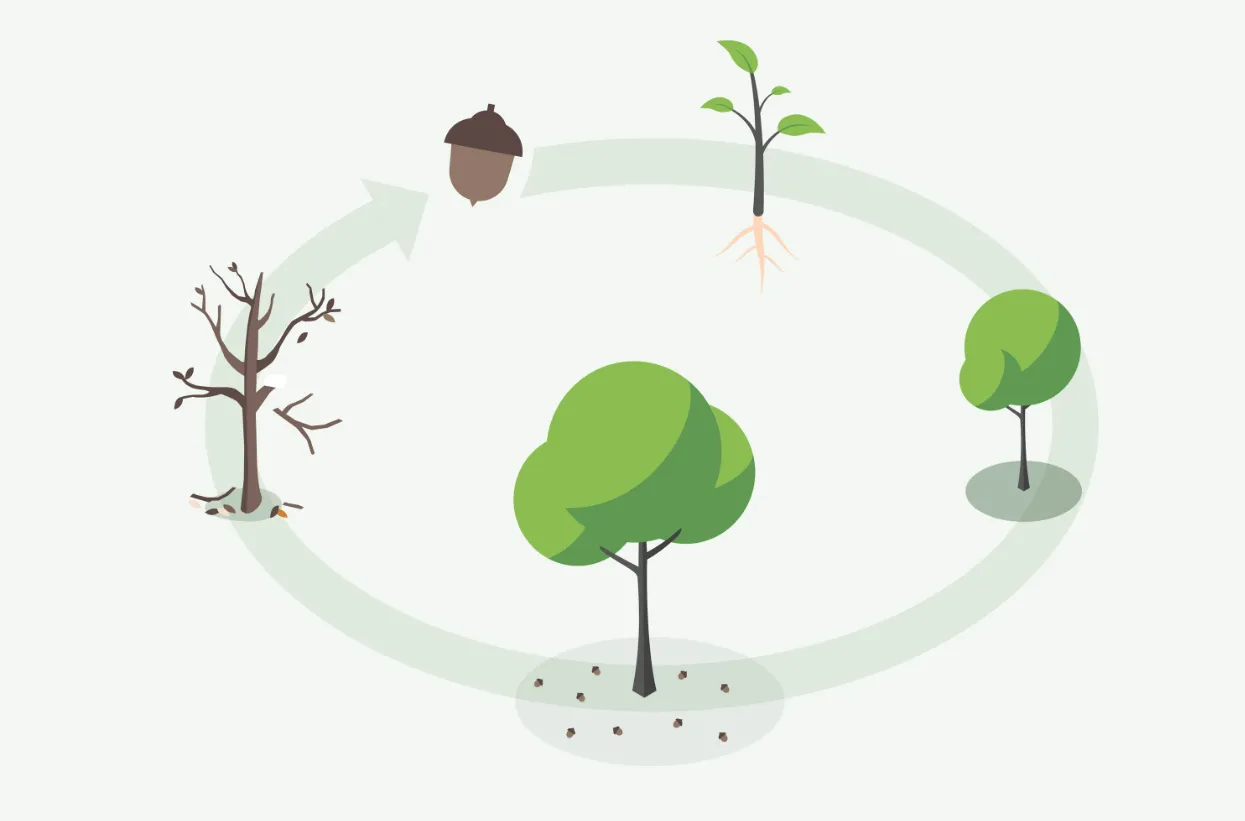
The life cycle of a Tree is one of nature’s most fascinating and essential processes. From a tiny seed to a towering giant, trees go through several stages that ensure the survival of forests and ecosystems worldwide. Understanding this cycle not only helps us appreciate nature but also teaches us how to protect it.
Trees are vital for life on Earth. They produce oxygen, store carbon, provide shelter for wildlife, and even influence climate patterns. The journey of a tree—from Germination to maturity and eventual decay—is a continuous cycle that supports biodiversity and ecological balance.
🔹 Quick Answers (Most Common Questions)
1. What are the stages in the life cycle of a tree?
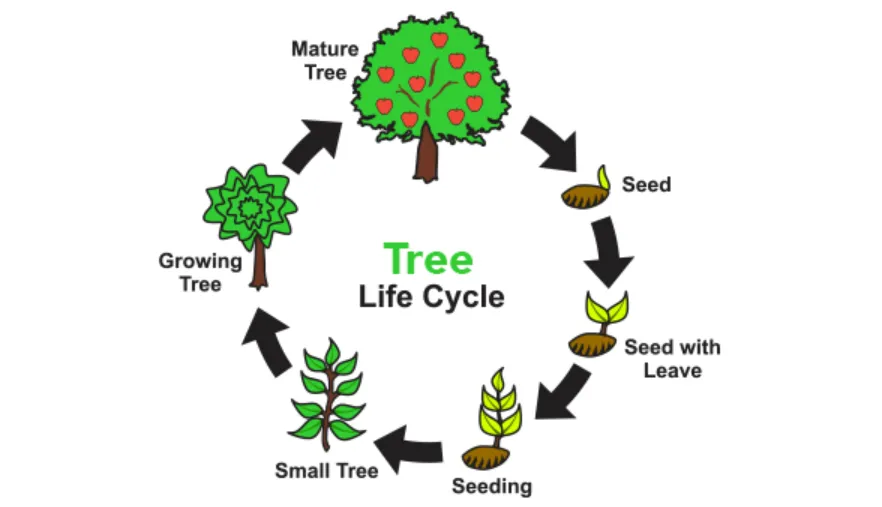
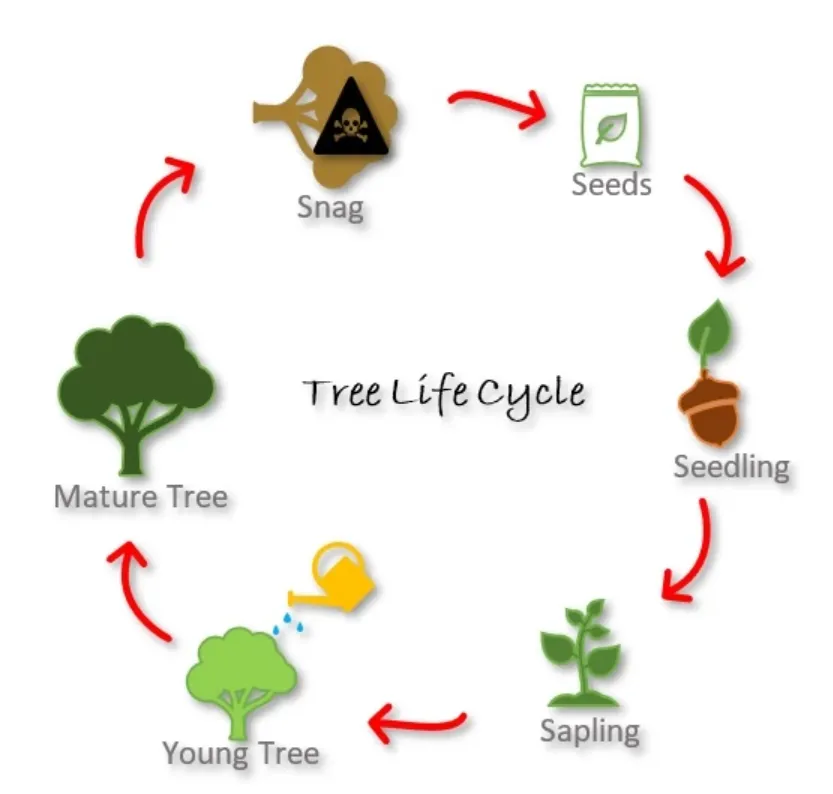
The main stages include seed, Germination, seedling, sapling, mature tree, reproduction, and decay.
2. How long does a tree’s life cycle take?
It varies widely. Some trees live for decades, while others, such as oak and redwood, can live for hundreds or even thousands of years.
3. Why is the life cycle of a tree important?
It supports ecosystems, provides oxygen, and helps sustain plant species.
Quick Life Cycle Table
| Stage | Description |
| Seed | The starting point containing the embryo of the tree |
| Germination | The seed absorbs water and begins to sprout |
| Seedling | Young plant with initial leaves and roots |
| Sapling | A growing tree with stronger roots and trunk |
| Mature Tree | Fully grown tree capable of reproduction |
| Reproduction | Produces flowers, fruits, and seeds |
| Aging & Decay | The tree weakens and eventually decomposes, enriching the soil |
The History Of Their Scientific Naming
The scientific naming of trees falls under the binomial nomenclature system, introduced by Carl Linnaeus in the 18th century. This system assigns each tree species a unique two-part Latin name.
- 🌿 Genus and Species System
- Each tree has a genus (group) and species (specific identity), such as Quercus robur (oak tree).
- 🌿 Standardisation Across the World
- Scientific names allow botanists worldwide to communicate clearly, avoiding confusion caused by local names.
- 🌿 Historical Classification
- Early botanists classified trees based on physical features like leaves, bark, and seeds.
- 🌿 Modern Advancements
- Today, DNA analysis helps scientists classify trees more accurately.
- 🌿 Importance in Research
- Scientific naming helps track species evolution, conservation, and biodiversity.
This naming system ensures that every tree species is uniquely identified and studied across generations.
Their Evolution And Their Origin
Trees have a long evolutionary history dating back over 370 million years to the Devonian period. The earliest tree-like plants were primitive and lacked many features seen in modern trees.
Initially, plants were small and lived close to water sources. Over time, they evolved structures such as roots, stems, and vascular systems, enabling them to grow taller and survive on land.
During the Carboniferous period, forests became widespread. These ancient trees played a major role in forming the coal deposits we use today.
Modern trees evolved with advanced features such as:
- Strong woody trunks for support
- Leaves for efficient photosynthesis
- Seeds and fruits for reproduction
Evolution also helped trees adapt to different climates—from tropical rainforests to arid deserts.
Natural selection ensured that only the most adaptable species survived environmental changes. For example, coniferous trees developed needle-like leaves to conserve water in cold climates.
Today, trees are among the most diverse and resilient life forms on Earth. Their evolution continues as they adapt to climate change and human impact.
Their main food and its collection process
Trees produce their own food through photosynthesis. Unlike animals, they do not need to hunt or consume other organisms.
🌿 Key Processes:
- Sunlight Absorption
- Leaves capture sunlight using chlorophyll.
- Water Uptake
- Roots absorb water and minerals from the soil.
- Carbon Dioxide Intake
- Leaves take in carbon dioxide from the air through tiny pores called stomata.
- Photosynthesis Process
- Sunlight + Water + Carbon Dioxide → Glucose (food) + Oxygen
- Food Distribution
- The produced glucose is transported throughout the tree for growth and energy.
🌿 Additional Nutrient Collection:
- Trees also absorb nutrients, such as nitrogen and phosphorus, from the soil.
- Mycorrhizal fungi help roots absorb more nutrients efficiently.
- Fallen leaves decompose and enrich the soil, creating a nutrient cycle.
This self-sustaining system allows trees to grow independently and support other life forms.
Their life cycle and ability to survive in nature
🌱 Seed Stage
The life cycle begins with a seed. Seeds contain all the necessary information to grow into a tree.
🌱 Germination
When conditions are favourable—water, warmth, and oxygen—the seed begins to sprout.
🌱 Seedling Stage
Small leaves appear, and the plant starts photosynthesis.
🌱 Sapling Stage
The tree grows taller and stronger, developing a trunk and branches.
🌱 Mature Tree
At maturity, the tree produces flowers, fruits, and seeds.
🌱 Ageing and Decay
Eventually, the tree weakens and decomposes, enriching the soil.
🌿 Survival Abilities:
- Deep root systems for water access
- Thick bark for protection
- Seasonal adaptations like shedding leaves
- Ability to regenerate after damage
Trees are highly adaptable and can survive in diverse environments.
Their Reproductive Process and raising their children
Trees reproduce through seeds, ensuring the continuation of their species.
🌿 Key Reproductive Steps:
- Flowering Stage
- Many trees produce flowers containing reproductive organs.
- Pollination
- Wind, insects, or animals transfer pollen.
- Fertilization
- Leads to the formation of seeds.
- Fruit Development
- Seeds are often protected within fruits.
- Seed Dispersal
- Seeds are spread through wind, water, or animals.
- Germination
- New trees begin their life cycle.
🌿 Raising “Children” (Seed Survival):
- Trees produce many seeds to increase survival chances
- Some seeds remain dormant until conditions are ideal
- Fruits attract animals that help spread seeds
This natural strategy ensures forests continue to grow and thrive.
The importance of them in this Ecosystem
🌍 Oxygen Production
Trees release oxygen, an essential resource for human and animal survival.
🌍 Carbon Storage
They absorb carbon dioxide, helping combat climate change.
🌍 Habitat for Wildlife
Trees provide shelter and food for countless species.
🌍 Soil Protection
Roots prevent soil erosion and maintain fertility.
🌍 Water Cycle Regulation
Trees influence rainfall and maintain groundwater levels.
🌍 Climate Control
They regulate temperature and provide shade.
Trees are the backbone of ecosystems and are essential for life on Earth.
Important Things That You Need To Know
The life cycle of a tree is not only important for scientists but also easy to understand for beginners and children.
🌿 Key Insights:
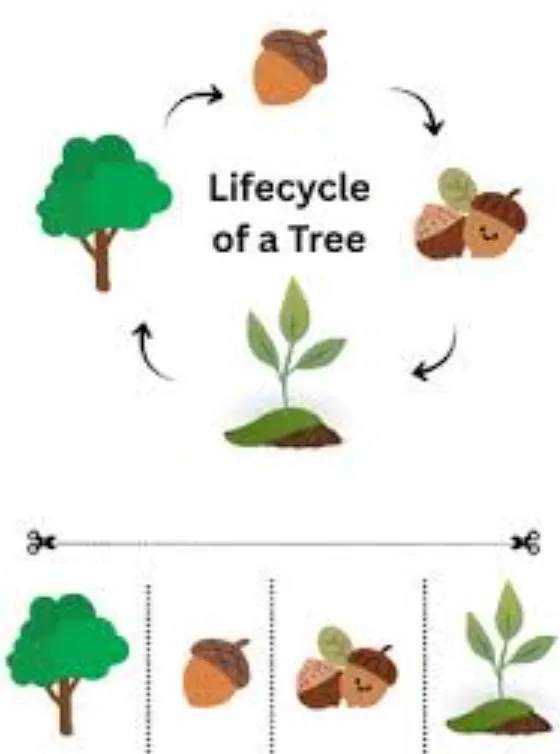
- The life cycle of a tree for kids can be explained using simple stages like seed → plant → tree.
- A tree diagram of a life cycle helps visualize growth stages clearly.
- Teachers often use a life cycle of a tree worksheet to help students learn interactively.
- Understanding the life cycle of a tree helps in environmental awareness.
- These concepts are essential for both education and conservation.
Learning these basics makes it easier to appreciate how trees grow and why they matter.
What to do to protect them in nature and save the system for the future
- 🌱 Plant more trees regularly
- 🌱 Avoid cutting trees unnecessarily
- 🌱 Support reforestation programs
- 🌱 Reduce paper and wood waste
- 🌱 Protect forests from fires
- 🌱 Promote sustainable agriculture
- 🌱 Educate others about tree conservation
- 🌱 Support eco-friendly policies
- 🌱 Prevent pollution that harms soil and water
- 🌱 Encourage biodiversity preservation
Protecting trees ensures a healthier planet for future generations.
Frequently Asked Questions (FAQs)
1. What is the first stage of a tree’s life cycle?
The seed stage is the beginning of a tree’s life.
2. How do trees reproduce?
Through seeds formed after pollination and fertilization.
3. What is Germination?
It is the process where a seed sprouts into a new plant.
4. Why are trees important in ecosystems?
They provide oxygen, habitat, and regulate climate.
5. How long do trees live?
Some trees live for decades, others for thousands of years.
6. What helps trees grow faster?
Sunlight, water, nutrients, and proper environmental conditions.
7. Can trees survive without sunlight?
No, sunlight is essential for photosynthesis.
8. What is a sapling?
A young tree that is still growing but stronger than a seedling.
Conclusion
The life cycle of a tree is a powerful example of nature’s balance and resilience. From a tiny seed to a towering giant, each stage plays a crucial role in sustaining life on Earth. Trees not only support ecosystems but also provide essential resources for humans and animals.
Understanding this cycle helps us realize how interconnected life is. Every stage—from Germination to decay—contributes to the environment in meaningful ways. As climate challenges increase, protecting trees becomes more important than ever.
By planting trees, conserving forests, and spreading awareness, we can ensure that future generations continue to benefit from these natural wonders. Trees are not just plants—they are life-givers, climate protectors, and the foundation of our Ecosystem. 🌳
Also Read About: lady bug cycle of life