Admin
Admin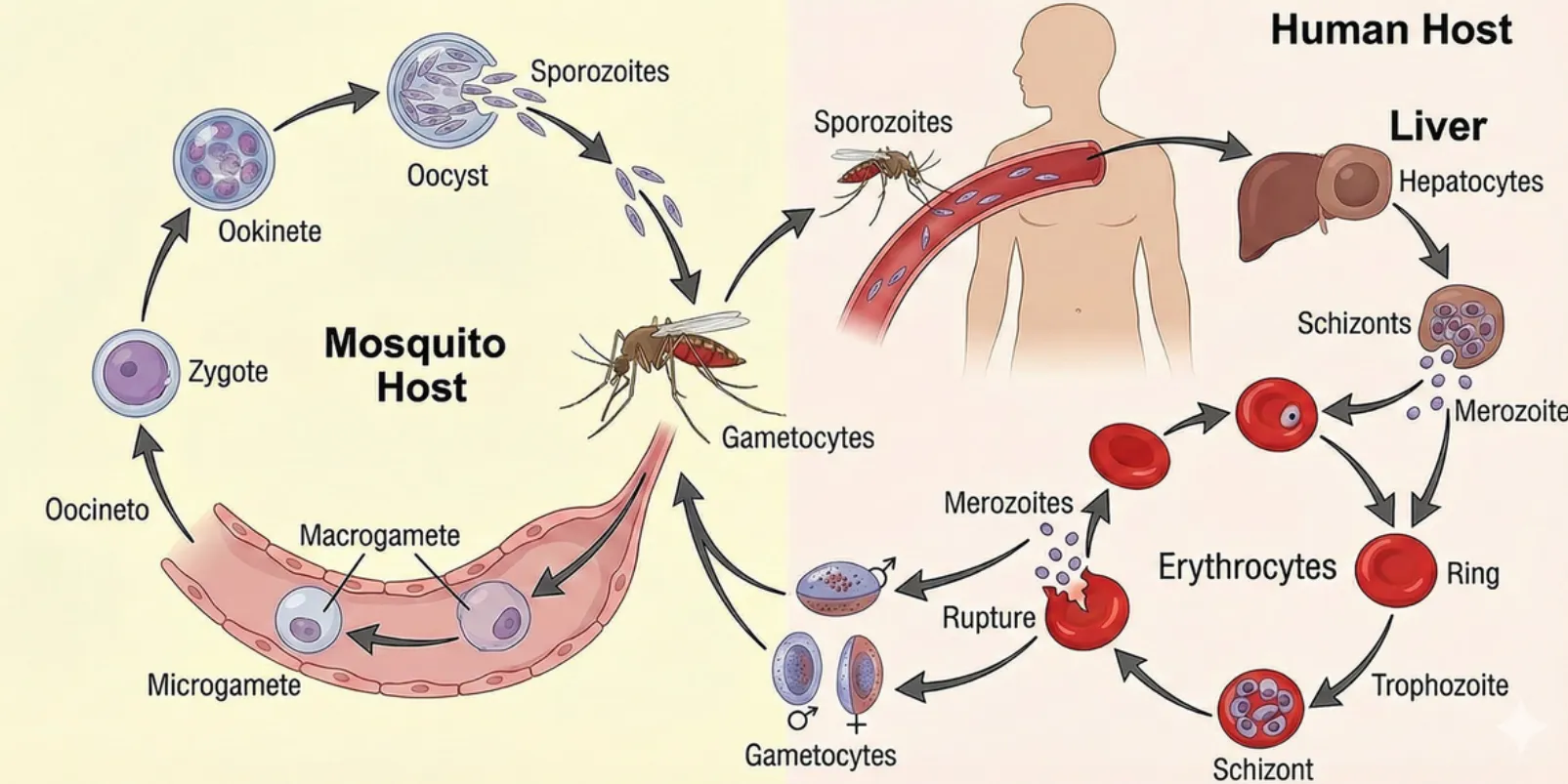
The malaria life cycle is one of the most complex biological processes involving both humans and mosquitoes. Malaria is a life-threatening disease caused by Plasmodium parasites, transmitted through the bite of an infected female Anopheles mosquito. Understanding how malaria spreads and develops inside the human body is essential for prevention and treatment.
Each year, millions of people are affected by malaria, especially in tropical and subtropical regions. The disease continues to be a major global health challenge despite advancements in malaria medication and malaria prevention strategies.
Quick Answers (Most Common Questions)
1. How is malaria transmitted?
Malaria is transmitted through the bite of an infected female Anopheles mosquito carrying Plasmodium parasites.
2. How do you get malaria?
You get malaria when an infected mosquito injects parasites into your bloodstream while feeding.
3. Can malaria be prevented?
Yes, malaria can be prevented using mosquito control, bed nets, and anti-malaria pills in high-risk areas.
Quick Life Cycle Table
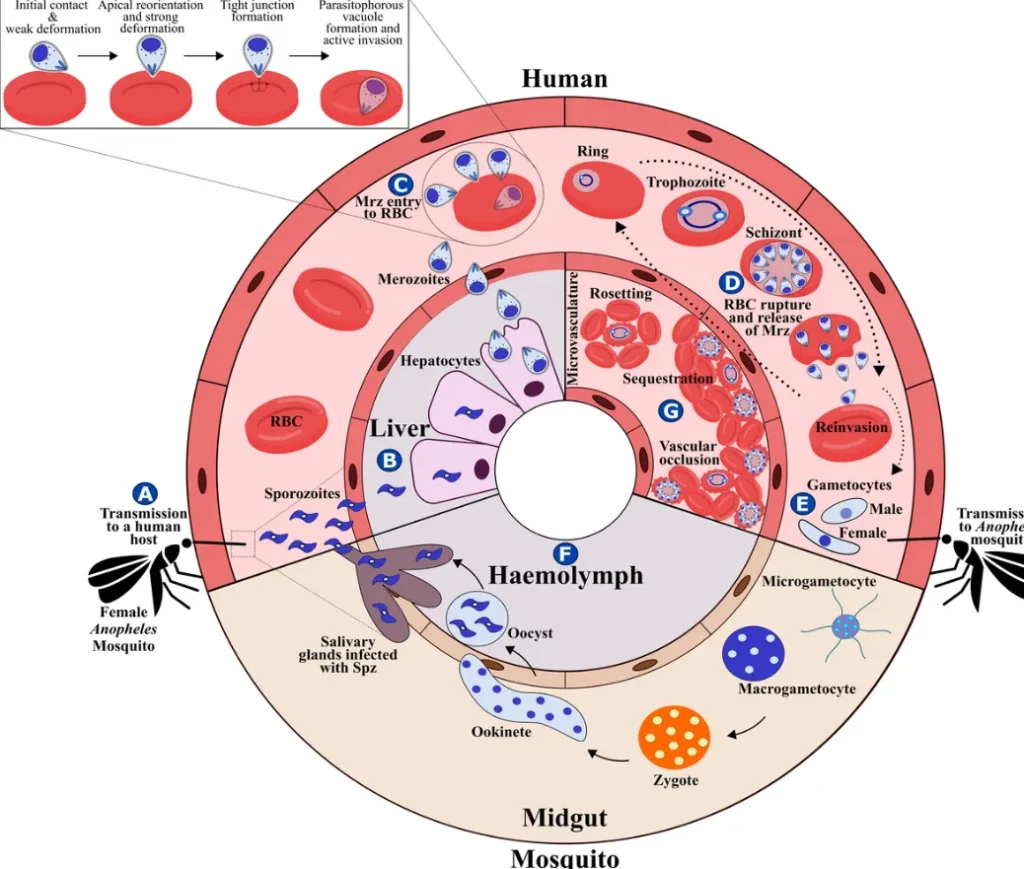
| Stage | Location | Description |
| Sporozoite Stage | Human liver | Parasites enter liver cells after a mosquito bite |
| Liver Stage | Human liver | Parasites multiply rapidly |
| Blood Stage | Human bloodstream | Infect red blood cells and cause symptoms |
| Gametocyte Stage | Human blood | Sexual forms develop |
| Mosquito Stage | Mosquito gut | Parasites reproduce and become infectious |
The History Of Their Scientific Naming
The scientific naming of malaria parasites has evolved through years of research and discovery. The disease itself was first described in ancient civilizations, but its true cause remained unknown until the late 19th century.
- In 1880, Charles Louis Alphonse Laveran discovered malaria parasites in human blood.
- The parasite was named Plasmodium, derived from the Greek word ” plasmoid, meaning “something formed or molded.”
- Several species were identified, including:
- Plasmodium falciparum (most dangerous)
- Plasmodium vivax
- Plasmodium malariae
- Plasmodium ovale
Later, Ronald Ross confirmed that mosquitoes transmit malaria, which revolutionized the understanding of disease transmission. The term “malaria” itself comes from the Italian phrase “mala aria,” meaning “bad air,” reflecting early beliefs about its cause.
This scientific classification has been crucial for developing targeted malaria medication and control strategies.
Their Evolution And Their Origin
Malaria parasites have a long evolutionary history dating back millions of years. Genetic studies suggest that Plasmodium species evolved alongside vertebrate hosts and insect vectors.
Originally, malaria parasites infected reptiles and birds. Over time, they adapted to infect mammals, including humans. This transition likely occurred due to environmental changes and increased interaction between species.
One of the most significant evolutionary adaptations is the parasite’s ability to live in two hosts—humans and mosquitoes. This dual-host life cycle allows the parasite to survive and spread efficiently.
Plasmodium falciparum, the deadliest species, is believed to have evolved from parasites infecting gorillas. This zoonotic transfer highlights how diseases can jump between species.
Over centuries, malaria has adapted to human immune systems, developing resistance to drugs and environmental challenges. This makes malaria a constantly evolving threat.
Modern research focuses on understanding these evolutionary mechanisms to improve vaccines and treatments. Organizations like the Against Malaria Foundation work globally to reduce transmission and protect vulnerable populations.
Important Things That You Need To Know
Understanding malaria requires awareness of key factors that influence its spread and impact. Below are essential insights related to major LSI keywords:
Malaria Transmission and Risk Factors
Malaria spreads primarily through the malaria mosquito, specifically female Anopheles. These mosquitoes breed in stagnant water, making tropical regions highly vulnerable.
Malaria Medication and Treatment
Effective malaria medication includes antimalarial drugs like artemisinin-based combination therapies (ACTs). Early diagnosis is critical to prevent severe complications.
How Do You Get Malaria?
People often ask, how do you get malaria? Besides mosquito bites, rare cases include blood transfusion or shared needles.
Malaria Prevention Methods
Using bed nets, insect repellents, and environmental control measures is essential for malaria prevention. Travelers often rely on anti-malaria pills for protection.
Global Efforts Against Malaria
Organizations like the Against Malaria Foundation distribute mosquito nets and promote awareness campaigns to reduce infection rates worldwide.
These combined strategies play a crucial role in controlling malaria and reducing its global burden.
Their Main Food and Its Collection Process
Malaria parasites do not “eat” in the traditional sense but rely on host cells for nutrients.
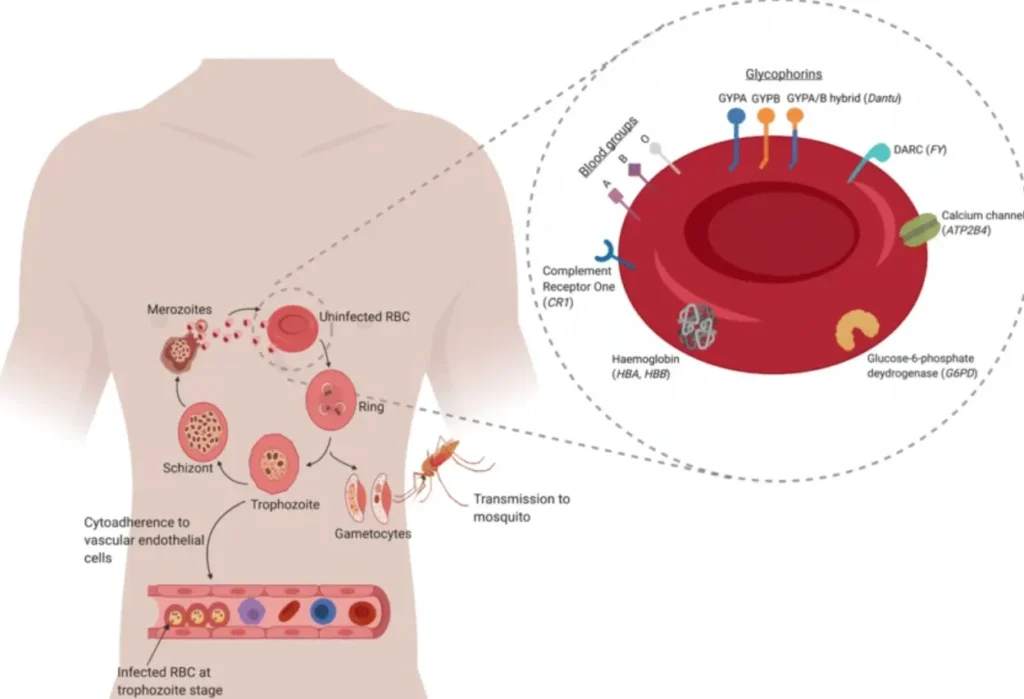
- They invade red blood cells and consume hemoglobin.
- Hemoglobin provides amino acids essential for parasite growth.
- The parasite converts toxic heme into harmless hemozoin.
Food Collection Process
- Parasites attach to red blood cells.
- They enter the cell and begin digestion.
- Waste products accumulate, causing cell rupture.
This process leads to common malaria symptoms such as fever, chills, and anemia.
Inside mosquitoes, parasites feed on nutrients in the insect’s gut. This dual feeding system ensures survival in both hosts.
Their Life Cycle and Ability to Survive in Nature
H3: Entry into the Human Body
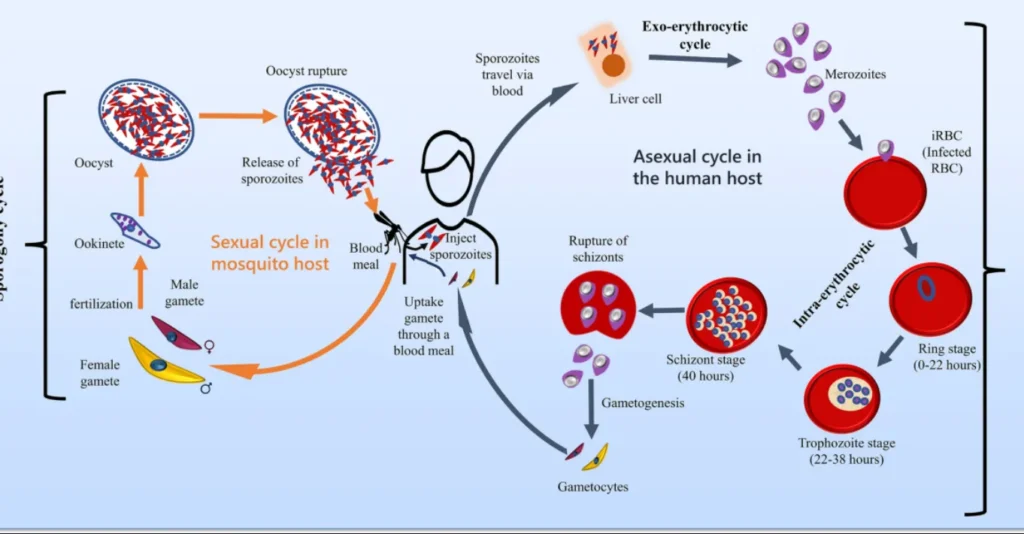
The cycle begins when an infected mosquito injects sporozoites into human blood.
H3: Liver Stage Development
Sporozoites travel to the liver, where they multiply rapidly without symptoms.
H3: Blood Stage Infection
Parasites infect red blood cells, causing cycles of destruction and illness.
H3: Transmission Back to Mosquito
Another mosquito takes up gametocytes during a blood meal.
H3: Survival Mechanisms
- Ability to hide in liver cells
- Rapid reproduction
- Adaptation to immune responses
This complex cycle allows malaria parasites to thrive in nature despite medical interventions.
Their Reproductive Process and Raising Their Children
Malaria parasites reproduce both sexually and asexually.
Asexual Reproduction (Humans)
- Occurs in the liver and blood cells
- Rapid multiplication increases infection
Sexual Reproduction (Mosquito)
- Gametocytes develop into male and female forms
- Fertilization occurs in the mosquito gut
- Produces sporozoites for the next infection
Key Points
- No parental care (unlike animals)
- A high reproduction rate ensures survival
- Transmission depends on mosquito feeding
This reproductive strategy is highly efficient and contributes to widespread malaria infections.
Importance of Them in this Ecosystem
H3: Role in Population Control
Malaria indirectly controls population levels of certain species, including humans, in extreme cases.
H3: Impact on Food Chains
Mosquitoes serve as food for fish, birds, and insects, linking malaria parasites to broader ecosystems.
H3: Scientific Research Importance
Malaria studies have advanced knowledge in immunology, genetics, and medicine.
H3: Ecological Balance
Although harmful, malaria parasites are part of natural biodiversity and evolutionary processes.
What to do to protect them in nature and save the system for the future
While malaria parasites themselves are harmful, protecting ecosystems helps control disease spread naturally.
- Maintain clean environments to reduce mosquito breeding
- Avoid water stagnation in the surroundings
- Support mosquito control programs
- Use eco-friendly insecticides
- Promote awareness about malaria prevention
- Encourage the use of bed nets and repellents
- Support global health initiatives
- Invest in research for vaccines and treatments
Balancing ecosystem health is key to reducing malaria without harming biodiversity.
Frequently Asked Questions (FAQs)
1. What is the malaria life cycle?
It is the process involving parasite development in humans and mosquitoes.
2. How long does the malaria life cycle take?
It typically takes 10–14 days in mosquitoes and several days in humans.
3. What causes malaria symptoms?
Destruction of red blood cells during parasite reproduction.
4. Can malaria spread without mosquitoes?
Rarely, through blood transfusion or shared needles.
5. What is the most dangerous malaria parasite?
Plasmodium falciparum is the most severe.
6. Are anti-malaria pills effective?
Yes, they help prevent infection when taken properly.
7. Why do mosquito bites transmit malaria?
Because infected mosquitoes carry parasites in their saliva.
8. Is malaria curable?
Yes, with early diagnosis and proper treatment.
Conclusion
The malaria life cycle is a fascinating yet dangerous biological process that highlights the complexity of infectious diseases. From its origin in ancient times to modern-day challenges, malaria continues to impact millions worldwide.
Understanding how malaria spreads, develops, and survives helps individuals take preventive measures and supports global efforts to eliminate the disease. With advancements in malaria medication, improved sanitation, and awareness campaigns, significant progress has been made.
However, continued research, education, and cooperation are essential to control and eventually eradicate malaria. By staying informed and proactive, we can protect ourselves and contribute to a healthier future for all.
Also Read: life cycle of the ladybird