Admin
Admin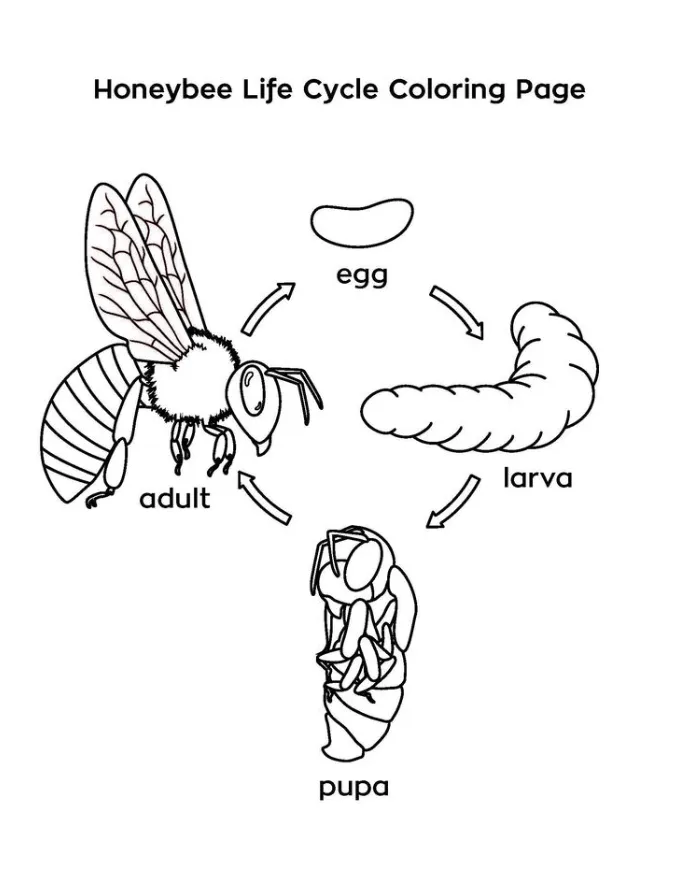
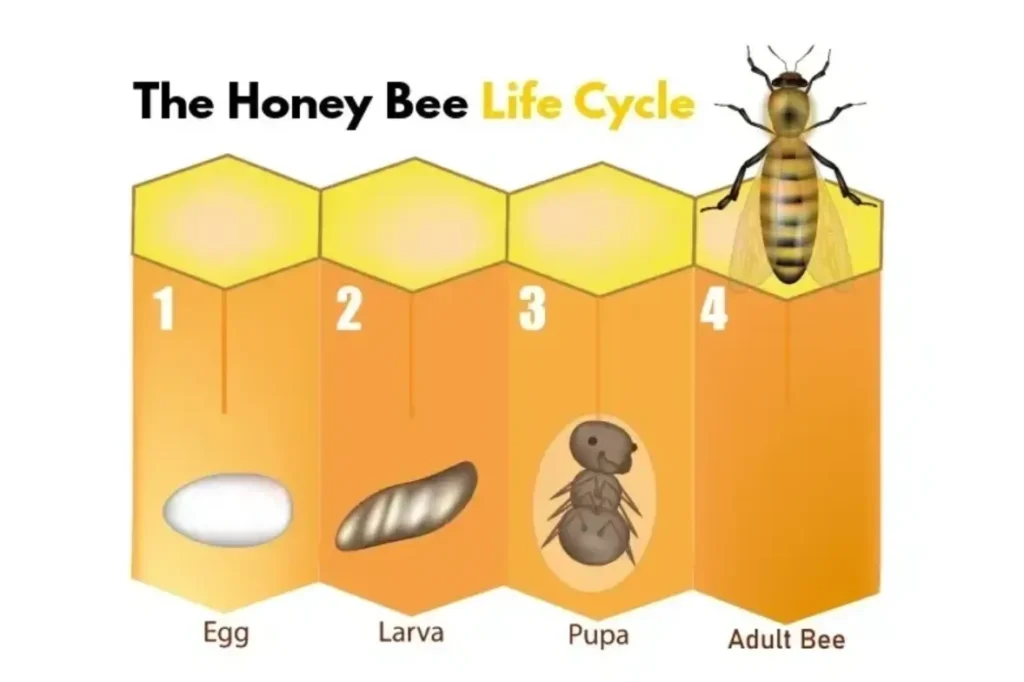
The honey bee’s life cycle is one of the most fascinating processes in nature. These tiny yet powerful pollinators undergo a complete metamorphosis, with four distinct stages: egg, larva, pupa, and adult. Understanding this cycle is essential not only for beekeepers but also for anyone interested in biodiversity, agriculture, and ecosystem balance.
Honey bees play a crucial role in pollination, helping crops grow and sustaining global food production. Each bee in a colony has a specific role—worker, drone, or queen—and their development depends on nutrition and environmental conditions.
Quick Answers (Most Common Questions)
1. How long is the life cycle of a honey bee?
A honey bee’s life cycle typically takes 16 days for a queen, 21 days for workers, and 24 days for drones.
2. What are the stages of a honey bee’s life cycle?
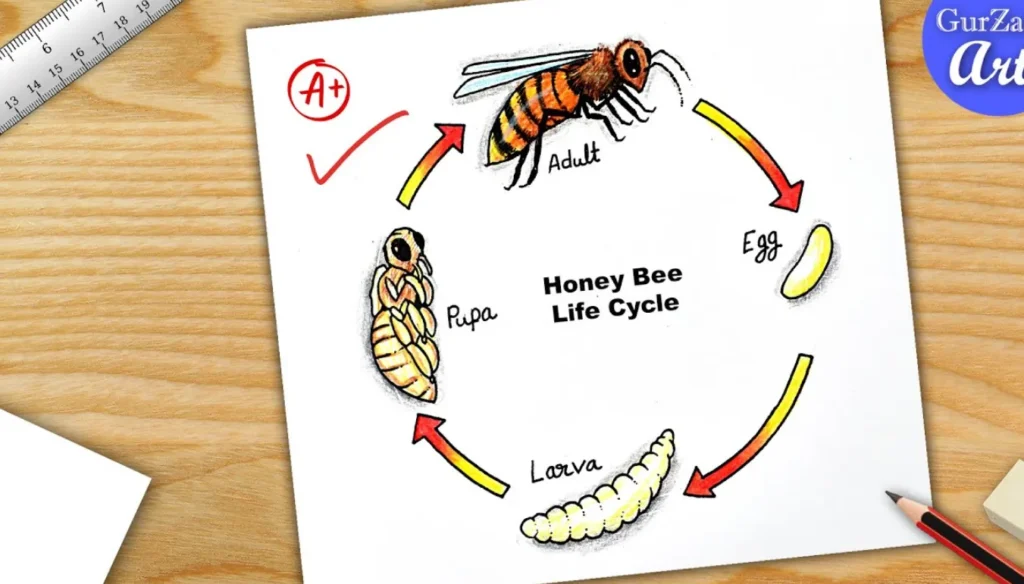
The four stages are egg → larva → pupa → adult.
3. What determines whether a bee becomes a queen or a worker?
The diet, especially royal jelly, determines if a larva develops into a queen honey bee.
Quick Life Cycle Table
| Stage | Duration | Description |
| Egg | 3 days | Laid by the queen, tiny and white |
| Larva | 5–6 days | Fed intensively; rapid growth |
| Pupa | 7–12 days | Transformation inside a sealed cell |
| Adult | Varies | Emerges fully formed bee |
The History Of Their Scientific Naming
The scientific classification of honey bees has evolved over centuries. Here are the key points:
- Honey bees belong to the genus Apis, derived from the Latin word for “bee.”
- The most common species is Apis mellifera, named by Carl Linnaeus in 1758.
- “Mellifera” means “honey-bearing”, highlighting their ability to produce honey.
- Earlier classifications grouped bees broadly, but modern taxonomy uses genetics.
- Scientists differentiate honey bees from other bees, such as bumble bees, based on behavior and colony structure.
- The naming reflects their ecological importance and domestication history.
- Today, there are about 7 recognized species of honey bees worldwide.
This scientific naming system helps researchers understand relationships between species and their roles in ecosystems.
Their Evolution And Their Origin
Honey bees have a long evolutionary history dating back millions of years. Fossil evidence suggests that bees evolved from wasp-like ancestors approximately 100 million years ago during the Cretaceous period.
Initially, these early insects were carnivorous. Over time, they adapted to feeding on nectar and pollen as flowering plants became widespread. This mutual relationship between bees and plants led to coevolution, in which both species benefited and evolved together.
The genus Apis originated in Southeast Asia. From there, different species spread across Europe and Africa, and eventually into other parts of the world. The Western honey bee (Apis mellifera) became the most widely distributed species due to human domestication.
Natural selection played a significant role in shaping their behavior. Social organization, communication (like the waggle dance), and division of labor developed over time. These traits allowed honey bees to survive harsh environmental conditions and predators.
Their ability to adapt to diverse climates—from tropical forests to temperate regions—demonstrates their evolutionary success. Today, honey bees are essential pollinators in both natural ecosystems and agricultural systems.
Their Main Food and Its Collection Process
Honey bees primarily feed on nectar and pollen, which provide energy and protein.
Main Food Sources
- Nectar: A sugary liquid from flowers used to make honey
- Pollen: Rich in protein, essential for larval growth
- Water: Used for cooling the hive and digestion
- Propolis: Plant resin used for hive structure and protection
Collection Process
- Worker bees leave the hive in search of flowers.
- They use their long tongues to extract nectar.
- Nectar is stored in a special stomach called the honey stomach.
- Pollen sticks to their hairy bodies and is collected in pollen baskets.
- Bees communicate the location of food through the waggle dance.
- Back in the hive, nectar is passed between bees and processed into honey.
- Honey is stored in wax cells and sealed for future use.
This efficient system ensures the colony always has food, even during scarcity.
Their Life Cycle and Ability to Survive in Nature
Egg Stage
The queen lays eggs in hexagonal wax cells. Each egg is fertilized or unfertilized, depending on its future role.
Larva Stage
Larvae are fed continuously by worker bees. Diet determines development.
Pupa Stage
Cells are sealed, and larvae transform into adult bees.
Adult Stage
Fully developed bees emerge and take on roles in the colony.
Honey bees survive due to:
- Strong social structure
- Division of labor
- Efficient food storage
- Communication systems
- Temperature regulation inside the hive
Their adaptability makes them resilient in many environments.
Their Reproductive Process and Raising Their Children
- The queen honey bee is the only fertile female.
- She mates with multiple drones during a nuptial flight.
- Sperm is stored and used throughout her life.
- Fertilized eggs become workers or queens; unfertilized eggs become drones.
- Worker bees care for larvae by feeding them.
- Royal jelly is given to future queens.
- Cells are capped when larvae enter pupation.
- Workers maintain the hive temperature for proper development.
- Young bees are fed until they become independent.
This organized reproductive system ensures colony survival.
Importance of Them in this Ecosystem
Pollination Power
Honey bees pollinate over 75% of flowering plants and many crops.
Food Production
They contribute to the production of fruits, vegetables, nuts, and seeds.
Biodiversity Support
Pollination helps maintain plant diversity.
Economic Value
Beekeeping and agriculture depend heavily on honey bees.
Environmental Indicators
Healthy bee populations indicate a balanced ecosystem.
Without honey bees, global food security would be at risk.
Important Things That You Need To Know
The world of honey bees is broader than just their life cycle. Let’s explore some related topics:
Honey Bee
These are social insects living in colonies with complex communication systems.
Queen Honey Bee
The queen is the heart of the colony, responsible for laying thousands of eggs daily.
Bumble Bee vs Honey Bee
- Bumble bees are larger and less social.
- Honey bees produce honey and live in large colonies.
Honey Bee Supplies
Beekeepers use tools like hives, smokers, and protective suits.
Honey Bee Drawing
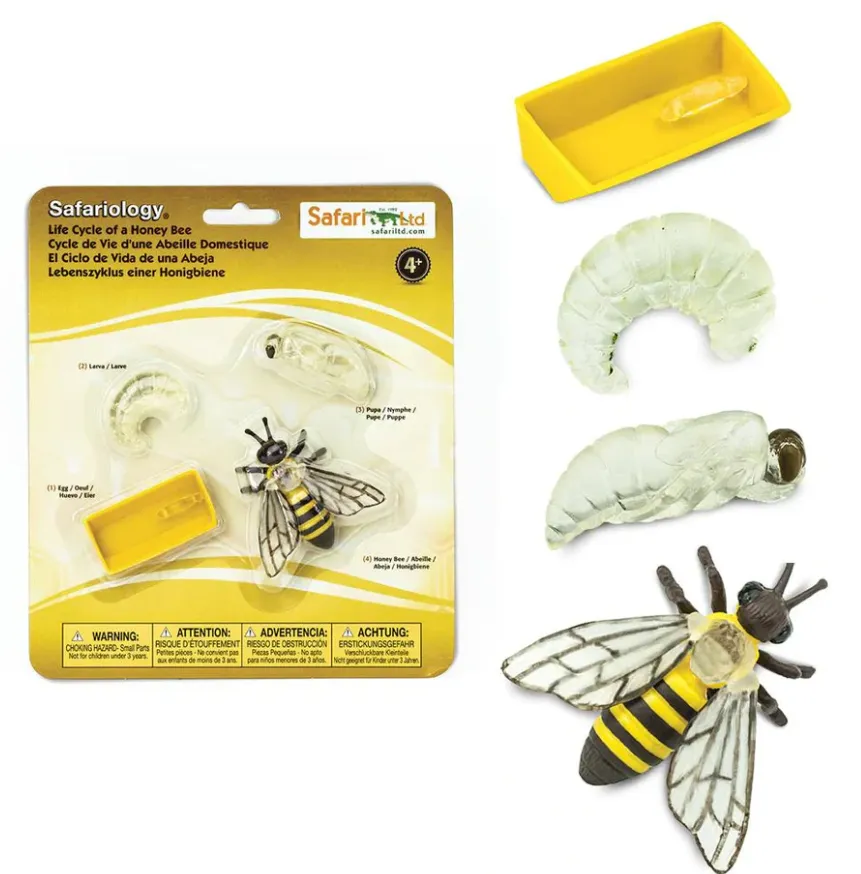
Educational diagrams help understand bee anatomy and the life cycle.
Is Honey Bee Vomit?
Technically, honey is regurgitated nectar, but it’s processed and safe to eat.
Honey Bee Stamps
These are collectible items celebrating the importance of bees globally.
Understanding these aspects helps appreciate their role beyond just honey production.
What to do to protect them in nature and save the system for the future
- Plant bee-friendly flowers like lavender and sunflowers
- Avoid using harmful pesticides
- Support local beekeepers
- Provide water sources for bees
- Preserve natural habitats
- Educate others about bee conservation
- Reduce pollution and carbon footprint
- Encourage organic farming practices
- Build bee hotels for wild bees
- Support environmental policies
Protecting bees ensures a sustainable future.
Frequently Asked Questions (FAQs)
1. What is the lifespan of a honey bee?
Worker bees live about 5–6 weeks, while queens can live up to 5 years.
2. How many eggs does a queen lay?
Up to 2,000 eggs per day.
3. What is royal jelly?
A nutrient-rich secretion fed to larvae, especially future queens.
4. Do all bees make honey?
No, only honey bees produce significant amounts of honey.
5. Why are honey bees important?
They are essential pollinators for crops and plants.
6. How do bees communicate?
Through dances like the waggle dance.
7. What threatens honey bees?
Pesticides, habitat loss, climate change, and diseases.
8. Can bees survive without humans?
Yes, but human activities greatly impact their survival.
Conclusion
The honey bee’s life cycle is a remarkable journey that reflects the complexity and efficiency of nature. From a tiny egg to a fully functional adult, each stage plays a critical role in maintaining the colony and supporting ecosystems worldwide.
Honey bees are not just honey producers; they are vital pollinators that sustain agriculture and biodiversity. Their social structure, communication, and adaptability make them one of the most successful insect species on Earth.
However, their survival is increasingly threatened by human activities. By understanding their life cycle and importance, we can take meaningful steps to protect them.
Also Read: life cycle of a tree