Admin
Admin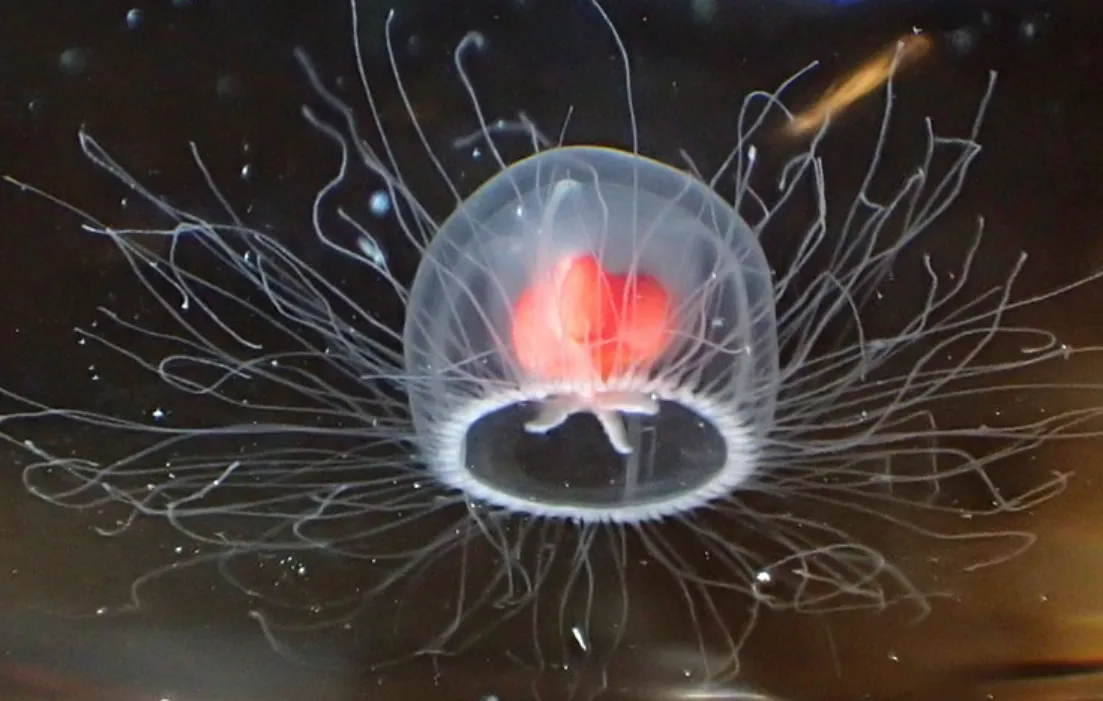
The immortal jellyfish’s life cycle is one of the most fascinating biological phenomena discovered in modern marine science. Unlike most living organisms, which follow a linear path of birth, growth, reproduction, and death, the immortal jellyfish can reverse its life cycle and return to an earlier stage. This remarkable trait has earned it the title of the “biologically immortal” creature.
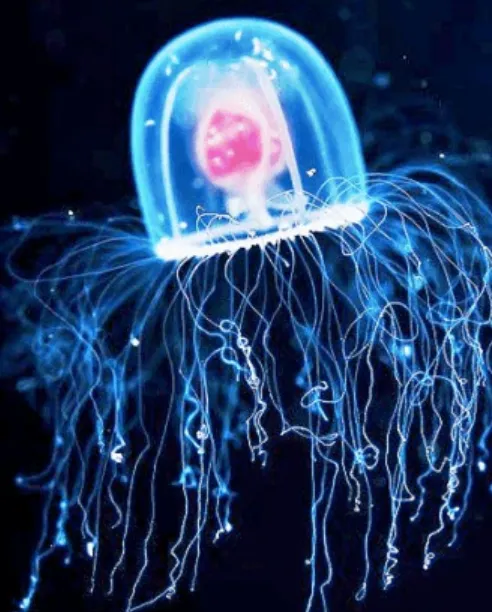
Scientifically known as Turritopsis dohrnii, this tiny marine organism has captured global attention due to its extraordinary regenerative abilities. Found in oceans around the world, especially in temperate and tropical waters, the immortal jellyfish is incredibly small—often measuring less than 5 millimeters in diameter. Despite its size, its biological capabilities challenge everything we know about aging and mortality.
The concept of biological immortality does not mean the jellyfish cannot die. It can still fall victim to predators, disease, or environmental changes. However, under ideal conditions, it can live indefinitely by reverting its cells to a youthful state through a process called transdifferentiation.
In recent years, scientists have been studying this organism more intensely, hoping to unlock secrets that could influence human medicine, aging research, and regenerative biology. The immortal jellyfish life cycle is not just a curiosity—it is a doorway into understanding how life itself might be prolonged or regenerated.
As we explore this incredible creature, you’ll discover its origins, scientific history, unique survival mechanisms, and its vital role in the ecosystem.
Their Evolution And Their Origin
The immortal jellyfish belongs to the phylum Cnidaria, a group of ancient marine animals that includes corals, sea anemones, and other jellyfish species. These organisms have existed for over 500 million years, making them some of the earliest multicellular life forms on Earth.
Turritopsis dohrnii is believed to have evolved from simpler hydrozoan ancestors. Hydrozoans are small, predatory animals that typically alternate between two stages: a polyp stage (attached to surfaces) and a medusa stage (free-swimming). This dual life cycle is common among jellyfish species, but the immortal jellyfish has taken it to an entirely new level.
Originally discovered in the Mediterranean Sea, the species has since spread worldwide. This expansion is largely due to human activities, such as shipping, in which larvae attach to ship hulls and travel to new regions. Today, the immortal jellyfish can be found in oceans worldwide, from the Atlantic to the Pacific.
From an evolutionary perspective, the ability to reverse its life cycle is thought to be an adaptation for survival. In harsh or stressful conditions—such as injury, starvation, or environmental threats—the jellyfish can revert to its polyp stage rather than die. This gives it a second chance at life, increasing its chances of survival over time.
Scientists believe this mechanism evolved as a response to environmental instability. In unpredictable marine environments, having the ability to “start over” offers a significant evolutionary advantage. Unlike other species that perish under stress, Turritopsis dohrnii essentially resets itself.
Interestingly, not all jellyfish possess this ability. While many can regenerate body parts, the immortal jellyfish is unique in its complete reversal of the life cycle. This makes it one of the most extraordinary examples of biological adaptation in the animal kingdom.
Research conducted through 2026 has revealed that specific genes involved in DNA repair and cellular reprogramming are highly active in this species. These findings suggest that a strong emphasis on regeneration and survival has shaped its evolutionary path.
The History of Their Scientific Naming
The scientific naming of the immortal jellyfish has undergone several changes as researchers gained a deeper understanding of its biology. Below are key points outlining its naming history:
- Initial Discovery (1883):
- The species was first discovered in the Mediterranean Sea and initially classified under a different genus due to limited understanding of its characteristics.
- Original Name – Turritopsis nutricula:
- For many years, scientists believed that the immortal jellyfish belonged to this species. Early studies grouped several similar jellyfish under this classification.
- Reclassification to Turritopsis dohrnii:
- Later research revealed that what was once thought to be a single species was actually multiple distinct species. The true “immortal jellyfish” was then identified as Turritopsis dohrnii.
- Named After Scientist August Weismann:
- The species name “dohrnii” honors German zoologist Anton Dohrn, a pioneer in marine biology.
- Breakthrough Discovery (1990s):
- Scientists officially recognized its ability to reverse its life cycle, leading to widespread scientific and public interest.
- Modern Classification (2026):
- Today, it is firmly classified within the Hydrozoa class, and ongoing genetic studies continue to refine our understanding of its taxonomy.
This journey of scientific naming reflects how our understanding of marine life evolves, especially with advances in genetic research and microscopy.
Their life cycle and ability to survive in nature
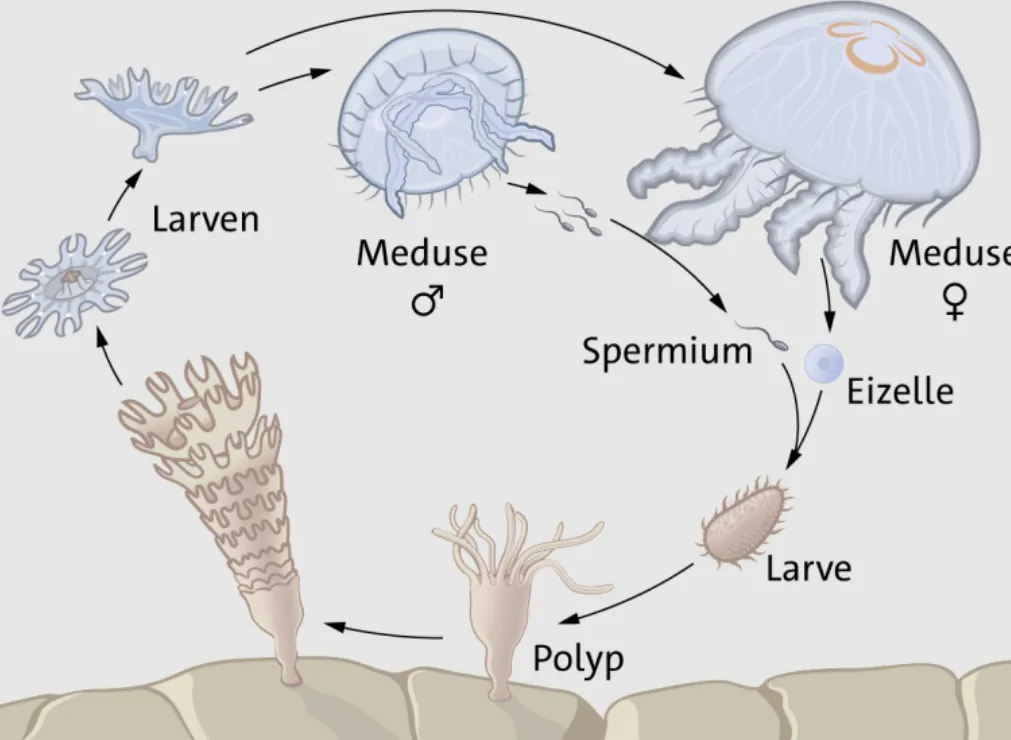
The immortal jellyfish’s life cycle is unlike that of any other organism. Instead of progressing in a straight line, it forms a continuous loop.
Here’s how it works:
- Fertilized Egg Stage:
- The cycle begins when eggs are fertilized and develop into larvae called planulae.
- Planula Stage:
- These larvae settle on the ocean floor and attach themselves to a surface.
- Polyp Stage:
- The planula develops into a polyp colony, which resembles tiny, branching structures.
- Medusa Stage (Adult Jellyfish):
- Polyps produce free-swimming jellyfish through budding. These mature into adult medusae.
- Reversal Process (Transdifferentiation):
- When stressed or injured, adult jellyfish can revert to the polyp stage rather than die.
This ability is what makes it “immortal.” Through cellular transformation, its specialized cells change into different types, effectively resetting its biological clock.
In nature, this survival mechanism provides a powerful advantage. While many marine organisms perish due to environmental stress, the immortal jellyfish adapts by starting over.
However, it is not invincible. Predators such as fish, sea turtles, and larger jellyfish still pose a threat. Additionally, pollution and climate change can impact its survival.
Their Reproductive Process and raising their children
The reproductive process of the immortal jellyfish is both complex and fascinating. It involves both sexual and asexual reproduction, allowing the species to thrive in various environments.
Here are the key stages:
- Sexual Reproduction:
- Adult medusae release sperm and eggs into the water. Fertilization occurs externally, forming larvae.
- Larval Development:
- The fertilized eggs develop into planula larvae, which swim freely before settling.
- Attachment and Growth:
- The larvae attach to surfaces and transform into polyps.
- Asexual Reproduction:
- Polyps reproduce by budding, creating multiple clones of jellyfish.
- No Traditional Parenting:
- Unlike mammals, immortal jellyfish do not raise their young. Once larvae are released, they are independent.
- Survival Strategy:
- Producing large numbers of offspring increases the chances of survival.
This dual reproductive strategy ensures both genetic diversity and rapid population growth. It also contributes to the species’ widespread distribution worldwide.
The importance of them in the ecosystem
The immortal jellyfish plays a crucial role in maintaining the balance of the marine ecosystem. Despite its small size, its impact is significant.
- Food Source:
- It serves as prey for various marine animals, including fish and sea turtles.
- Population Control:
- By feeding on plankton and small organisms, it helps regulate marine populations.
- Indicator of Ocean Health:
- Changes in jellyfish populations can signal shifts in ocean conditions.
- Nutrient Cycling:
- When they die, they contribute to nutrient recycling in marine ecosystems.
- Scientific Value:
- Their unique biology provides insights into aging, regeneration, and cellular processes.
Without species like the immortal jellyfish, the delicate balance of ocean ecosystems could be disrupted.
Important Things That You Need To Know
The immortal jellyfish is full of surprising facts that many people are unaware of. Understanding these details can deepen your appreciation for this extraordinary creature.
The immortal jellyfish is incredibly small, often no larger than a pinky nail. Its transparent body makes it difficult to spot in the ocean, helping it avoid predators.
When discussing the size of immortal jellyfish, most individuals measure about 4–5 millimeters in diameter. Despite their tiny size, they possess complex biological systems capable of cellular transformation.
The species known as the immortal jellyfish (Turritopsis dohrnii) is unique among all known animals for its ability to reverse aging. This makes it a subject of intense scientific research.
Interestingly, there is no such thing as the oldest immortal jellyfish in the traditional sense. Since it can reset its life cycle repeatedly, determining its age becomes nearly impossible.
The scientific name, Turritopsis dohrnii, for the immortal jellyfish of the genus Turritopsis is now widely recognized in marine biology. Researchers continue to study its genes to understand how it achieves biological immortality.
This combination of features makes the immortal jellyfish one of the most intriguing organisms on Earth.
What to do to protect them in nature and save the system for the future
Protecting the immortal jellyfish also means protecting the broader marine ecosystem. Here are key actions we can take:
- Reduce Ocean Pollution:
- Limit plastic waste and chemical runoff entering oceans.
- Support Marine Conservation Programs:
- Participate in or donate to organizations protecting marine life.
- Promote Sustainable Fishing Practices:
- Avoid overfishing, which disrupts marine food chains.
- Combat Climate Change:
- Reduce carbon emissions to prevent ocean warming and acidification.
- Protect Coastal Habitats:
- Preserve coral reefs and seagrass beds where marine life thrives.
- Raise Awareness:
- Educate others about the importance of marine biodiversity.
- Encourage Scientific Research:
- Support studies focused on marine biology and conservation.
- Adopt Eco-Friendly Lifestyle Choices:
- Use sustainable products and reduce environmental impact.
These steps not only protect the immortal jellyfish but also ensure the health of our oceans for future generations.
Frequently Asked Questions (FAQs)
1. What is the immortal jellyfish?
The immortal jellyfish (Turritopsis dohrnii) is a species capable of reverting its life cycle, effectively avoiding aging-related death.
2. Can immortal jellyfish live forever?
Theoretically, yes. However, they can still die from predators or environmental threats.
3. How big is the immortal jellyfish?
It is very small, typically around 4–5 millimeters in diameter.
4. Where are immortal jellyfish found?
They are found worldwide in oceans, especially in temperate and tropical regions.
5. What makes them unique?
Their ability to reverse their life cycle through transdifferentiation.
6. Do they have predators?
Yes, including fish, sea turtles, and other marine organisms.
7. How do they reproduce?
They reproduce both sexually and asexually.
8. Why are scientists interested in them?
Because their biology may help unlock secrets about aging and regeneration.
Conclusion
The immortal jellyfish’s life cycle stands as one of nature’s most astonishing biological mysteries. In a world where aging and death are considered inevitable, this tiny marine organism challenges our understanding of life itself. Its ability to reverse its life cycle through transdifferentiation offers a glimpse into the potential of cellular regeneration and longevity.
From its ancient evolutionary roots to its modern scientific significance, Turritopsis dohrnii represents a remarkable example of adaptation and survival. Despite its small size, it plays an essential role in marine ecosystems, contributing to biodiversity and ecological balance.
As research continues in 2026 and beyond, scientists are increasingly hopeful that studying the immortal jellyfish could lead to breakthroughs in medicine, particularly in aging and regenerative therapies. However, its survival is closely tied to the health of our oceans.
Human activities, including pollution, climate change, and habitat destruction, threaten marine life worldwide. Protecting species like the immortal jellyfish requires collective effort and awareness. By taking steps to preserve ocean ecosystems, we not only safeguard this incredible organism but also ensure a sustainable future for all marine life.
Also Read About: Grasshopper Insect Life Cycle