Admin
Admin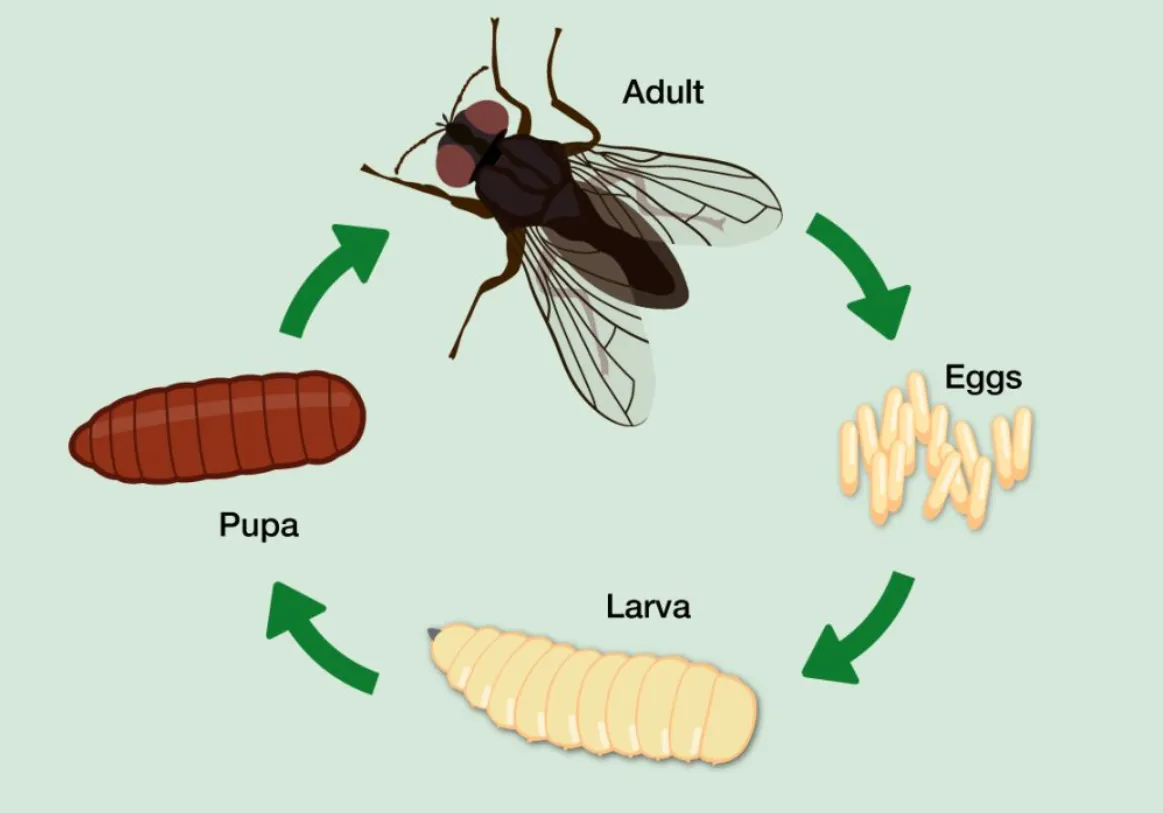
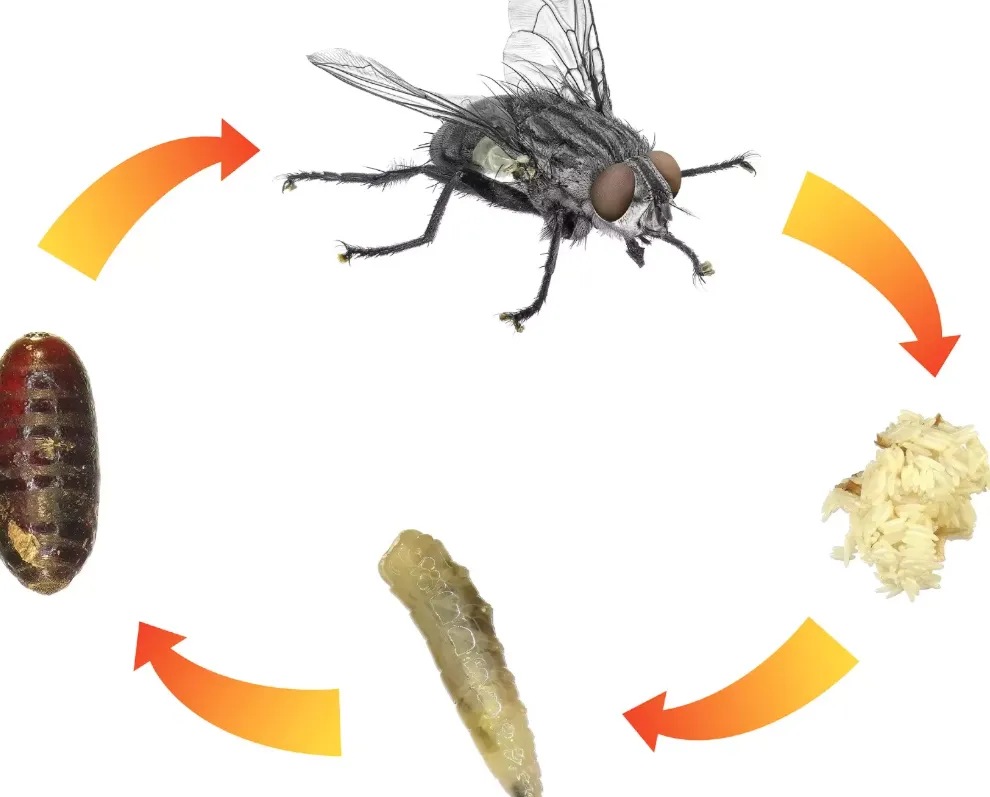
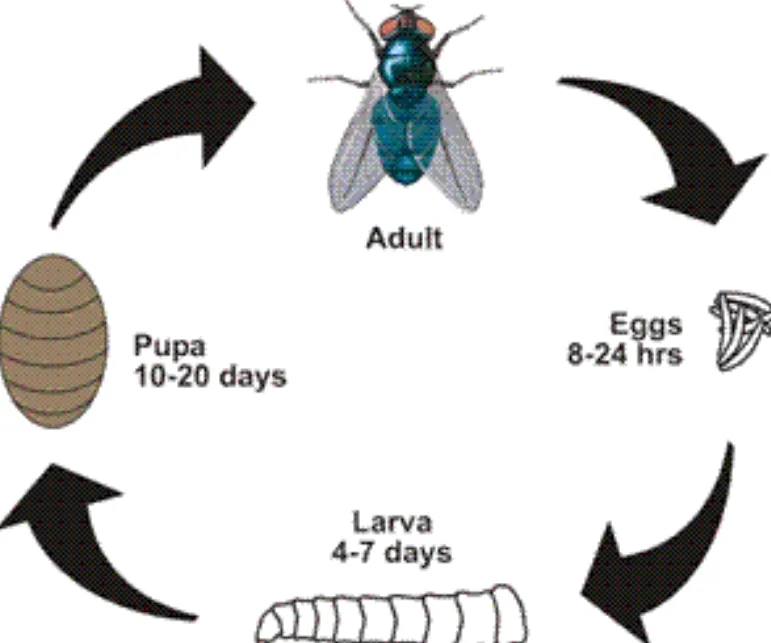
The house fly’s life cycle is one of the fastest and most adaptable insect life cycles found around humans. The common house fly, scientifically known as Musca domestica, undergoes complete metamorphosis, meaning it passes through four distinct stages: egg, larva, pupa, and adult. Under warm, moist conditions, this cycle can move quickly, allowing house fly populations to increase rapidly around garbage, manure, spoiled food, and other decaying organic matter.
A female house fly lays clusters of small, whitish eggs in moist organic material. These eggs hatch into house fly larvae, commonly called maggots, which feed actively before turning into pupae. After the pupal stage, the adult fly emerges, feeds, mates, and starts the cycle again.
Although many people search for house fly bites, a true house fly does not bite because it has sponging mouthparts, not piercing mouthparts. This is different from a horse fly, which can bite painfully using cutting mouthparts.
Q: How many stages are in the house fly life cycle?
A: The house fly life cycle has four stages: egg, larva, pupa, and adult.
Q: How long does it take for a housefly egg to hatch?
A: Under suitable conditions, house fly eggs may hatch within about 8 to 24 hours.
Q: How long does a house fly live?
A: Adult house fly lifespan usually ranges from a few weeks to about two months, depending on food, water, temperature, and environmental conditions.
Quick Life Cycle Table
| Stage | What Happens | Typical Time | Key Detail |
| Egg | Females lay eggs in moist organic waste | 8–24 hours | Eggs are small, white, and laid in clusters |
| Larva | House fly larvae feed and grow | 3–7 days in favorable conditions | Larvae are also called maggots |
| Pupa | Larva changes inside a brown puparium | 2–6 days, sometimes longer | Major body transformation happens here |
| Adult | Fly emerges, feeds, mates, and lays eggs | Usually weeks | Adult females can lay many egg batches |
Important Things That You Need To Know
Understanding the house fly life cycle is useful because it explains why flies appear suddenly in homes, farms, restaurants, and waste areas. A few adult flies may not look serious, but if they find moist garbage, manure, or food waste, the population can grow quickly.
One important point is that house fly eggs are usually placed directly in the food source for the larvae. This means the young flies do not need to search for food after hatching. They begin feeding almost immediately.
Another key fact concerns the house fly’s lifespan. People often ask how long a house fly lives, and the answer depends strongly on temperature, nutrition, water, and shelter. A fly in a warm kitchen with access to food may survive better than one in a dry outdoor environment.
Many people also search for solutions to house fly traps. Traps can reduce adult flies, but they do not solve the root problem if breeding sites remain. Removing garbage, cleaning drains, covering food, and sealing waste containers are more important for long-term control.
The phrase “horse fly vs. house fly” is also important. A house fly is smaller, does not bite, and feeds by liquefying food. A horse fly is usually larger, and female horse flies bite mammals to obtain blood for egg development.
Finally, house fly bites are usually a misunderstanding. If something that looks like a house fly bites you, it may be a stable fly, horse fly, or another biting fly, not a true house fly.
The History of Their Scientific Naming, Evolution, and Origin
Scientific Naming of the House Fly
The common house fly is scientifically named Musca domestica. The name is strongly linked with its close association with human homes, farms, food waste, and domestic environments. Musca refers to a fly, while domestica reflects its habit of living near human settlements.
Classification and Biological Identity
The house fly belongs to the order Diptera, which means “two wings.” Unlike many other winged insects that have two pairs of wings, true flies have only one functional pair. The house fly belongs to the family Muscidae, a group that includes several familiar flies found around animals, waste, and human activity.
Evolution and Adaptation
The evolutionary success of Musca domestica comes from its ability to use decaying organic matter as both food and a breeding site. Its fast life cycle, strong flying ability, flexible diet, and close relationship with human waste systems have helped it spread across nearly every inhabited region of the world.
Origin and Global Spread
The house fly likely became closely associated with humans as people began storing food, keeping livestock, and producing waste near settlements. Over time, trade, migration, agriculture, and urban growth helped this insect become one of the most widely recognized flies on Earth.
Their Reproductive Process, Giving Birth And Rising Their Children
Mating Process
Adult house flies usually begin reproduction after feeding. Mating occurs when a male locates a receptive female and transfers sperm. A female can store sperm and use it to fertilize multiple batches of eggs. This ability helps one female produce many offspring even after limited mating opportunities.
Egg-Laying Behavior
A female house fly does not give birth to live young. Instead, she lays housefly eggs in clusters. These eggs are usually placed in warm, moist, decomposing organic material such as manure, garbage, spoiled food, or waste mixed with straw. These materials provide both moisture and nutrition for the larvae.
High Reproductive Capacity
A female may lay around 75 to 150 eggs in one batch, and several hundred eggs during her lifetime. This is why fly problems can become serious very quickly if waste is not managed properly.
No Parental Care
House flies do not raise their young like birds or mammals. Once the eggs are laid in a suitable material, the parent fly leaves. The larvae survive by feeding on the same organic matter from which they hatched.
Larval Growth
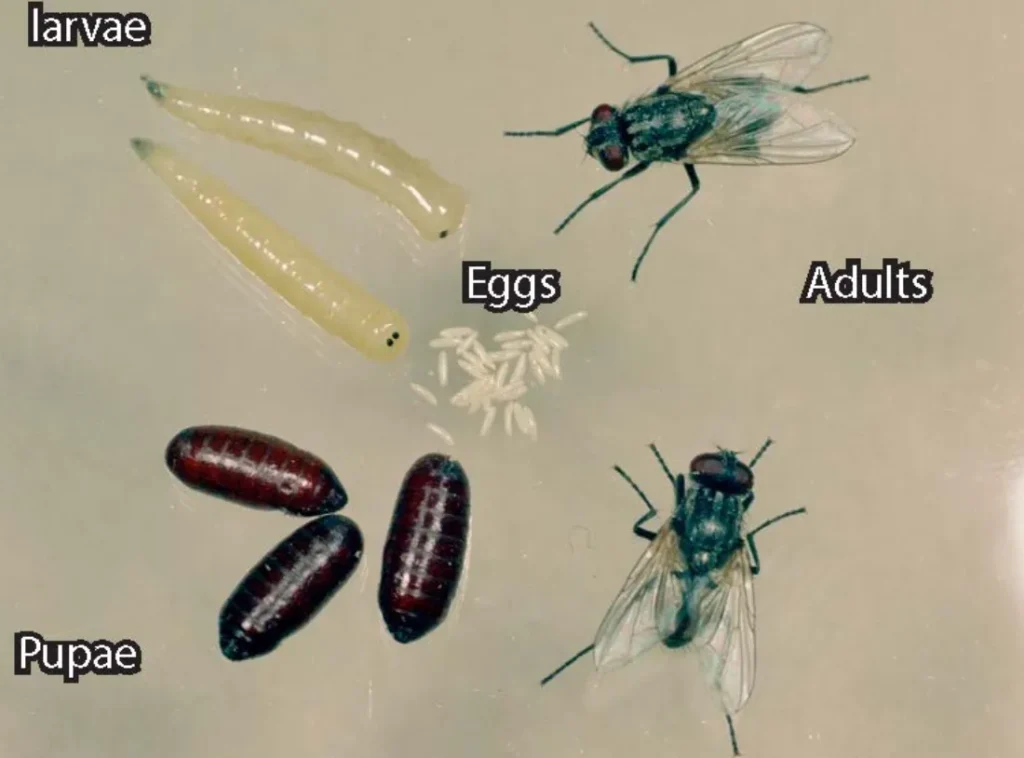
The newly hatched house fly larvae are legless, pale, and active feeders. They grow by passing through several larval stages, also called instars. After feeding enough, the larvae move to a drier place and enter the pupal stage.
Stages of the House Fly Life Cycle
1. Egg Stage
The egg stage is the beginning of the house fly’s life cycle. Female flies choose moist, nutrient-rich places where larvae can survive immediately after hatching. Common egg-laying sites include garbage, manure, animal waste, spoiled food, and damp organic matter.
The eggs are small, whitish, and usually laid in clusters. In warm conditions, they can hatch quickly, sometimes within the same day. This rapid hatching gives house flies an advantage in unstable environments where food waste may dry out, be removed, or become unsuitable for feeding.
2. Larva Stage
The larval stage is the feeding stage. House fly larvae, often called maggots, are creamy white, legless, and adapted to move through soft organic material. They feed on decomposing matter and grow rapidly.
During this stage, larvae pass through three growth phases. They consume food, increase in size, and prepare for metamorphosis. This stage is very important because the quality of larval food affects the size and strength of the adult fly.
3. Pupa Stage
After the larva finishes feeding, it moves away from the wet breeding material to a drier location. There, it forms a protective case called a puparium. This case may turn from yellowish or reddish to dark brown or black as it ages.
Inside the pupal case, the insect transforms from a soft larva into a winged adult fly. This stage looks inactive from the outside, but inside, major changes are happening.
4. Adult Stage
The adult house fly emerges from the puparium using a special head structure to break open the case. At first, the body is soft, but it soon hardens. The adult then searches for food, water, and mates.
Adult flies are gray, usually about 5–7 mm long, with large compound eyes and dark stripes on the thorax. They cannot chew solid food. Instead, they use liquid feeding methods and often soften solid food with saliva before consuming it.
Their main diet, food sources, and collection process are explained
The house fly has a very flexible diet. Both adults and larvae are strongly attracted to moist, decaying organic matter. This is why they are common around garbage bins, animal shelters, food waste, markets, kitchens, and farms.
Adult house flies feed on liquid or semi-liquid food. When they land on solid food, they may regurgitate digestive fluid to soften it, then suck it up through their sponging mouthparts. This feeding habit is one reason they can contaminate food surfaces after visiting waste, manure, or carrion.
Common food sources include:
- Rotting fruits and vegetables
- Animal manure
- Garbage and kitchen waste
- Spilled drinks and sugary liquids
- Decaying animal matter
- Human and animal excrement
- Milk, food scraps, and moist organic residue
The collection process is guided mainly by smell, moisture, and accessibility. Flies detect odors from decomposing materials and fly toward them. They land, taste the material with their sensory structures, and feed if the material is suitable.
For larvae, feeding is simpler. The female lays eggs directly into the food source. After hatching, the larvae begin feeding immediately, using the surrounding organic matter to grow before pupation.
How Long Does A House Fly Live
The question of how long a house fly lives is common because flies seem to appear suddenly and disappear quickly. The answer depends on several real-life factors.
- Adult lifespan is usually measured in weeks.
- The adult house flies’ lifespan is typically a few weeks, but it may be longer when food, water, and shelter are available. LSU AgCenter notes that adult Musca domestica can live from about 25 days to two months, depending on nutrition.
- Without food, survival is very short.
- A house fly cannot live long without nutrition. Under poor conditions, adults may survive only a few days without food. Access to sugar, moisture, and suitable resting places can improve survival.
- Temperature affects lifespan
- Warm temperatures speed up development and reproduction. However, extreme heat or dryness can reduce survival. Cooler conditions may slow activity and development, sometimes extending the time needed to complete the life cycle.
- Food quality matters
- A fly with access to nutritious liquid food, moisture, and safe resting places may live longer than one trapped in a dry room with no food.
- The full life cycle may be short in ideal conditions
- Under favorable conditions of warmth and moisture, the egg-to-adult process can occur quickly. This is why house fly control must focus on removing breeding sites, not only killing adult flies.
- Indoor flies may survive differently from outdoor flies
- Indoors, flies may avoid rain, predators, and wind, but they may die faster if there is no food or water. Outdoors, flies may find more breeding material but face predators and weather stress.
- Reproduction begins soon after adulthood.
- Female flies can begin laying eggs after reaching reproductive maturity and feeding. This makes even a short-lived adult important in population growth.
- A small fly is not always a young fly.
- Adult house flies do not grow after emerging. A small adult may have had poor larval nutrition, not necessarily be younger.
House Fly Life Cycle Lifespan in the Wild vs. in Captivity
Lifespan in the Wild
In the wild or outdoor environment, the house fly’s lifespan is shaped by weather, predators, food supply, and sanitation. Flies may find rich breeding sites around manure, food waste, garbage, and decaying organic matter. However, they also face spiders, birds, frogs, lizards, wind, rain, heat, and human control measures.
Outdoor flies may live only a short time if conditions are dry, cold, or unsafe. But in warm places with abundant waste, their life cycle can continue rapidly across multiple generations.
Lifespan in Captivity or Controlled Conditions
In captivity, under laboratory conditions, or in protected indoor environments, house flies may live longer if they receive water, sugar, protein, a suitable temperature, and a safe resting space. Controlled conditions reduce predators and environmental stress.
However, ordinary homes are not always ideal environments for captivity. A fly trapped in a clean, dry room without food or water may die quickly. A fly near uncovered food waste or drains may survive longer.
Main Difference
The main difference is stability. Wild environments provide natural resources but also pose many dangers. Captive or indoor conditions may reduce danger but only support longer survival when food and moisture are available.
Importance of the House Fly Life Cycle in this Ecosystem
Role in Decomposition
Despite being a nuisance, the house fly has an ecological role. Its larvae help break down decaying organic matter such as manure, food waste, and carrion. This supports nutrient recycling and reduces the buildup of rotting material in nature.
Food for Other Animals
House flies and their larvae are food for many animals. Birds, frogs, lizards, spiders, fish, and other insects may feed on flies or maggots. In this way, the house fly life cycle supports the food web.
Forensic Importance
House flies and other insects can also be important in forensic science. Because they visit decomposing bodies and develop through predictable life stages, their eggs, larvae, and pupae may help investigators estimate time-related details in decomposition studies.
Waste Conversion Potential
The feeding ability of fly larvae shows how insects can convert organic waste into biological matter. While house flies are not usually welcome in homes due to disease risks, their ecological role as decomposers remains important.
Disease and Balance
Their importance is not only positive. House flies can mechanically transfer pathogens from waste to food surfaces. This means their ecological role must be balanced with hygiene, sanitation, and safe waste management.
What to do to protect them in nature and save the system for the future
1. Protect Natural Decomposer Habitats
- Support healthy, natural habitats where insects, fungi, and bacteria can safely break down organic matter.
- Avoid destroying every insect habitat unnecessarily.
- Keep natural waste cycles functioning in forests, wetlands, farms, and grasslands.
2. Manage Waste Responsibly
- Do not leave garbage, manure, or food scraps exposed near homes.
- Use covered bins and proper composting systems.
- Good sanitation protects human health while still allowing decomposition to happen in controlled places.
3. Reduce Harmful Chemical Use
- Avoid unnecessary insecticide spraying in natural areas.
- Use targeted pest management instead of broad chemical control.
- Overuse of chemicals can harm beneficial insects, predators, soil organisms, and pollinators.
4. Support Biodiversity
- Maintain plants, ponds, soil life, birds, reptiles, and amphibians.
- A balanced ecosystem naturally controls fly populations through predators.
- Biodiversity prevents one pest species from becoming too dominant.
5. Use Smart Control, Not Total Elimination
- Use screens, cleaning, traps, and waste control around homes.
- Do not aim to remove all flies from nature.
- The goal is to reduce indoor disease risk while maintaining balanced outdoor ecological processes.
Fun & Interesting Facts About House Fly Life Cycle
- House flies go through complete metamorphosis: egg, larva, pupa, and adult.
- House fly larvae are called maggots, and they are the main feeding stage of the life cycle.
- A female house fly can lay many eggs, often in batches placed directly into moist waste material.
- House flies cannot bite because they have sponging mouthparts, not piercing mouthparts.
- Horse flies are different from house flies. Female horse flies can bite because they need blood to help develop eggs.
- A house fly can walk upside down using special structures on its feet that help it cling to surfaces.
- Adult house flies do not grow bigger after emerging from the pupa. Their adult size depends largely on larval nutrition.
- House flies are strong fliers and may travel from breeding sites to food areas.
- House fly traps can reduce adult flies, but removing breeding sites is the most important control step.
- House flies are both useful and harmful: useful as decomposers, harmful when they contaminate food and spread disease-causing organisms.
Frequently Asked Questions (FAQs)
Q: What is the full house fly life cycle?
A: The full house fly life cycle includes four stages: egg, larva, pupa, and adult. This is called complete metamorphosis.
Q: Where do house flies lay eggs?
A: Female flies lay house fly eggs in moist organic matter such as manure, garbage, spoiled food, and decaying waste.
Q: What are house fly larvae?
A: House fly larvae are maggots. They are legless, pale, and feed on the organic material where the eggs were laid.
Q: Do house flies bite humans?
A: No. True house flies do not bite because their mouthparts are made for sponging and lapping liquid food. If a fly bites, it may be a horse fly, stable fly, or another biting species.
Q: What is the best house fly trap method?
A: A house fly trap can help catch adults, but the best long-term method is sanitation. Remove garbage, cover food, clean drains, manage manure, and keep breeding areas dry.
Conclusion
The house fly’s life cycle is fast, efficient, and closely connected to human environments. From house fly eggs to house fly larvae, pupae, and adults, each stage is designed for survival in moist, decaying organic material. This is why house flies are common around homes, farms, markets, and waste areas.
A house fly may seem like a small nuisance, but its biology is important. It helps recycle organic matter and supports food webs, yet it can also contaminate food and spread harmful microorganisms when sanitation is poor. Understanding the house fly’s lifespan, feeding behavior, reproduction, and the differences between horse flies and house flies helps people control flies safely and intelligently.
The best approach is balance: protect natural decomposition systems outdoors, but prevent house fly breeding indoors through cleanliness, covered waste, proper food storage, and smart pest management.
Also Read: aphids life cycle