Admin
Admin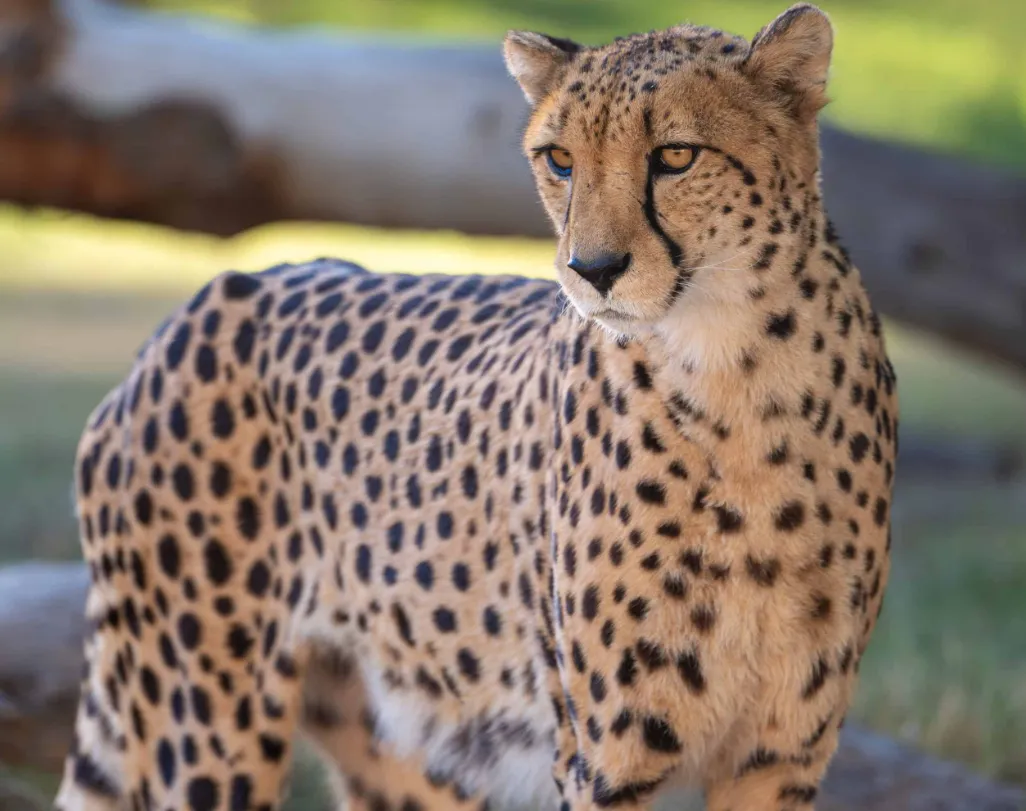
The cheetah’s life cycle is one of the most fascinating stories in the wild. The cheetah, scientifically known as Acinonyx jubatus, is famous as the fastest land animal, but its survival is about much more than speed. From blind newborn cubs hidden in grass to independent young hunters and powerful adults, every stage of a cheetah’s life is shaped by danger, learning, hunger, competition, and adaptation.
Cheetahs are built for short, explosive speed, not long fights. Their slim bodies, long legs, flexible spines, semi-retractable claws, enlarged lungs, and long balancing tails help them chase fast prey across open grasslands. However, this same lightweight body also makes them vulnerable to stronger predators such as lions, hyenas, and leopards. Cheetah cub survival is especially difficult, with many cubs lost before adulthood.
Today, cheetahs are listed as Vulnerable globally, and their wild population is estimated at 6,517 mature individuals across fragmented populations. Many live outside protected areas, where habitat loss, livestock conflict, prey decline, roads, and illegal wildlife trade threaten their future.
Q: What are the main stages of the cheetah life cycle?
A: The main stages are cub, adolescent, and adult. Cubs depend on their mother, adolescents learn hunting skills, and adults reproduce and survive independently.
Q: How long does a cheetah stay with its mother?
A: Cheetah cubs usually stay with their mother for about 18 months, learning how to hunt, hide, and avoid predators.
Q: How fast can a cheetah run?
A: Cheetahs commonly reach 80–100 km/h while chasing prey, and measured maximum speeds can reach around 114 km/h in short bursts.
Quick Life Cycle Table
| Life Stage | Age Range | Key Features | Survival Challenge |
| Newborn Cub | Birth to 6 weeks | Blind, helpless, hidden in the grass | Predators, cold, hunger |
| Growing Cub | 6 weeks to 6 months | Follows mother, starts eating meat | Lions, hyenas, eagles |
| Learning Cub | 6 to 18 months | Learns stalking, chasing, and killing prey | Hunting failure |
| Adolescent | 18 to 24 months | Leaves mother, siblings may stay together | Independence and territory |
| Adult | 24 months and older | Hunts, mates, raises cubs | Habitat loss, conflict, injury |
| Older Adult | 8+ years in the wild | Less hunting strength | Competition, disease, starvation |
The History of Their Scientific Naming
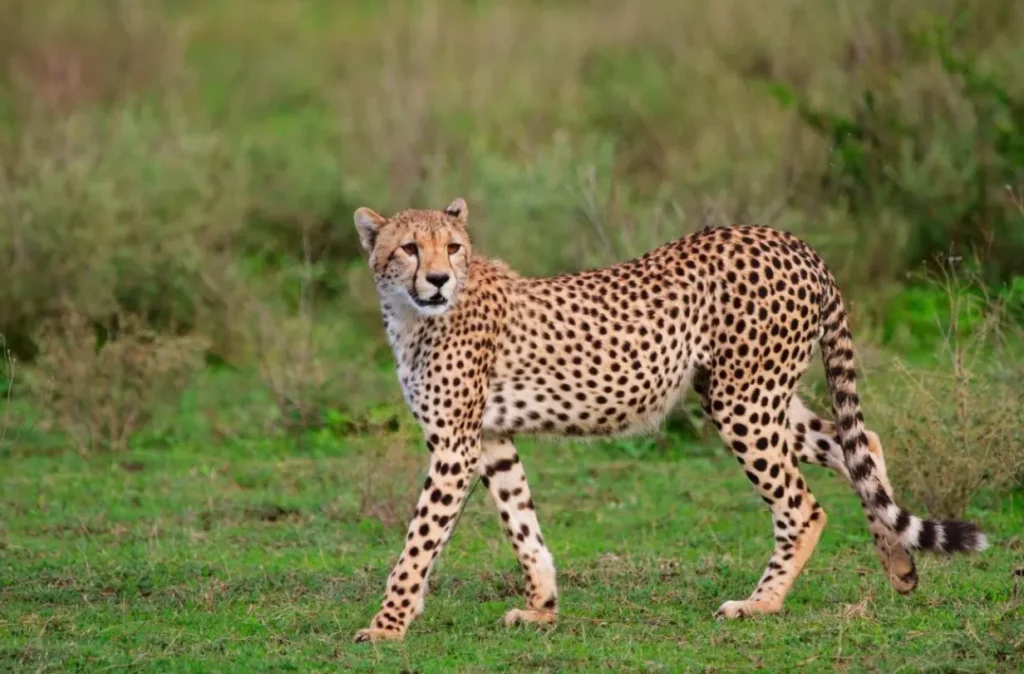
The scientific name of the cheetah is Acinonyx jubatus. This name helps separate the cheetah from other wild cats, especially the leopard, which many people confuse with it.
The genus name Acinonyx is commonly explained as referring to the cheetah’s limited ability to retract its claws. Unlike many cats, cheetahs keep their claws partly exposed, giving them a better grip during high-speed turns. The species name jubatus means “maned” or “crested,” referring to the long, silvery mantle seen on young cubs.
Important naming points:
- Common name: Cheetah
- Scientific name: Acinonyx jubatus
- Family: Felidae
- Genus: Acinonyx
- Species: jubatus
- Original scientific description: Linked to Schreber, 1775, in modern taxonomy references.
The English word cheetah is linked to older South Asian words meaning “spotted” or “painted,” which fit the animal’s golden coat covered with black spots. This naming history reflects both the cheetah’s appearance and its unique body design.
Their Evolution And Their Origin
The cheetah is not just another spotted cat. It is a highly specialized predator shaped by millions of years of evolution for speed, open-land hunting, and short-distance pursuit. Molecular evidence shows that cheetahs are closely related to the puma and jaguarundi, not to leopards or lions.
Cheetahs belong to a rare evolutionary path among cats. While lions, tigers, and leopards developed strength and power, cheetahs evolved a lightweight body built for acceleration. Their long legs, flexible spine, deep chest, enlarged heart, large nasal passages, and long tail work together like a natural racing system. These adaptations allow the cheetah to close the gap quickly when prey tries to escape.
Fossil and evolutionary studies suggest that ancient cheetah relatives were once more widespread than modern cheetahs. Today, however, the living cheetah is the only surviving member of the genus Acinonyx. Its modern range is much smaller than its historical range. Cheetahs once lived across large parts of Africa, the Middle East, and India. Still, now they mainly survive in fragmented areas of sub-Saharan Africa, with a very small Asian population remaining in Iran.
A major concern in cheetah evolution is low genetic diversity. Scientists link this to historical population bottlenecks, during which cheetah numbers dropped sharply, leaving only a few individuals to contribute to later populations. Low genetic diversity can reduce disease resistance and make small, isolated populations more vulnerable.
This evolutionary story explains both the cheetah’s strength and weakness. It is built for speed better than any land animal, but it needs large open spaces, healthy prey populations, and safe breeding areas to survive.
Their main food and its collection process
Cheetahs are carnivores, meaning they depend on meat. Their main prey includes small to medium-sized animals such as Thomson’s gazelles, impalas, springbok, hares, game birds, and young antelopes. In some regions, male coalitions may hunt larger prey, but most cheetahs prefer animals that can be caught through speed rather than strength.
Their food collection process is based on patience, timing, and explosive acceleration.
- Searching for prey: Cheetahs often scan open grasslands during the day, especially early morning or late afternoon.
- Choosing a target: They usually select young, weak, less alert, or separated animals because these are easier to catch.
- Stalking quietly: Before sprinting, a cheetah tries to move close to the prey using grass, bushes, or land shape as cover.
- Short high-speed chase: Once close enough, it bursts forward at incredible speed. Most chases are short because sprinting generates intense body heat and requires a large amount of energy.
- Tripping the prey: A cheetah may use its forepaw and dewclaw to knock prey off balance.
- Killing quickly: It usually kills prey with a throat hold, cutting off breathing.
- Eating fast: Cheetahs eat quickly because stronger predators like lions, hyenas, leopards, and jackals may steal their kill.
A mother with cubs often needs to hunt more frequently because she must feed herself and her growing young. Hunting is not always successful, so cubs must watch and practice many times before they can survive on their own.
Important Things That You Need To Know
Many people search for cheetah-related terms, but not all of them mean the same thing. Understanding these terms helps readers find the right information about the real animal.
The word cheetah refers to the wild cat species Acinonyx jubatus, the fastest land animal and a specialist hunter of open habitats. The phrase “how fast can a cheetah run?” usually refers to its sprinting speed. Cheetahs can reach extremely high speeds, but only for short distances because their bodies heat up quickly during a chase.
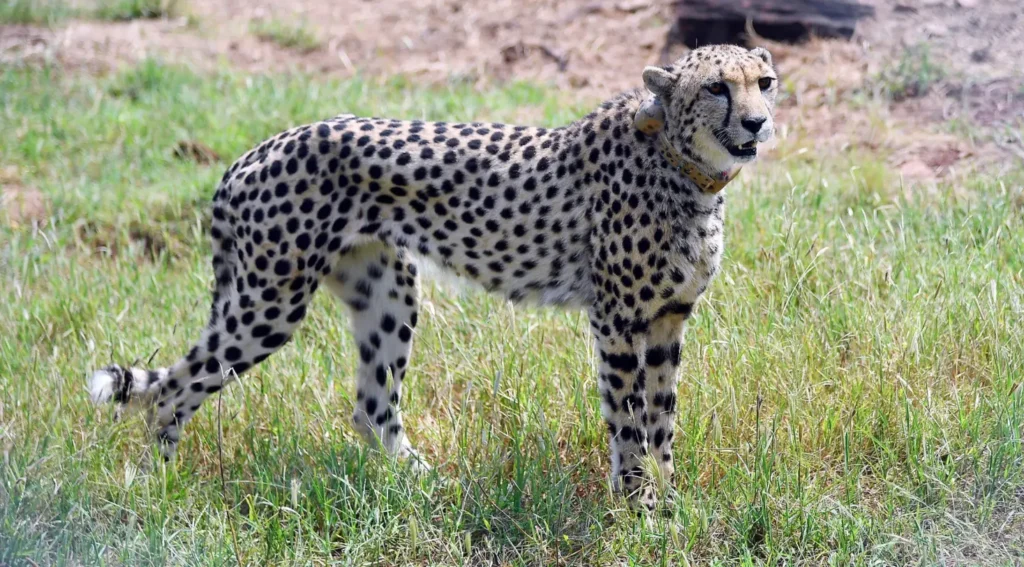
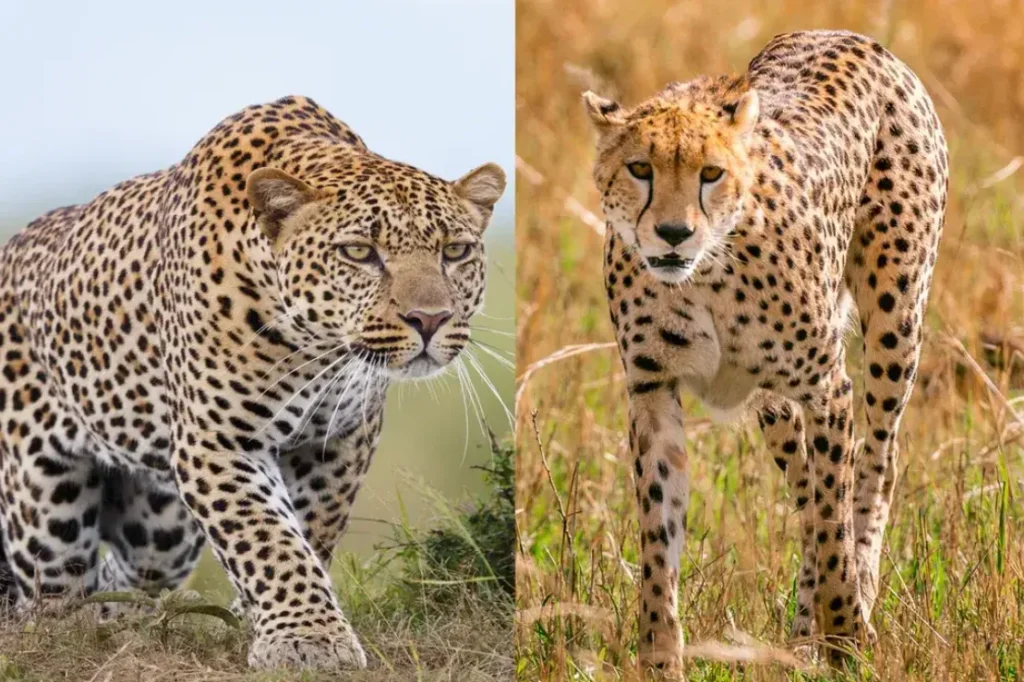
The search terms “cheetah vs leopard” and “leopard vs cheetah” are very common because both animals have spotted coats. The difference is simple: a cheetah has solid black spots, a slim body, long legs, and black tear marks on the face. A leopard has rosette-shaped markings, a stronger body, and no tear lines. Leopards are powerful climbers, while cheetahs are open-ground sprinters.
The phrase cheetah print usually refers to fashion patterns inspired by the cheetah’s spotted coat. It is not the same as studying the animal’s biology. Similarly, entertainment or product-related searches may use the word “cheetah,” but this article focuses on the real wildlife species, its life cycle, survival, and conservation.
Their life cycle and ability to survive in nature
Cub stage: birth to 18 months
Cheetah cubs are born after about three months of pregnancy. They are blind, small, and helpless at birth. The mother hides them in tall grass or thick vegetation to protect them from predators. Cubs have a silvery-grey mantle along their backs, which may help with camouflage and may make them look like a honey badger.
This is the most dangerous stage. Lions, hyenas, leopards, eagles, and even harsh weather can kill cubs. To reduce danger, the mother moves them from place to place.
Adolescent stage: 18 to 24 months
At about 18 months, young cheetahs separate from their mother. Brothers may stay together in a group called a coalition, while young females usually lead more solitary lives. This stage is difficult because they must hunt without help.
Adult stage: 24 months and older
Adult cheetahs are mature hunters. Females raise cubs alone, while males may defend territories or move through large areas. Survival depends on prey availability, safe habitat, and avoiding stronger predators and humans.
Their Reproductive Process and raising their children
Cheetah reproduction is closely linked to survival conditions. Females usually reach maturity around 2 to 3 years old, while males may also become mature around this age, although wild males often need territory or coalition strength before successful breeding.
The reproductive process includes several important steps:
- Finding a mate: Male cheetahs use scent marking and vocal calls to communicate. During mating periods, males may follow females and compete with other males.
- Mating: Cheetahs do not form long-term breeding pairs. After mating, the male usually leaves, and the female handles all parental care.
- Gestation: Pregnancy lasts around 90 to 93 days.
- Birth: A female usually gives birth in a hidden place. Litter size often ranges from three to five cubs, but litters can be smaller or larger.
- Early care: The mother nurses, cleans, and keeps the cubs warm, and moves them frequently to reduce predator risk.
- Teaching survival: At around six months, the mother begins teaching cubs how to hunt and avoid danger. Cubs learn by watching, playing, chasing, and practicing.
- Independence: By around 18 months, cubs leave their mother. Even then, they may not be perfect hunters, so sibling cooperation can help them survive.
Male cheetahs do not raise cubs. The female’s success depends on her hunting skills, her ability to hide her cubs, and her access to a safe habitat with enough prey.
The importance of them in this Ecosystem
Controlling prey populations
Cheetahs help maintain balance by hunting small and medium-sized herbivores. By selecting weaker, younger, or less alert animals, they support natural selection and keep prey populations healthier.
Without predators like cheetahs, some herbivore populations may grow too large and overgraze grasslands. This can damage vegetation, reduce food for other animals, and weaken the Ecosystem.
Supporting biodiversity
Cheetahs are part of a larger predator-prey system. Their hunting behavior affects gazelles, impalas, hares, birds, hyenas, jackals, vultures, insects, and scavengers. When a cheetah leaves remains from a kill, other animals may feed on it.
This means the cheetah contributes to energy flow in the wild. It is not only a hunter but also part of the food web.
Indicator of healthy landscapes
Cheetahs need large, open spaces, plenty of prey, and low human pressure. When cheetahs survive in an area, it often means the landscape still has some ecological health.
Because many cheetahs live outside protected areas, their conservation also helps protect coexistence zones between farmland and wildlife, grasslands, dry forests, shrublands, and savannas. Protecting cheetahs can therefore protect many other species at the same time.
What to do to protect them in nature and save the system for the future
Saving the cheetah requires protecting both the animal and its Ecosystem. Since many cheetahs live outside national parks, conservation must include local communities, farmers, governments, and wildlife organizations.
- Protect large connected habitats: Cheetahs need wide landscapes. Wildlife corridors should connect isolated populations.
- Reduce human-wildlife conflict: Farmers should use non-lethal livestock protection methods, such as guarded kraals, trained livestock guardian dogs, and better night enclosures.
- Protect natural prey: Anti-poaching efforts must protect gazelles, impalas, springbok, and other prey species.
- Stop illegal cub trade: Cheetah cubs are sometimes taken for the exotic pet trade. Strong enforcement and awareness are needed.
- Make roads safer: In cheetah range areas, road planning, speed control, warning signs, and wildlife crossings can reduce deaths.
- Support community conservation: Local people should benefit from wildlife tourism, conservation jobs, and education.
- Improve scientific monitoring: Camera traps, GPS tracking, genetic research, and population surveys help conservationists understand where cheetahs are declining.
- Support protected and unprotected landscapes: National parks alone are not enough because many cheetahs live outside protected areas. Conservation must include private land and community land.
Frequently Asked Questions (FAQs)
Q1: What is the cheetah’s life cycle?
A: The cheetah life cycle includes three main stages: cub, adolescent, and adult. Cubs depend on their mother, adolescents learn independence, and adults hunt, mate, and reproduce.
Q2: How long are cheetahs pregnant?
A: Cheetah pregnancy lasts about 90 to 93 days, or roughly three months.
Q3: How many cubs does a cheetah have?
A: A female cheetah commonly gives birth to three to five cubs, though litter size can vary.
Q4: Why do many cheetah cubs die?
A: Cheetah cubs are vulnerable to lions, hyenas, leopards, eagles, bad weather, and starvation. Their mother can hide and move them, but she cannot always defend them from stronger predators.
Q5: How fast can a cheetah run?
A: A cheetah can commonly reach 80–100 km/h during a chase, with maximum measured speeds reported around 114 km/h.
Q6: What do cheetahs eat?
A: Cheetahs eat meat, especially gazelles, impalas, springbok, hares, birds, and young antelopes.
Q7: What is the difference between a cheetah and a leopard?
A: Cheetahs have solid black spots, tear marks, slim bodies, and long legs. Leopards have rosette-shaped markings, stronger bodies, and are better climbers.
Q8: Are cheetahs endangered?
A: Cheetahs are globally listed as Vulnerable, while some subspecies, including the Asiatic cheetah and Northwest African cheetah, are Critically Endangered.
Conclusion
The cheetah’s life cycle is a powerful example of speed, struggle, learning, and survival. From helpless cubs hidden in grass to skilled adults sprinting across open land, every stage of a cheetah’s life depends on habitat, prey, maternal care, and protection from threats.
Although the cheetah is the fastest land animal, speed alone cannot protect it from habitat loss, prey decline, human conflict, illegal wildlife trade, and genetic vulnerability. Its future depends on large connected landscapes, safer coexistence with people, stronger protection of prey, and long-term conservation planning.
Understanding the cheetah’s life cycle helps us appreciate why this animal is both extraordinary and fragile. If we protect cheetahs, we also protect grasslands, prey species, scavengers, and the natural balance of ecosystems. A future with wild cheetahs is possible, but it requires action before their remaining populations become too small and isolated.
Also Read: life cycle of monarch butterfly