Admin
Admin
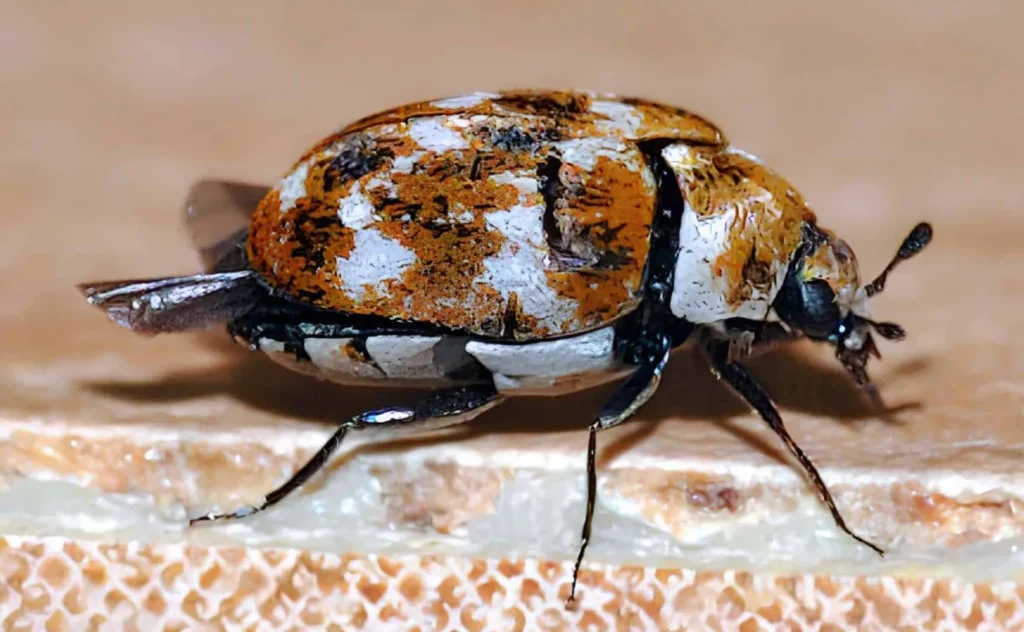
The carpet beetle’s life cycle is an important topic for homeowners, students, pest-control learners, and anyone who wants to understand why these tiny insects suddenly appear near windows, carpets, wardrobes, stored fabrics, or pantry corners. Carpet beetles are small insects from the Dermestidae family. They are not the same as bed bugs, and they do not feed on human blood. The main problem comes from their larvae, which can damage wool, silk, feathers, fur, leather, dead insects, pet hair, lint, and some stored dry foods.
In nature, carpet beetles work as small recyclers. Their larvae help break down dry animal-based materials, such as feathers, hair, dead insects, and old nests. Inside homes, however, the same feeding habit can become a serious problem because larvae may feed on carpets, clothing, blankets, museum specimens, and stored products. Adult beetles often feed outdoors on pollen, then may enter homes and lay eggs near suitable larval food sources.
Q: What is the life cycle of carpet beetles?
A: Carpet beetles pass through egg, larva, pupa, and adult stages. This is called complete metamorphosis. The larval stage is usually the longest and most damaging stage.
Q: Do carpet beetles bite humans?
A: No, carpet beetles do not bite humans. Some people may experience skin irritation from tiny larval hairs, which can look like bite marks, but it is not a true bite.
Q: Why do carpet beetles come into homes?
A: They come from outdoor populations, bird nests, animal dens, infested furniture, stored foods, flowers, or open windows. They stay when larvae find food such as pet hair, lint, wool, feathers, dead insects, or dry pantry products.
Quick Life Cycle Table
| Stage | What Happens | Common Duration | Main Risk or Role |
| Egg | Females lay tiny white eggs near food sources | Around 8–20 days, depending on species and temperature | Hidden in lint, cracks, wardrobes, carpets, air ducts, or near stored materials |
| Larva | Hairy larvae feed and grow through several molts | It can last months to over a year in many species | Most damaging stage; eats wool, fur, feathers, hair, dead insects, and some dry foods |
| Pupa | Larva transforms into an adult beetle | Often around 10–17 days, but varies | Usually hidden and inactive |
| Adult | Adult beetle flies mate, feed on pollen, and lay eggs | Often, it takes 2–6 weeks for many carpet beetles | Adults are visible near windows and lights; they do not damage fabrics like larvae. |
The timing is not fixed for all carpet beetles. For example, varied carpet beetles may lay about 40 eggs; eggs may hatch in 10–20 days; larvae may live 220–630 days; and adults may live a few weeks. Other species may develop faster or slower depending on food, temperature, humidity, and season.
Important Things That You Need To Know
Before studying the deeper biology, you should understand the practical side of carpet beetles. These insects are often noticed only after damage appears. The most common signs of carpet beetles include shed larval skins, tiny hairy larvae, small adult beetles near windows, holes in wool or natural fabrics, damaged feathers or fur items, and dry debris called frass around feeding sites.
Many people search for how to get rid of carpet beetles because they think the adult beetles are the main problem. In reality, the larvae cause most damage. Adult beetles may fly indoors, but the hidden larvae feed quietly in dark places. That is why cleaning, vacuuming, washing fabrics, removing lint, and finding the food source are more important than only killing visible adults.
A common question is do carpet beetles bite. They do not bite like fleas, mosquitoes, or bed bugs. However, larval hairs may irritate sensitive skin and create rash-like marks. Another common question is where do carpet beetles come from. They may come from flowers, open doors, old bird nests, animal nests, infested rugs, second-hand furniture, wool clothing, or stored dry food.
People also ask what causes carpet beetles, and are carpet beetles harmful? The availability of food sources and hiding places causes them. They are not highly dangerous to humans, but they can damage household goods and may trigger skin irritation in sensitive people.
The History of Their Scientific Naming
The common name “carpet beetle” does not refer to a single species. It is a general name used for several small beetles in the family Dermestidae, order Coleoptera. The word Dermestidae is associated with “skin beetles” because many members of this family feed on dry animal materials, such as skin, hair, fur, feathers, and dead insects.
Important naming points:
- Kingdom: Animalia
- Phylum: Arthropoda
- Class: Insecta
- Order: Coleoptera
- Family: Dermestidae
- Common group names: carpet beetles, skin beetles, hide beetles, larder beetles
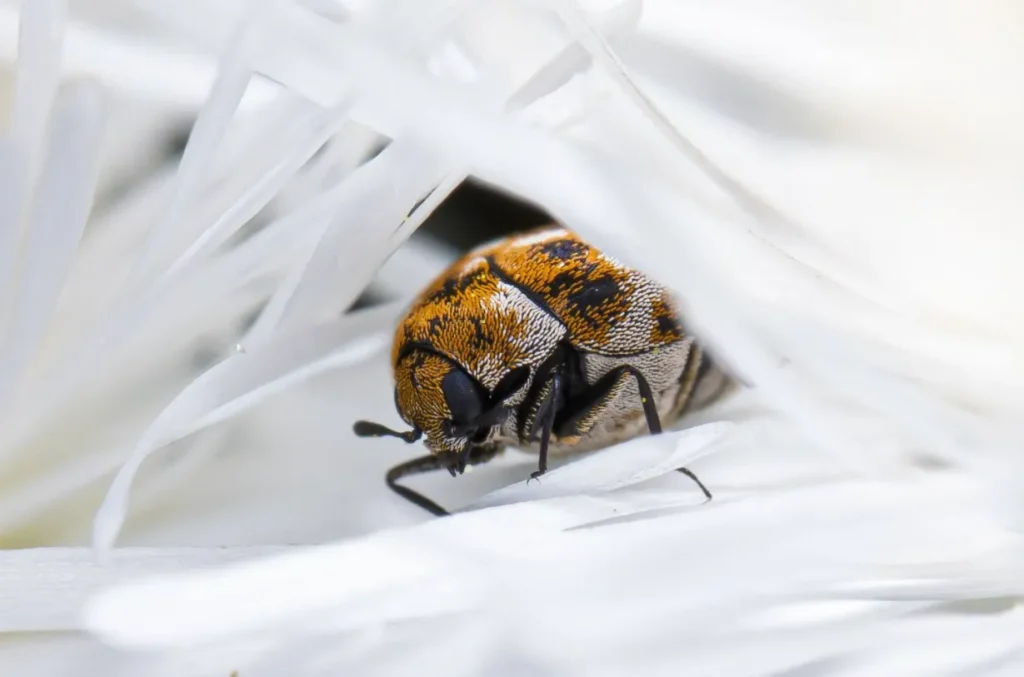
One famous species is the varied carpet beetle, scientifically known as Anthrenus verbasci. It was originally described by Linnaeus in 1767 and is still one of the best-known carpet beetle species.
Scientific naming helps separate carpet beetles from similar household pests such as clothes moths, bed bugs, fleas, and pantry beetles. This is important because each pest has a different life cycle, food source, and control method.
Their Evolution And Their Origin
The evolutionary success of carpet beetles comes from their ability to feed on materials that many other insects cannot easily digest. Their family, Dermestidae, includes many scavenging beetles that specialize in dry animal-based matter. In natural habitats, these materials include feathers in bird nests, fur in mammal dens, dry carcass remains, dead insects, old skin, and dried organic debris.
This feeding style gave dermestid beetles a strong survival advantage. While many insects need fresh leaves, living plants, or blood meals, carpet beetle larvae can survive in dry, hidden, low-moisture environments. Their hairy bodies, slow movement, and ability to remain hidden make them well adapted to nests, cracks, attics, abandoned animal spaces, and indoor storage areas.
As human homes became filled with wool rugs, carpets, leather, feather pillows, taxidermy, stored grains, pet hair, and clothing, carpet beetles found new artificial habitats. A home can accidentally copy the natural environment of a bird nest or animal den: warm, dry, dark, and full of organic fibers.
The origin of household infestations often lies in outdoor populations. Adult beetles may feed on pollen and flowers outside, then enter homes through windows, doors, vents, or cracks. Some infestations also begin through infested second-hand furniture, old rugs, stored clothing, museum specimens, or pantry products.
Because their life cycle can stretch from a few months to more than a year, carpet beetles can survive quietly before people notice them. This hidden lifestyle is one reason they remain common indoor pests worldwide.
Their main food and its collection process
The main food of carpet beetle larvae is dry organic material, especially animal material. The larvae are the feeding and damaging stage. Adult beetles usually feed outside on pollen and nectar, while larvae feed in dark places where food is available.
Their food sources include:
- Wool carpets and wool clothing
- Fur, feathers, leather, and silk
- Pet hair and lint under furniture
- Dead insects in windowsills, attics, basements, and wall voids
- Bird nests, wasp nests, and animal dens
- Taxidermy, dried specimens, and museum collections
- Dry pet food, cereals, spices, flour, grains, and other stored products
- Cotton, linen, or synthetic blends when stained with food, sweat, or animal material
The “collection process” is simple but effective. Female adult beetles search for hidden areas near larval food sources. After mating, they lay eggs where newly hatched larvae can start feeding immediately. Eggs may be placed in lint buildup, carpet edges, closet corners, cracks, air ducts, under furniture, behind baseboards, or near stored fabrics.
Larvae do not need to travel far if the food source is rich. They feed slowly, molt several times, and shed their skins. When the food source is poor, dry, or disturbed, larvae may wander to new hiding spots. This is why people sometimes see larvae on walls, beds, floors, or near windows, even when the original feeding site is elsewhere.
Their life cycle and ability to survive in nature
Egg Stage
The life cycle starts when a female lays eggs near a reliable food source. Eggs are tiny, pale, and hard to notice. Depending on the species and conditions, eggs may hatch in 1 to 3 weeks. Warm conditions and suitable food usually support faster development.
Larval Stage
The larva is the most important stage in the carpet beetle life cycle. Larvae are often brownish, hairy, and slow-moving. They avoid light and prefer quiet places. Their ability to feed on dry animal material allows them to survive in bird nests, dead insect collections, carpets, wardrobes, attics, and stored products.
Pupal Stage
After enough feeding and growth, the larva becomes a pupa. During this stage, the insect changes into an adult beetle. Pupation usually happens in a hidden place, sometimes inside the last larval skin or in a protected crack.
Adult Stage
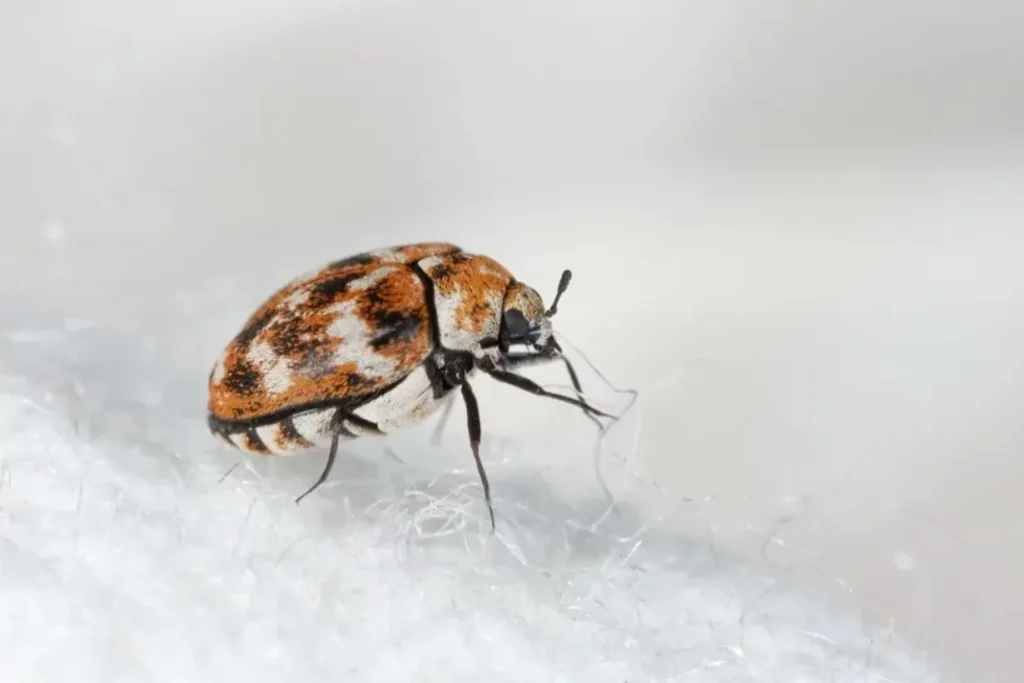
Adult carpet beetles are small, oval, and often attracted to light. Many adults feed on pollen outdoors. They can fly, mate, and start the cycle again by laying eggs near food sources.
Their survival power comes from three things: hidden feeding, long larval development, and a flexible diet. Some species may complete one generation per year, while others may vary depending on food and temperature.
Their Reproductive Process and raising their children
Carpet beetles reproduce through mating between adult males and females. Adult beetles often become active in warm conditions. They may be found near windows because they are attracted to light and may try to move between indoors and outdoors. After mating, the female searches for a place where her larvae can survive.
Key reproductive points:
- Adult beetles mate after emergence.
- Females lay eggs near larval food, not randomly.
- Depending on the species, a female may lay dozens of eggs.
- Eggs are usually hidden in cracks, lint, fabric folds, carpet edges, nests, or stored food areas.
- Newly hatched larvae begin feeding without parental care.
- The mother does not raise the young as mammals or birds do.
- Survival depends on where the eggs are placed and whether enough food is available.
In insect biology, this is a common strategy. Instead of caring for a few babies, many insects lay multiple eggs in suitable places. Carpet beetles “raise” their young indirectly by choosing the right egg-laying site. If the eggs are laid near wool, feathers, pet hair, dead insects, or dry stored foods, the larvae can feed and grow successfully.
The larval period may be long because larvae need enough nutrition before pupation. If food is limited, development slows. If the environment is cold or dry, the life cycle may also take longer. This flexible development helps carpet beetles survive in unstable indoor and outdoor environments.
The importance of them in this Ecosystem
Natural Decomposers
In nature, carpet beetles and other dermestid beetles are important decomposers. Their larvae help break down dry animal matter that would otherwise accumulate in nests, dens, or sheltered spaces for long periods. Feathers, hair, dry skin, dead insects, and old animal remains are difficult to break down, but dermestid larvae can recycle them back into the Ecosystem.
Nutrient Recycling
By feeding on dry organic matter, carpet beetle larvae help replenish soil nutrients and support the food chain. Their waste, shed skins, and broken-down materials become part of the decomposer system. This supports microbes, other insects, and soil organisms.
Food for Other Organisms
Carpet beetles may also become food for spiders, predatory insects, birds, and other small animals. Although they are pests indoors, they are part of a balanced food web outdoors.
Scientific and Museum Relevance
Some dermestid beetles are used in museums and taxidermy because they can clean skeletons by removing soft tissues. However, uncontrolled carpet beetles can also damage museum collections, insect specimens, feathers, skins, and natural history materials. This makes them both useful and risky, depending on how they are managed.
What to do to protect them in nature and save the system for the future
Even though carpet beetles can be household pests, they should not be viewed as useless insects. The goal is not to remove them from nature. The goal is to keep homes clean while protecting the natural ecosystem balance.
- Protect natural habitats: Avoid destroying every dead log, old nest area, and natural debris zone in wild spaces. These microhabitats support decomposers.
- Use targeted control indoors: Do not spray chemicals everywhere. First, identify the food source, clean the area, and remove infested material.
- Reduce unnecessary pesticide use: Broad pesticide use can harm beneficial insects, pollinators, and natural predators.
- Keep homes clean without harming nature: Vacuum carpets, closets, baseboards, vents, and under furniture regularly. This removes lint, pet hair, eggs, larvae, and food sources.
- Store natural fabrics safely: Use sealed containers for wool, silk, fur, feathers, and seasonal clothing.
- Remove old nests near buildings: Bird nests, wasp nests, and dead insects around attics or vents may attract dermestids.
- Support biodiversity: Native plants and balanced outdoor habitats support predators and natural decomposer systems.
- Use professional help for severe infestations: If damage is widespread, targeted professional pest management is better than random chemical overuse.
This approach protects the Ecosystem while reducing indoor carpet beetle problems.
Frequently Asked Questions (FAQs)
Q1: What are carpet beetles?
A: Carpet beetles are small beetles from the Dermestidae family. Their larvae feed on dry organic materials such as wool, fur, feathers, hair, dead insects, and some stored food products.
Q2: What is the full carpet beetle life cycle?
A: The full carpet beetle life cycle has four stages: egg, larva, pupa, and adult. This is a complete metamorphosis. The larval stage is usually the longest and most damaging stage.
Q3: What are the signs of carpet beetles in a home?
A: Common signs of carpet beetles include hairy larvae, shed larval skins, tiny adult beetles near windows, holes in wool or natural fabrics, damaged feathers or fur, and dry debris near feeding areas.
Q4: Do carpet beetles bite humans?
A: No, carpet beetles do not bite humans. Their larvae may cause skin irritation in sensitive people because of tiny hairs, but this is not a true bite.
Q5: Are carpet beetles harmful?
A: They are not dangerous like blood-feeding pests, but they can be harmful to fabrics, carpets, stored products, museum specimens, and sensitive skin. The biggest problem is property damage caused by larvae.
Q6: Where do carpet beetles come from?
A: They may come from outdoors, flowers, bird nests, animal dens, wall voids, attics, infested furniture, old rugs, stored clothing, or pantry items. Adult beetles can fly indoors through windows and doors.
Q7: What causes carpet beetles?
A: Carpet beetles are usually caused by available food sources such as pet hair, lint, wool, feathers, dead insects, dry pet food, and hidden organic debris. Poor storage and irregular cleaning can increase the chance of infestation.
Q8: How to get rid of carpet beetles naturally?
A: Start by finding the source. Vacuum deeply, wash or heat-treat washable fabrics, freeze delicate items when suitable, remove lint and pet hair, seal stored clothing, clean pantry areas, and block entry points. Severe infestations may need professional treatment.
Conclusion
The carpet beetle’s life cycle explains why these tiny insects can become a hidden household problem. Adult beetles are usually not the main danger; the real damage comes from the larvae, which feed on wool, fur, feathers, dead insects, pet hair, lint, and some stored dry foods. Their complete life cycle includes egg, larva, pupa, and adult, and the larval stage may last for many months depending on food and environmental conditions.
At the same time, carpet beetles are not useless. In nature, they help recycle dry animal materials and support the decomposer system. The best approach is balanced management: protect them in their natural Ecosystem while preventing them from damaging homes. Regular cleaning, safe fabric storage, source removal, and careful pest control are the most effective ways to manage carpet beetles without harming the wider environment.
Also Read: life mosquito cycle