Admin
Admin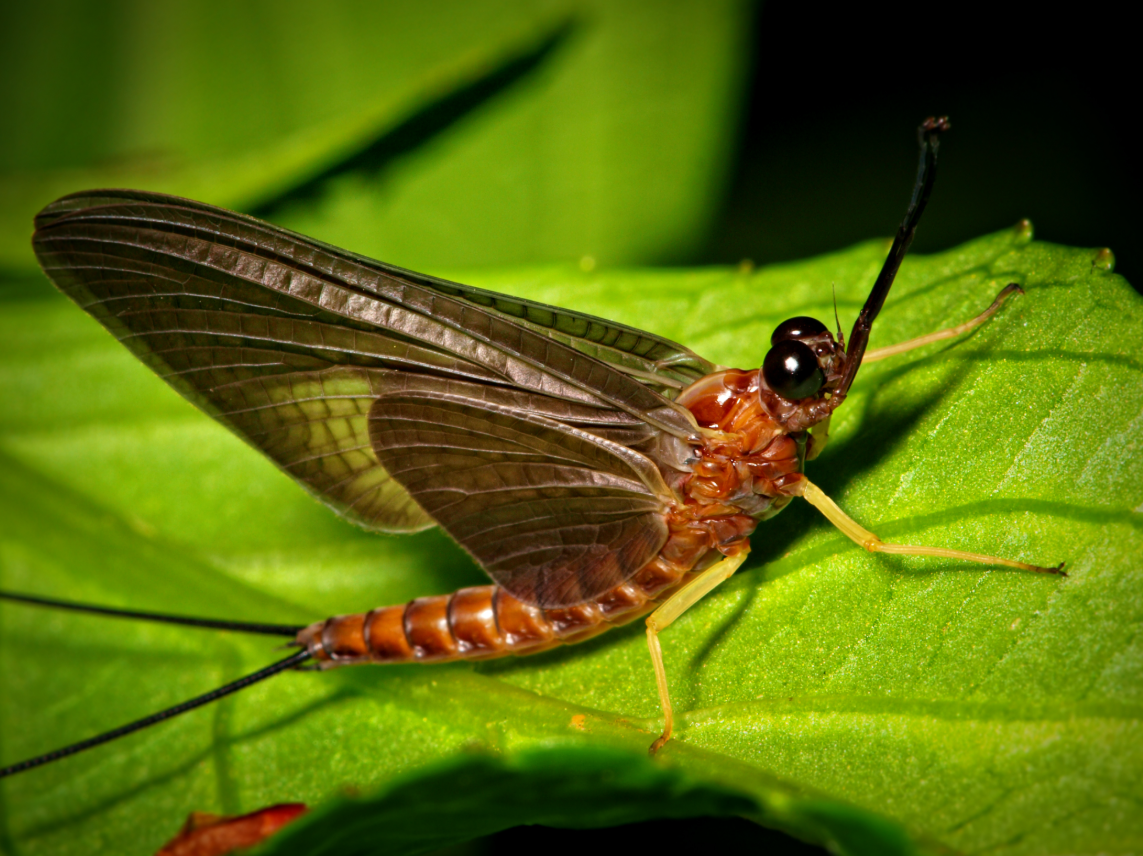
The mayfly life cycle is one of the most interesting stories in the insect world. A mayfly spends most of its life underwater as a growing mayfly nymph, but its adult life is very short. In many species, the adult mayfly lives only for a few hours or a few days, just long enough to mate and lay eggs.
Mayflies belong to the insect order Ephemeroptera, a name linked with “short-lived wings.” This name fits them well because the winged adult stage is brief. However, the full mayfly lifespan is not always short. The underwater nymph stage may last from weeks to months, and in some species it can last one or more years depending on water temperature, food, and habitat conditions.
Mayflies are also important signs of freshwater health. Their nymphs often live in clean, oxygen-rich water, so scientists and conservation workers use them as helpful indicators of river, stream, and lake quality.
Q: What is a mayfly?
A: A mayfly is a soft-bodied aquatic insect. Its young stage lives in freshwater, while the adult stage flies, mates, lays eggs, and dies quickly.
Q: How long does a mayfly live?
A: The adult mayfly lifespan is usually only hours to a few days, but the full life cycle can last weeks, months, or even years because the nymph stage is much longer.
Q: Is a mayfly larva the same as a mayfly nymph?
A: In common language, people often say mayfly larvae, but the more correct term is mayfly nymph or naiad because mayflies do not have a pupal stage.
Quick Life Cycle Table
| Stage | Place | Time period | What happens |
| Egg | Freshwater bottom, plants, rocks, or debris | Often about 2 weeks, but it can vary | Eggs hatch into tiny nymphs. Some may pause development during poor conditions. |
| Mayfly Nymph | Underwater in streams, rivers, lakes, or ponds | Weeks to months, often around 1 year, sometimes longer | The nymph eats, grows, molts many times, and develops wing pads. |
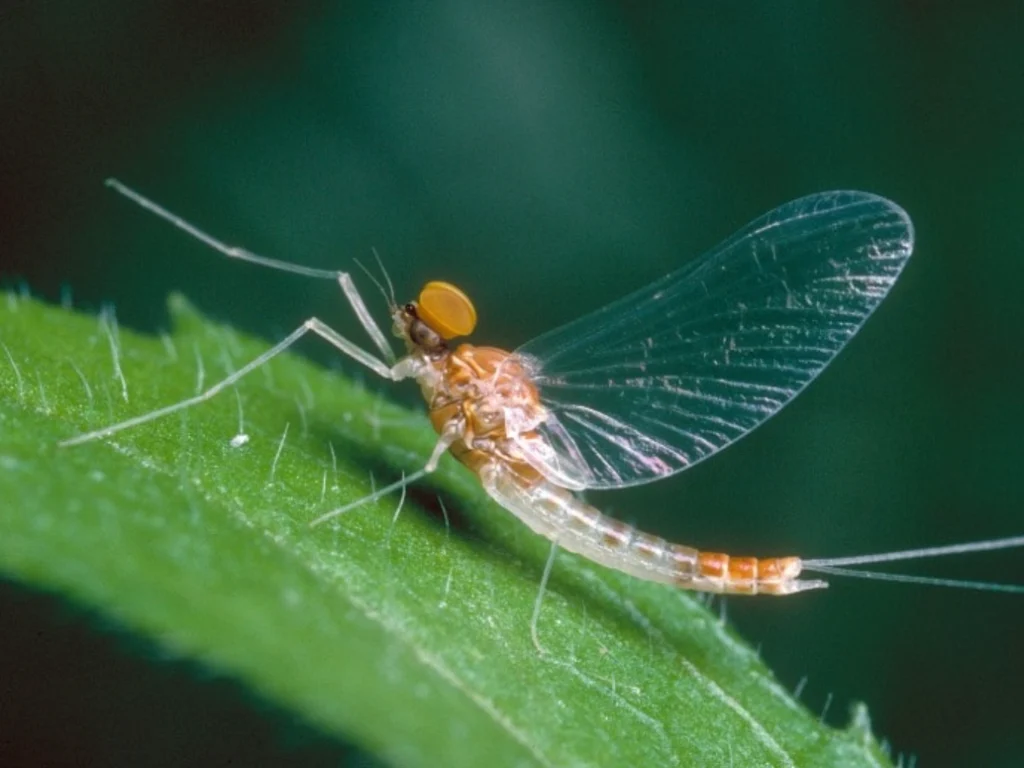
| Subimago | Water surface, plants, rocks, or nearby shelter | Minutes to days, often overnight | A winged but sexually immature stage appears. Mayflies are unusual because they molt again after getting wings. |
| Imago | Air and the nearby land around the freshwater | Hours to a few days | The adult mates lay eggs and die soon after reproduction. |
The life cycle has egg, nymph, subimago, and imago stages. Mayflies are famous because they are the only insects known to molt again after developing functional wings.
Important Things That You Need To Know
Before learning the full mayfly life cycle, it is helpful to understand a few common search terms. A mayfly is not a true fly like a housefly. It is an aquatic insect from the order Ephemeroptera. The name is connected with short adult life, but that does not mean the whole insect lives for only one day.
The mayfly nymph is the early underwater stage. This stage is also called a naiad. It is the most important stage for growth because the nymph eats, hides, breathes through external gills, and molts many times. Many people search for mayfly larvae, but scientifically, “nymph” is the better word because mayflies have incomplete metamorphosis and no pupal stage.
A baby mayfly usually means a newly hatched nymph. It is tiny, wingless, and fully aquatic. As it grows, it develops stronger legs, gills, and wing pads. Some nymphs cling to stones in fast-flowing streams, while others burrow into mud or swim through calmer water.
The mayfly lifespan can be confusing. The adult stage is extremely short, but the nymph stage can last much longer. So, when someone asks, “How long does a mayfly live?” the answer depends on whether they mean the adult mayfly or the whole life cycle.
Overall, the key point is simple: mayflies live long underwater, then live briefly in the air to reproduce.
The History of Their Scientific Naming
The scientific name of the mayfly order is Ephemeroptera. This word comes from Greek roots. Ephemeros means short-lived or lasting for a day, while pteron means wing. Together, the name points to the insect’s short-winged adult life.
Important points about the naming history:
- Ephemeroptera describes the short adult stage, not the full life cycle.
- The common name mayfly is linked to the fact that many species emerge in large numbers around May in some regions.
- The early stage is called a nymph or naiad, not a maggot.
- The first winged stage is called the subimago, also known as a dun.
- The final adult stage is called the imago, also known as a spinner.
This naming system helps clearly separate each stage. It also shows why mayflies are so unique. Most insects become fully adult once they have wings, but mayflies pass through a winged subadult stage before becoming true reproductive adults.
Their Evolution And Their Origin
Mayflies are among the oldest groups of winged insects. They belong to the ancient insect lineages often connected with early flying insects. Their fossil history shows that mayfly-like insects existed hundreds of millions of years ago, making them an important group for understanding insect evolution.
Their body design also reflects their long evolutionary history. A mayfly nymph has external gills, a soft body, strong legs, and usually two or three tail-like filaments. These features help it survive in freshwater habitats such as rivers, ponds, lakes, and streams.
Over time, different mayfly groups adapted to different aquatic environments. Some became clingers, with flattened bodies that help them hold onto rocks in fast water. Some became burrowers, using modified legs and jaws to dig into sand or mud. Others became swimmers or crawlers, moving through plants, stones, and bottom debris.
Their unusual winged subimago stage is another evolutionary feature. Most insects with wings do not molt again after their wings appear. Mayflies do, which makes them a special case in insect development.
The origin of mayflies also explains their ecological importance. They evolved as freshwater insects, and their nymphs became part of the food webs of rivers and lakes. Fish, birds, amphibians, spiders, and other predators depend on them. This long relationship with water ecosystems is why mayflies are still important today.
Their main food and its collection process
Mayflies eat mainly during the nymph stage. Adult mayflies usually do not feed because their mouthparts and digestive system are reduced or nonfunctional. Their adult bodies are designed for one main purpose: reproduction.
Main foods of mayfly nymphs include:
- Algae: Many nymphs scrape algae from rocks, plants, and underwater surfaces.
- Detritus: They feed on tiny pieces of dead plant material and organic matter.
- Fine particles: Some collect small food particles from the water or riverbed.
- Microorganisms: Tiny organisms attached to algae and debris may also become part of their diet.
- Aquatic plant matter: Some species graze on soft plant material in freshwater habitats.
Their food collection process depends on their body type and habitat. Crawling nymphs move slowly over stones and plants, scraping or picking up food. Clinging nymphs stay attached to rocks in fast streams and feed from surfaces around them.
Burrowing nymphs live in mud or sand. They may feed on organic matter inside the sediment. Swimming nymphs move more freely and collect food from plants, debris, or underwater surfaces.
This feeding habit makes mayflies important cleaners in freshwater ecosystems. They help recycle nutrients by breaking down algae and organic matter. In turn, they become food for fish and other animals.
So, the mayfly larvae stage, commonly called the nymph stage, is not just a growth period. It is also a natural stage for cleaning and nutrient movement in freshwater systems.
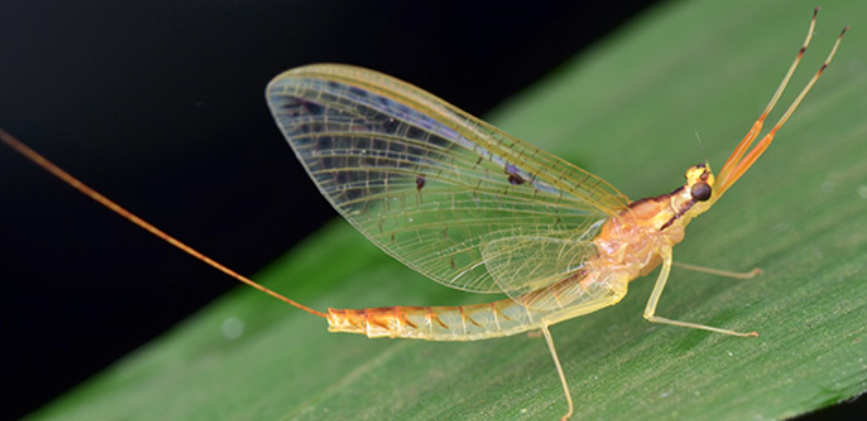
Their life cycle and ability to survive in nature
Egg stage
The mayfly life cycle begins when the female lays eggs in water. Some females drop eggs onto the water’s surface. Others dip their abdomen into the water while flying. The eggs then sink, stick to underwater objects, or settle among plants and debris.
Egg development depends on species, temperature, oxygen, and water conditions. Some eggs hatch quickly, while others may stay inactive for a period if conditions are not suitable.
Mayfly nymph stage
After hatching, the baby mayfly becomes a tiny aquatic nymph. This is the longest and most active stage. The nymph breathes through external gills and lives among rocks, plants, mud, or streambed materials.
The nymph molts many times as it grows. Some mayflies may molt dozens of times before reaching the next stage. The number of molts depends on species, water temperature, and food availability.
Subimago stage
When the nymph is ready, it rises to the water surface or climbs out of the water. Its skin splits, and a winged stage called the subimago emerges. This stage can fly but is not fully mature.
Imago stage
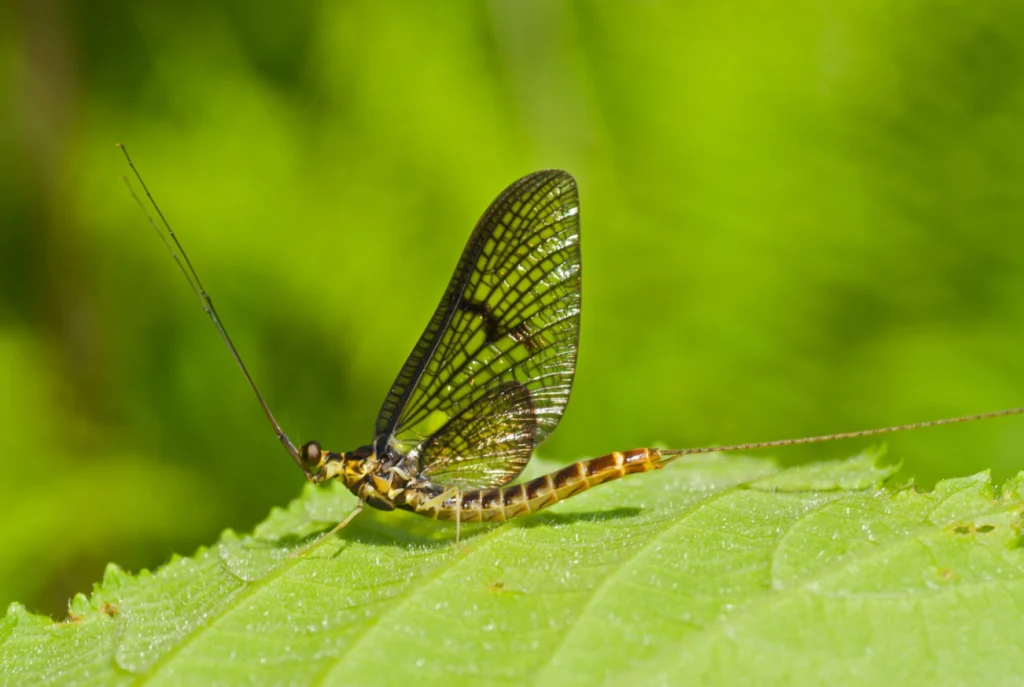
The subimago molts one final time into the imago, the true adult. The adult mayfly lives briefly, mates, lays eggs, and dies. This short adult life is why mayflies are known as symbols of brief existence.
Their Reproductive Process and raising their children
Mayflies do not raise their young as birds or mammals do. Their reproductive strategy is based on mass emergence, rapid mating, egg laying, and allowing the next generation to develop independently.
Important points about their reproductive process:
- Mating swarms: Male mayflies often gather in groups as they fly near water. Females enter the swarm to mate.
- Short adult life: Adults usually live only long enough to reproduce.
- Egg laying: After mating, females lay eggs in freshwater. Eggs may be dropped onto the water surface or placed by dipping the body into water.
- High egg numbers: Depending on the species, a female may produce between 50 and 10,000 eggs.
- No parental care: Adult mayflies die soon after reproduction. They do not guard eggs or feed young.
- Independent nymphs: After hatching, young nymphs survive by hiding, feeding, growing, and molting underwater.
- Mass survival strategy: Many eggs and synchronized emergence help balance heavy predation by fish, birds, and other animals.
This system may look simple, but it works well in nature. Mayflies produce many young because predators eat many eggs, nymphs, and adults. Their life cycle supports the food chain while still allowing enough individuals to survive and reproduce.
The importance of them in this Ecosystem
Natural food source
Mayflies are a major food source in freshwater and nearby land ecosystems. Fish such as trout, bass, and other species feed heavily on mayfly nymphs and adults. Birds, spiders, frogs, and aquatic insects also eat them.
When mayflies emerge in large groups, they create feeding events. Fish gather near the surface, birds fly over water, and many predators benefit from this short but rich food supply.
Water quality indicator
Mayflies are also important because they help show the condition of freshwater habitats. Many species need clean, oxygen-rich water. If mayflies disappear from a stream or river, it may indicate pollution, low oxygen levels, habitat damage, or chemical stress.
Recent research also discusses mayflies as bioindicators of heavy metals and microplastics, although scientists still need standardized methods for comparing results across ecosystems.
Nutrient cycling
As nymphs, mayflies eat algae, organic particles, and plant material. This helps move energy from small food sources into larger animals. They act as a bridge between tiny freshwater nutrients and bigger predators.
Balance in freshwater systems
Mayflies support ecosystem balance by feeding, being eaten, and helping scientists understand water health. Their presence usually means the habitat still has enough oxygen, structure, and natural food to support sensitive aquatic life.
What to do to protect them in nature and save the system for the future
Protecting mayflies means protecting freshwater. Since most of their lives are spent underwater, damaged rivers, polluted ponds, and unhealthy streams can threaten their survival.
- Keep rivers and streams clean: Avoid throwing waste, oil, plastic, or chemicals into water bodies.
- Reduce pesticide use near water: Pesticides can wash into streams, harming mayfly nymphs and other aquatic insects.
- Protect streamside plants: Trees, grasses, and shrubs near water reduce erosion, provide shade, and stabilize water temperatures.
- Prevent soil erosion: Muddy runoff can cover eggs and nymph habitats, especially rocky streambeds.
- Control industrial pollution: Heavy metals, untreated waste, and chemical discharge can damage freshwater insect communities.
- Reduce microplastic pollution: Microplastics can enter freshwater food webs, affecting aquatic organisms.
- Maintain oxygen-rich water: Healthy water flow, natural vegetation, and reduced organic pollution help maintain suitable oxygen levels.
- Avoid unnecessary river modification: Dredging, channel straightening, and concrete banks can destroy nymph shelters.
- Support wetland and freshwater conservation: Protected wetlands, ponds, rivers, and floodplains help mayflies and many other species.
- Use mayflies in water monitoring: Schools, researchers, and conservation groups can study mayfly presence to understand local water health.
Saving mayflies is not only about one insect. It is about protecting the full freshwater system that supports fish, birds, amphibians, plants, and people.
Frequently Asked Questions (FAQs)
Q: What is a mayfly?
A: A mayfly is an aquatic insect from the order Ephemeroptera. Its early stage lives in freshwater, and its adult stage lives only long enough to reproduce.
Q: What is the mayfly life cycle?
A: The mayfly life cycle includes egg, nymph, subimago, and imago stages. The nymph lives underwater, while the final adult stage flies and reproduces.
Q: What is a mayfly nymph?
A: A mayfly nymph is the early aquatic stage. It lives underwater, breathes through gills, eats algae or organic matter, and molts many times.
Q: Is mayfly larvae the correct term?
A: Many people say mayfly larvae, but the more accurate term is mayfly nymph because mayflies do not have a pupal stage.
Q: How long is the mayfly’s lifespan?
A: Adult mayflies often live only hours or a few days. However, the full mayfly lifespan can be much longer, as the nymph stage can last weeks, months, or even years.
Q: What does a baby mayfly look like?
A: A baby mayfly is a tiny aquatic nymph. It has no wings at first, but later develops gills, legs, tail filaments, and wing pads.
Q: Why do mayflies live such a short adult life?
A: Adult mayflies are built mainly for reproduction. They usually do not feed, so they mate, lay eggs, and die quickly.
Q: Are mayflies harmful to humans?
A: Mayflies do not bite, sting, or spread disease to humans. Large swarms can be annoying, but they are generally signs of nearby freshwater life.
Conclusion
The mayfly life cycle is a powerful example of how nature uses timing, adaptation, and balance. A mayfly may live only briefly as a winged adult, but its underwater nymph stage is long, active, and important. From egg to mayfly nymph, then from subimago to adult imago, every stage has a clear purpose.
Mayflies are more than delicate insects near water. They feed fish, support birds, recycle nutrients, and help show whether freshwater habitats are healthy. Their presence often indicates that a river, stream, pond, or lake still has oxygen, food, and a natural balance.
Protecting mayflies means protecting clean water. When we reduce pollution, save streamside plants, control runoff, and protect freshwater habitats, we also protect the wider Ecosystem. In that sense, the short life of a mayfly carries a long message: healthy water keeps nature alive.
Also Read: life cycle of a bed bug