Admin
Admin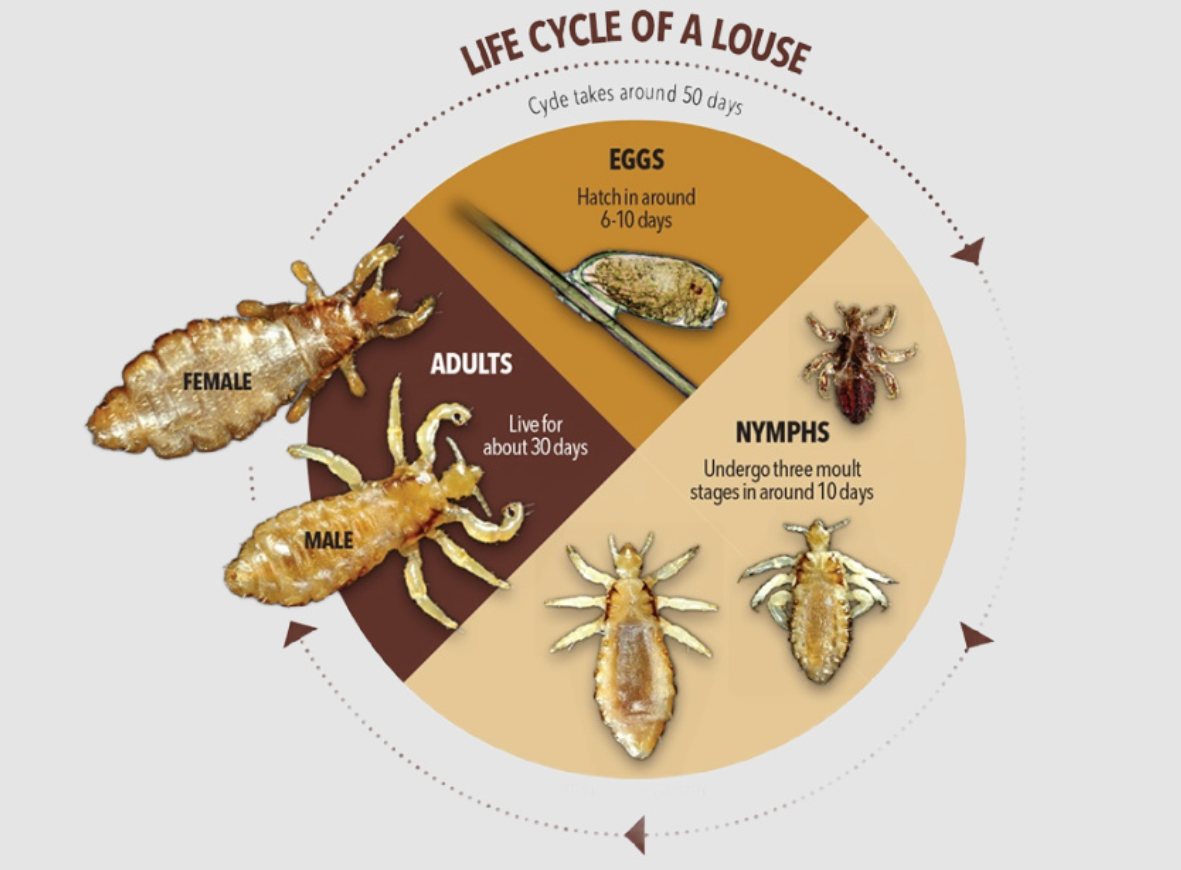
The life cycle of head lice is short, fast, and closely connected to the human scalp. Head lice are tiny parasitic insects that live mostly on the scalp and feed on human blood. They do not fly, jump, or come from poor hygiene.
They mainly spread through direct head-to-head contact, especially among children, family members, and close contacts. Current CDC information indicates that head lice are most common among preschool and elementary school children and their household members, with an estimated 6 to 12 million infestations each year among U.S. children aged 3 to 11.
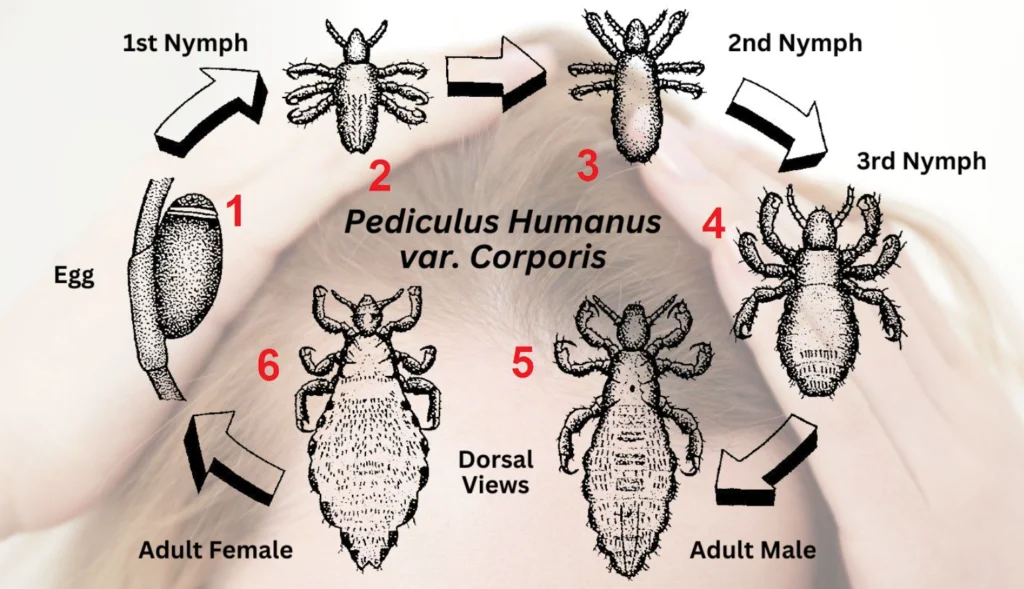
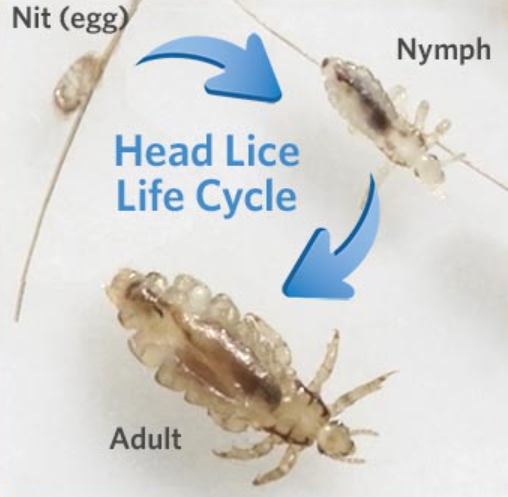
Understanding the head lice life cycle helps people know why treatment needs careful timing. A louse begins as a nit, hatches into a nymph, and then becomes an adult louse. The full cycle can continue quickly if live lice are not removed or treated properly. Head lice do not spread disease, but they can cause itching, irritation, sleep problems, and sores from scratching.
Q: What is the life cycle of head lice?
A: The life cycle has three main stages: egg or nit, nymph, and adult louse.
Q: How long does it take for head lice eggs to hatch?
A: Nits usually hatch in about 6 to 9 days, especially when they are close to the warm scalp.
Q: How do you get rid of head lice?
A: Active infestations are treated with proper head lice treatment, careful combing, checking close contacts, and repeating treatment when the product instructions require it.
Quick Life Cycle Table
| Stage | What It Looks Like | Time Period | Key Detail |
| Nit / Egg | Tiny oval egg attached to hair | 6–9 days to hatch | Usually close to the scalp |
| Nymph | Small baby louse, pinhead-sized | Around 7 days to mature | Feeds on blood |
| Adult Louse | Sesame-seed-sized insect | Up to 30 days on the scalp | A female lays several eggs daily |
| Off the Host | Away from the human scalp | 1–2 days | Usually dies without blood |
Important Things That You Need To Know
Before going deeper, it is important to understand some common search questions about head lice, head lice treatment, what head lice look like, head lice infestation, and early-stage head lice.
First, head lice are not a sign of being dirty. They can affect hair that is clean, oily, short, or long. The main reason they spread is close hair-to-hair contact. This is why children often get lice during play, sports, sleepovers, or school activities. CDC guidance also says animals do not get or spread human head lice.
Second, many people confuse nits with dandruff. Dandruff usually flakes away easily, but nits are glued tightly to the hair shaft. Fresh, viable nits are usually found very close to the scalp because they need warmth to hatch. Empty nit shells may remain attached to hair even after lice are gone.
Third, good head lice treatment depends on timing. Some products kill live lice but do not fully kill unhatched eggs. In that case, retreatment is often needed after the eggs hatch but before new adult lice can lay more eggs.
Finally, head lice pictures can help with identification, but real checking should focus on finding live crawling lice or nits close to the scalp, especially behind the ears and at the back of the neck.
The History of Their Scientific Naming
The scientific name of the human head louse is Pediculus humanus capitis. In simple terms, Pediculus refers to lice, humanus indicates the species is found on humans, and capitis refers to the head. The National Center for Biotechnology Information lists Pediculus humanus capitis as the current scientific name for the human head louse.
Scientists classify head lice as insects because they have six legs, a segmented body, and claws adapted for holding onto hair. They are also called ectoparasites, meaning they live on the outside of the host’s body and feed from the host.
The naming history is linked with the study of human lice in general. CDC’s DPDx notes that Pediculus humanus includes two major forms: the head louse called P. h. capitis and the body louse called P. h. humanus. Both are human parasites, but they live in different places and have different habits.
This scientific naming helps doctors, researchers, and public health workers separate head lice from body lice and pubic lice. That difference matters because treatment, spread, and health risks differ across types.
Their Evolution And Their Origin
The origin of head lice is closely connected to human evolution. Head lice are highly host-specific parasites, which means they depend on humans to survive. They have adapted to living on the scalp, gripping hair shafts, feeding on blood, and laying eggs near the warm skin surface.
Unlike fleas, head lice do not jump. Unlike mosquitoes, they do not fly. Their bodies are built for crawling through hair. Their claws are shaped to hold onto hair strands, which explains why they can move well on the scalp but do not survive well on smooth surfaces.
CDC’s parasite guidance describes head lice as human ectoparasites with only humans as hosts. It also explains that molecular data suggests head lice and body lice are closely related forms of the same species, with an ongoing evolutionary connection between them.
Their evolution shows a very specialized survival pattern. Head lice do not need a nest, soil, water, or animal host. Their “environment” is the human scalp. The scalp gives them warmth, food, shelter, and hair shafts for egg attachment.
This close relationship also explains why head lice spread mainly through direct head-to-head contact. They cannot travel long distances on their own. They depend on human closeness to move from one host to another.
Over time, head lice became experts at hiding in hair, feeding quickly, and reproducing fast. This is why an early-stage head lice infestation can be easy to miss, but can grow within weeks if left unchecked.
Their main food and its collection process
The main food of head lice is human blood. They do not eat hair, dandruff, shampoo residue, dead skin, or fabric. Both nymphs and adult lice need blood meals to stay alive. CDC explains that adult lice need to feed on blood several times daily and, without blood meals, usually die within 1 to 2 days away from the host.
Here is how their feeding process works:
- Finding the scalp: Head lice move through hair and stay close to the scalp because this area is warm and gives easy access to blood.
- Holding onto hair: Their legs have tiny claw-like structures that help them grip hair strands tightly.
- Piercing the skin: A louse uses its mouthparts to pierce the scalp skin and reach tiny blood vessels.
- Feeding on blood: It takes small blood meals several times a day. This feeding can cause itching because the body may react to louse saliva.
- Staying hidden: After feeding, lice continue to move closer to the scalp. They avoid light and can be hard to see.
- Supporting egg production: A female adult louse uses the energy from blood meals to produce and lay eggs.
This feeding process is why head lice cannot survive for long away from humans. A louse on a pillow, sofa, comb, or hat is already in a risky situation because it no longer has regular access to blood.
This also explains why excessive house cleaning is usually not the main solution. Treatment should focus on the scalp, live lice, nits close to the scalp, and close contacts.
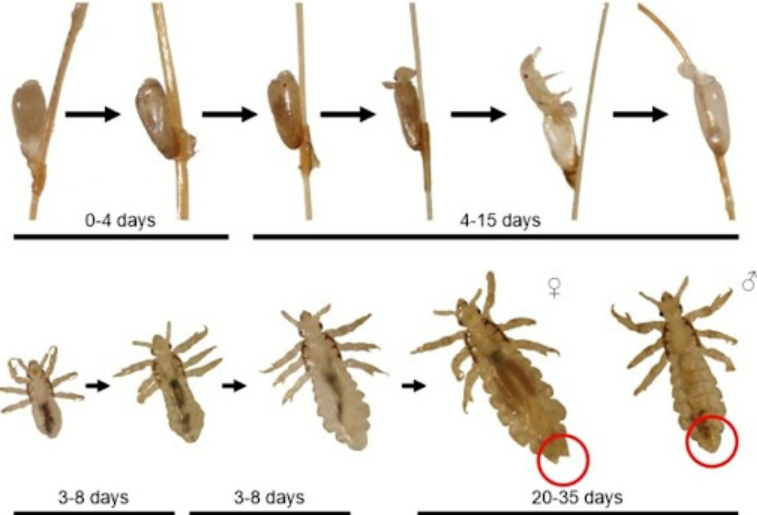
Their life cycle and ability to survive in nature
Egg or Nit Stage
The nit is the egg of the head louse. It is tiny, oval, and usually yellowish to white. It is attached firmly to the hair shaft with a glue-like substance. Viable eggs are usually close to the scalp, where warmth helps development. CDC states that nits are about 0.8 mm by 0.3 mm and usually hatch in 6 to 9 days.
Nymph Stage
After the egg hatches, a nymph comes out. A nymph looks like a small adult louse but is much smaller, about the size of a pinhead. It must feed on blood to survive. It molts three times before becoming an adult. CDC notes that nymphs become adults about 7 days after hatching.
Adult Stage
The adult head louse is about the size of a sesame seed. It has six legs with claws and may look tan, grayish-white, or darker depending on hair color and feeding. Adult lice can live up to 30 days on a person’s head. Female lice can lay several eggs daily, keeping the life cycle active.
Survival Outside the Scalp
Head lice are weak outside their host. They do not live naturally in grass, trees, pets, soil, or water. They survive best on the human scalp. Away from blood meals, they usually die within 1 to 2 days. This is why direct hair-to-hair contact is far more important than furniture or carpets in spreading lice.
Their Reproductive Process and raising their children
Head lice reproduce quickly, but they do not “raise” their young like birds or mammals. Their reproductive process involves laying eggs in a safe, warm place near the scalp.
Key points include:
- Mating: Adult male and female lice mate after reaching maturity.
- Egg laying: The female lays eggs, called nits, on individual hair shafts.
- Attachment: Each nit is cemented tightly to the hair so it does not fall off easily.
- Warmth requirement: Eggs are usually placed close to the scalp because warmth helps them hatch.
- Hatching: After about 6 to 9 days, the egg hatches, and a nymph emerges.
- No parental care: Adult lice do not feed or protect their young. The nymph survives by feeding on human blood by itself.
- Growth: The nymph molts three times and becomes an adult in about a week.
- Cycle repeats: Once mature, female lice can begin laying eggs, perpetuating the infestation.
This reproductive pattern makes timing critical for head lice treatment. If treatment kills only live lice but leaves some eggs alive, those eggs may hatch later. That is why some products require a second treatment after several days, depending on the medicine used. CDC guidance recommends retreatment when the product kills lice but not eggs.
The best way to stop reproduction is to remove or kill live lice, follow product directions carefully, and continue checking the scalp after treatment.
The importance of them in this Ecosystem
A Specialized Human Parasite
Head lice are part of biodiversity, but they are not beneficial to human health. They are parasites, meaning they live at the expense of their host. Their main ecological role is connected to parasite-host relationships, evolution, and biological research.
Role in Scientific Study
Head lice help scientists understand parasite adaptation, human contact patterns, and the long relationship between humans and parasites. Their bodies are highly adapted to hair, blood feeding, and scalp survival. This makes them useful for studying how small organisms specialize over time.
Food Chain Value Is Limited
In daily life, head lice do not play a major role in the food chain like bees, ants, worms, or flies. They live mostly on humans and do not freely move through outdoor ecosystems. So their direct importance in forests, gardens, farms, or wetlands is very low.
Public Health Importance
Their greater importance is in public health education. Head lice remind people that not every infestation is linked to poor hygiene or disease. CDC states that head lice do not transmit disease and are not considered a health hazard, although scratching can sometimes cause sores or infection.
Social Awareness
Head lice also show how misinformation can create stigma. Children with lice should not be shamed. Current CDC and AAP guidance discourages unnecessary exclusion from school and “no-nit” policies because they can lead to missed learning and social stress.
What to do to protect them in nature and save the system for the future
Because head lice are human parasites, the goal is not to protect them on people. The better goal is to protect the wider Ecosystem while controlling lice safely and responsibly.
- Avoid toxic home spraying: Do not use fumigant sprays or fogs for head lice. CDC says they are not necessary and can be toxic if inhaled or absorbed through the skin.
- Use only human-safe treatments: Never use animal lice products on humans. The AAP states that products intended for animal use are never appropriate for treating human head lice.
- Follow label instructions: Use approved head lice treatment exactly as directed. Overusing chemicals does not make treatment better and may increase irritation.
- Do not panic-clean the whole house: Focus on items used in the two days before treatment. Excessive chemical cleaning is usually unnecessary.
- Wash important items safely: Hot wash and high-heat dry for clothing, bedding, and towels recently used by the infested person.
- Choose combing when suitable: A fine-toothed lice comb can help remove lice and nits without adding chemicals.
- Protect children from stigma: Treat lice as a common problem, not a shameful one.
- Support research: Studying lice can help improve safer treatments and reduce the misuse of pesticides.
- Teach prevention: Avoid head-to-head contact and sharing combs, brushes, hats, and towels.
- Keep balance: Control infestations on humans while avoiding unnecessary environmental chemical exposure.
Frequently Asked Questions (FAQs)
Q1: What does head lice look like?
A: Head lice are tiny insects about the size of a sesame seed as adults. They may look tan, grayish-white, or darker after feeding. Nymphs are smaller and harder to see. Nits look like tiny oval eggs attached to hair shafts.
Q2: What are the early-stage head lice signs?
A: Early signs may include mild itching, a tickling feeling in the hair, small nits close to the scalp, or seeing one live louse. Some people do not itch right away, especially during a first infestation.
Q3: How long is the life cycle of head lice?
A: The cycle from nit to adult can happen in about two weeks. Nits usually hatch in 6 to 9 days, and nymphs mature about 7 days after hatching.
Q4: Can head lice jump or fly?
A: No. Head lice move by crawling. They cannot jump or fly. They spread mainly through direct head-to-head contact.
Q5: How do you get rid of head lice?
A: Use a proper head lice treatment, follow directions carefully, check close contacts, comb when needed, and repeat treatment only when the product instructions or healthcare guidance says it is needed.
Q6: Do head lice come from dirty hair?
A: No. Getting head lice is not related to cleanliness. Lice spread through contact, not dirt.
Q7: Can pets spread head lice?
A: No. Animals do not get or spread human head lice. Treating pets for human head lice is unnecessary.
Q8: Should a child with head lice stay home from school?
A: Current CDC guidance says a child with head lice does not need to leave school early. After starting proper treatment at home, the child can return to class. CDC, AAP, and NASN discourage strict “no-nit” policies.
Conclusion
The life cycle of head lice is simple but very effective. It begins with a nit, continues into a nymph, and ends with an adult louse that can lay more eggs. Because this cycle moves quickly, early checking and correct treatment timing are important. Head lice are not caused by poor hygiene, and they do not jump, fly, or spread through pets. They mostly spread through close head-to-head contact.
The best response to a head lice infestation is calm, careful, and practical. Look for live lice and nits near the scalp, use a safe treatment as directed, comb when needed, and check close contacts. Avoid panic, harsh chemicals, and stigma. With the right steps, most infestations can be managed successfully while protecting both human health and the wider environment.
Also Read: life cycle of fungi