Admin
Admin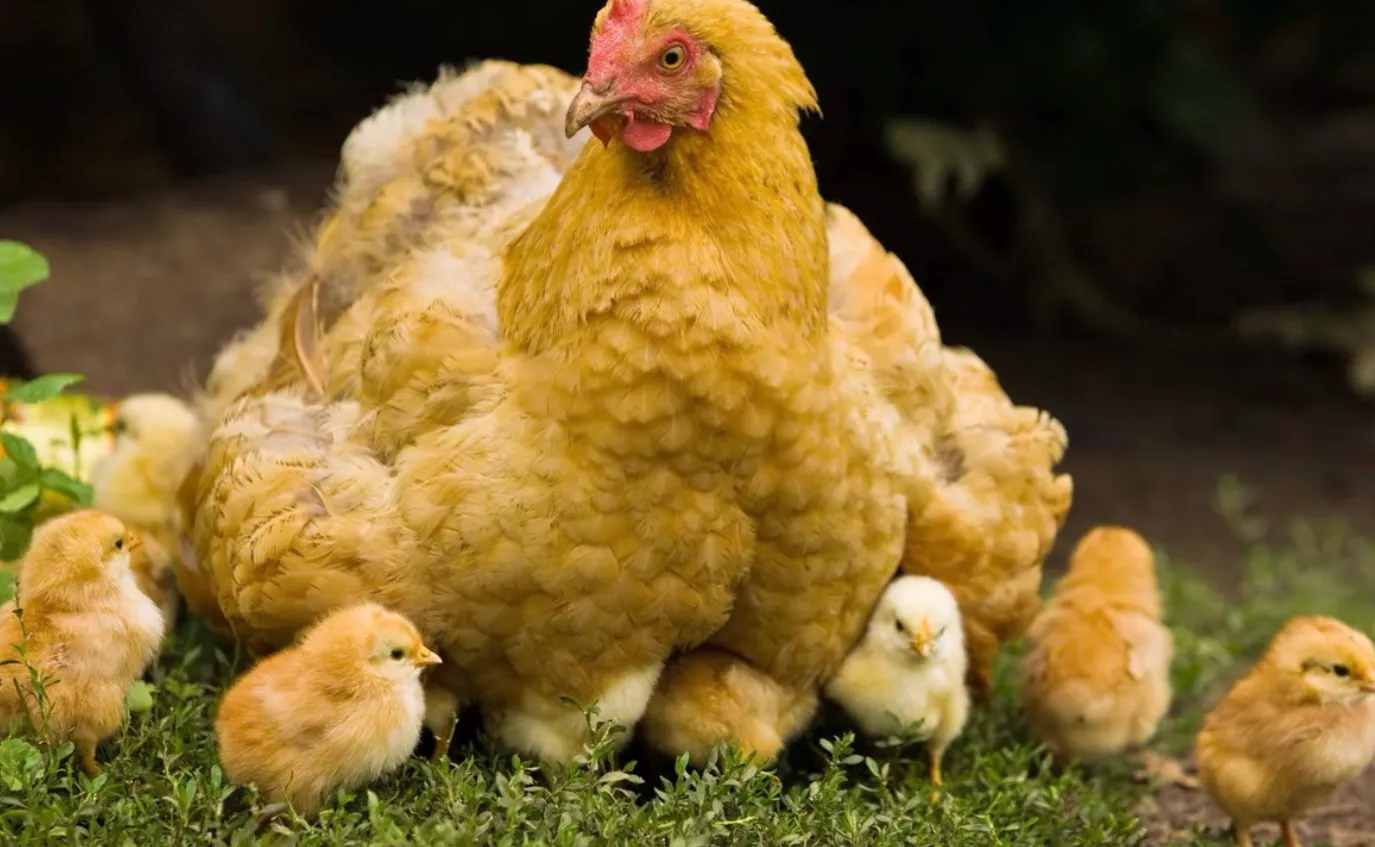
The life cycle of a chick is one of the clearest examples of growth, survival, and natural development in birds. A chick does not simply appear from an egg. It passes through a careful process that starts with fertilization, continues through embryo development, and ends with a young bird learning to eat, move, grow feathers, and survive outside the shell.
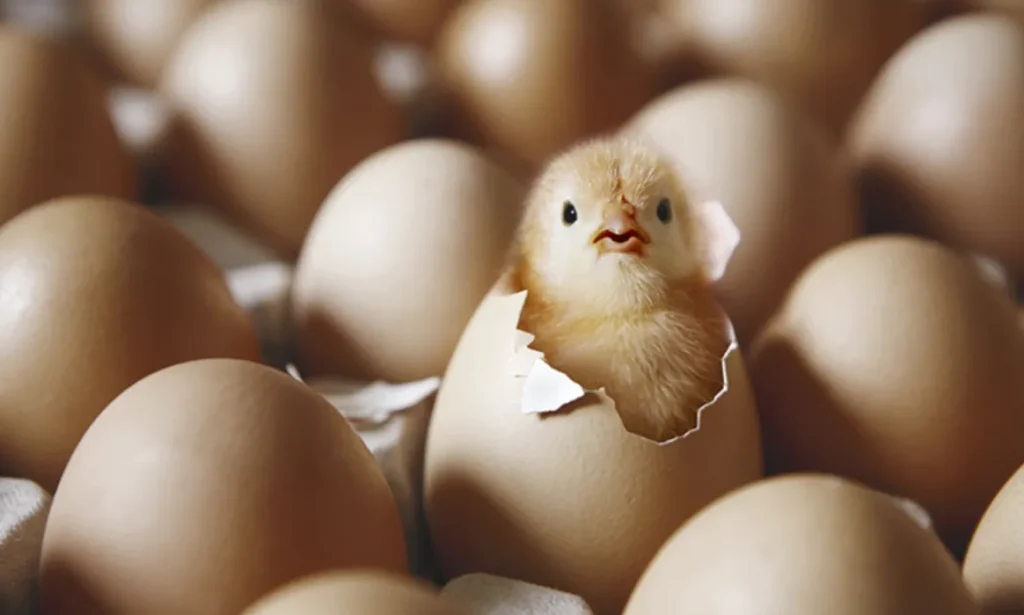
A normal chicken egg usually takes about 21 days of incubation before the chick hatches. During this time, the embryo forms a heart, eyes, beak, wings, legs, feathers, and internal organs. By the final days, the chick turns into the correct hatching position and uses its egg tooth to break through the shell.
Understanding the life cycle of a chick helps students, farmers, poultry keepers, and nature lovers learn how fragile yet strong young birds can be. It also explains why warmth, food, clean water, protection, and good habitat are so important during the early days of life.
Q: How long does it take for a chick to hatch?
A: A chick usually hatches after about 21 days of proper incubation.
Q: What are the main stages in the life cycle of a chick?
A: The main stages are fertilized egg, embryo, hatching chick, young chick, juvenile, and adult chicken.
Q: Can a chick survive alone after hatching?
A: A chick can walk and peck soon after hatching, but it still needs warmth, food, water, and protection to survive well.
Quick Life Cycle Table
| Stage | Time Period | What Happens | Survival Need |
| Fertilized Egg | Day 0 | Life begins after mating and fertilization | Healthy hen, fertile egg |
| Early Embryo | Days 1–7 | Heart, blood vessels, eyes, wings, and legs begin forming | Warm, steady incubation |
| Growing Embryo | Days 8–14 | Feathers, beak, claws, and body shape develop | Correct temperature and humidity |
| Pre-Hatch Chick | Days 15–20 | Chick moves into hatching position and absorbs yolk | Safe, undisturbed egg |
| Hatching Chick | Around Day 21 | Chick breaks the shell using its egg tooth | Time, oxygen, and strength |
| Young Chick | Week 1–6 | Learns to eat, drink, walk, and grow feathers | Heat, starter feed, clean water |
| Juvenile Chicken | Week 6–18 | Body grows larger; feathers become stronger | Space, food, safety |
| Adult Chicken | Around 18+ weeks | Hens may lay eggs; roosters can mate | Balanced diet and secure habitat |
The History Of Their Scientific Naming
The domestic chicken is commonly known by the scientific name Gallus gallus domesticus. This name connects the modern chicken to the red junglefowl, a wild bird from Southeast Asia. The classification recognizes the chicken’s main wild ancestor and its domesticated form.
Important naming points:
- Gallus is the genus name for junglefowl and chickens.
- Gallus gallus refers to the red junglefowl species.
- Domesticus shows the bird is the domesticated form.
- The word chick is not a separate species name. It simply means a young chicken.
- A female adult chicken is called a hen.
- A male adult chicken is called a rooster or cock.
- A young female is called a pullet.
- A young male is called a cockerel.
Scientific naming helps avoid confusion. Around the world, people use different local names for chickens and chicks. But in biology, Gallus gallus domesticus gives researchers, farmers, and students one clear name for the same bird.
Their Evolution And Their Origin
The origin of the modern chicken goes back to wild junglefowl. Most scientists agree that the red junglefowl of Southeast Asia is the primary ancestor of domestic chickens. Research also shows that other junglefowl species, such as the grey junglefowl, likely contributed some genetic traits to modern chickens.
Domestication probably began thousands of years ago, when wild junglefowl started living closer to human settlements. These birds were attracted to grains, seeds, insects, and leftover food around early farms. Humans noticed that they were useful for eggs, meat, feathers, and alarm calls.
Over time, people selected birds that were calmer, stronger, better egg layers, or larger. This slow selection shaped the domestic chicken we know today.
The life cycle of a chick also changed through domestication. Wild junglefowl chicks had to hatch, follow the mother, find food, and avoid predators almost immediately. Domestic chicks still have many of these instincts, but they often depend more on people for warmth, feed, and shelter.
In nature, chicks are called precocial birds, meaning they are fairly developed at hatching. Their eyes are open, their bodies are covered in soft down, and they can walk within a short time. This gives them a better chance of survival compared with helpless hatchlings that must stay in a nest.
Still, chicks remain vulnerable. Their small bodies lose heat quickly. They cannot fly. Their bones, feathers, and immune system are still developing. This is why the early weeks are the most important part of the chick’s life cycle.
Important Things That You Need To Know
The word chick usually means a young chicken from the time it hatches until it becomes older and more feathered. Many people use the word for any baby bird, but in poultry care, a chick most often refers to a baby chicken.
A newly hatched chick comes out of the egg wet, tired, and weak. After resting, it’s dry and becomes fluffy. Soon it begins to stand, walk, peck, and search for food. This early movement is natural and helps the chick learn fast.
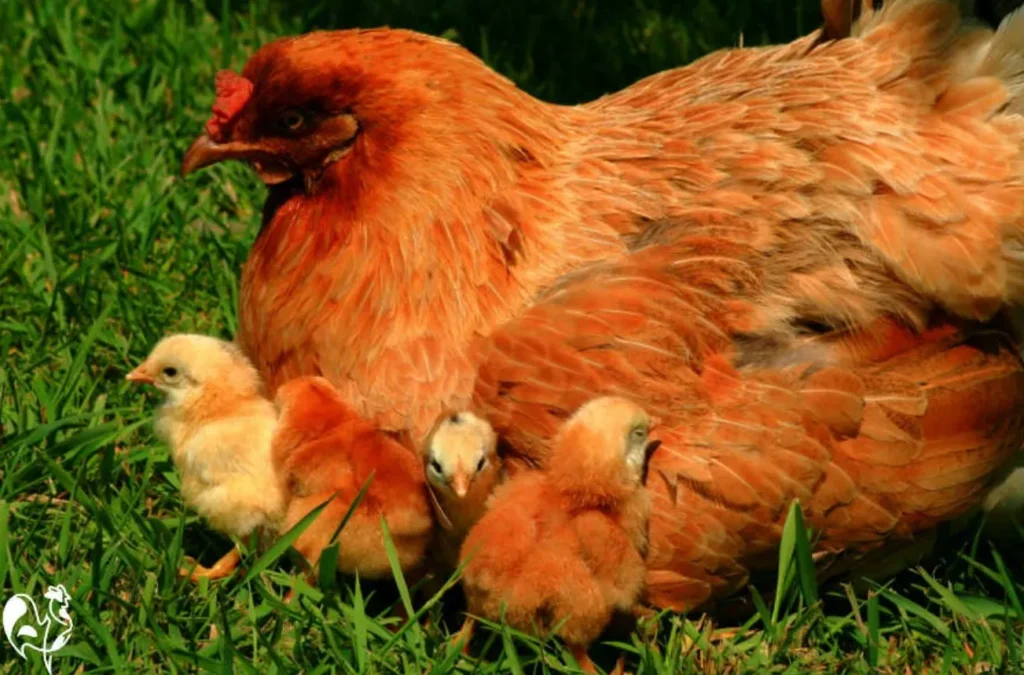
A baby chick needs warmth because it cannot control body temperature well during the first weeks. In natural conditions, the mother hen provides heat beneath her. In human care, a brooder gives the same support.
Good chick care includes clean bedding, safe drinking water, proper starter feed, and protection from cold air, predators, and disease. A chick’s first food is usually a fine starter feed because it is easy to eat and balanced for growth.
The chick growth stage is fast. Soft down slowly changes into real feathers. Legs become stronger. The chick learns social behavior, including following, calling, pecking, dust bathing, and staying close to the group.
The chick’s life cycle matters because early health affects the adult bird. A weak start can lead to poor growth, low immunity, and lower egg or meat production later. A strong start gives the chick a much better chance of becoming a healthy adult chicken.
Their Main Food and Its Collection Process
Food is a major part of a chick’s life cycle because growth is very rapid in the first few weeks. In nature, chicks follow the mother hen and learn what to eat by watching her pecking behavior.
Main foods include:
- Small insects
- Seeds
- Tender grasses
- Tiny worms
- Soft plant material
- Grain pieces
- Commercial chick starter feed in farms or backyard care
A wild or free-range chick collects food by pecking at the ground. The mother hen scratches the soil, dry leaves, and loose dirt with her feet. This exposes insects, seeds, and small edible particles. The chick then copies her movement and pecks at the food.
In human care, chicks are usually given starter feed for the first several weeks. A starter feed is designed to support bone, feather, and muscle growth, as well as immunity. Chicks should also have clean water as soon as they are active. Extension guidance for raising chicks commonly recommends starter feed in the early weeks and easy access to water from arrival.
Food collection is also a learning process. Chicks do not only eat; they explore. Pecking helps them understand texture, taste, space, and social rank. However, they should not be forced to eat hard grains too early without proper grit, because their digestive system is still developing.
Their Life Cycle and Ability to Survive in Nature
Fertilized Egg Stage
The life cycle begins when a rooster mates with a hen, and fertilization occurs. If the egg is fertile and kept under the right warmth, embryo growth begins. Without proper incubation, development stops.
Embryo Development Stage
Inside the egg, the chick develops quickly. The heart begins beating early, and organs form step by step. By the later stage, feathers, claws, beak, and body systems become ready for life outside the shell. Mississippi State University Extension notes that the chick reaches hatching after about 21 days of incubation.
Hatching Stage
The chick breaks into the air cell, starts breathing with its lungs, and uses the egg tooth to cut the shell. Hatching takes energy, so the chick rests often.
Young Chick Stage
After hatching, the chick dries, stands, walks, and follows warmth. In nature, the mother hen protects the young from cold, rain, and predators.
Survival Ability
Chicks survive through quick movement, loud calling, group behavior, camouflage, and close contact with the hen. Still, they are easy prey for cats, snakes, rats, hawks, and other predators.
Their best survival tools are warmth, alertness, fast learning, and protection from the mother hen.
Their Reproductive Process and Raising Their Children
Chicks do not reproduce while young. Reproduction begins only after they grow into adult chickens. A female becomes a hen, and a male becomes a rooster. Depending on breed, nutrition, light, and environment, many hens begin laying eggs around young adulthood.
The reproductive process includes:
- Mating: The rooster mates with the hen.
- Fertilization: Sperm fertilize the egg inside the hen’s body.
- Egg formation: The egg develops with yolk, albumen, membranes, and shell.
- Egg laying: The hen lays the egg in a nest or safe place.
- Incubation: The hen sits on fertile eggs to keep them warm.
- Hatching: The chick breaks out after full embryo development.
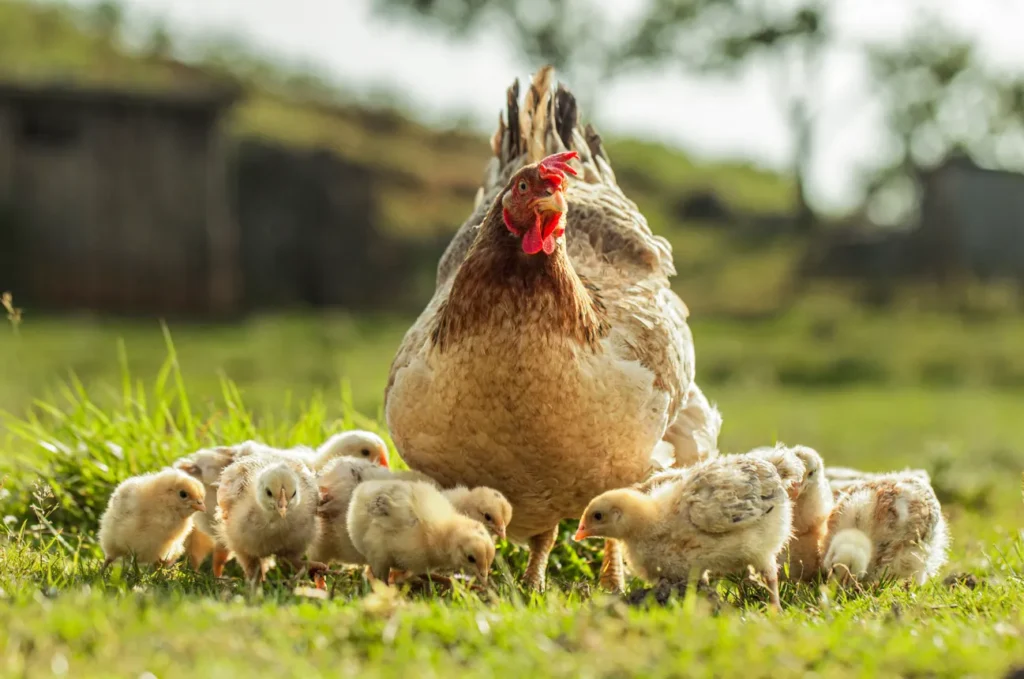
A mother hen raises chicks with strong natural behavior. She calls them toward food, warns them about danger, and covers them under her wings when they are cold or scared.
Chicks learn by following her. They copy pecking, scratching, drinking, dust bathing, and hiding. This learning is important because it teaches survival skills without formal training.
In farms and backyard settings, humans often replace the mother hen’s role. A brooder provides heat. Feeders provide food. Drinkers provide water. Safe bedding protects the feet and keeps the area dry.
Good raising depends on cleanliness, warmth, space, balanced food, and protection. Without these, chicks can become weak, stressed, or sick.
Importance of Them in This Ecosystem
Natural Food Chain Role
Chicks and chickens are part of the natural food chain. In wild or semi-wild environments, they may become food for predators such as foxes, snakes, hawks, wild cats, and other animals. This may seem harsh, but it supports balance in nature.
Seed and Insect Control
As chicks grow, they peck at insects, larvae, seeds, and small organisms in the soil. This helps control some insect populations naturally. Adult chickens are also active foragers and can reduce pests in open areas.
Soil Movement
Chickens scratch the ground as they search for food. This movement mixes dry leaves, soil, and organic matter. In small numbers, this can help natural decomposition and soil turning.
Human Food Systems
The domestic chicken is one of the most important birds in human food systems. Chickens provide eggs and meat, and they are raised in many parts of the world because they reproduce quickly and adapt well to different environments. Their widespread use is linked to their usefulness for meat and eggs.
Educational Value
The life cycle of a chick is often used in schools to teach biology. It helps students understand embryo development, growth, reproduction, survival, and animal care.
Chicks matter because they connect farming, nature, food, education, and ecosystem balance in one simple but powerful life cycle.
What to Do to Protect Them in Nature and Save the System for the Future
Protecting chicks means protecting both young birds and the environment around them. Whether chicks live on farms, in villages, or in semi-natural spaces, they need safe conditions.
- Protect nesting areas: Keep nests out of areas with heavy rain, flooding, predators, and human disturbance.
- Support mother hens: A broody hen needs quiet space, clean bedding, food, and water near the nest.
- Avoid harmful chemicals: Pesticides can reduce the insects that chicks eat and may poison birds directly.
- Keep clean water available: Dirty water spreads disease quickly among young chicks.
- Control predators safely: Use secure fencing, covered runs, and strong housing instead of harmful traps or poison.
- Preserve natural foraging spaces: Grass, loose soil, leaf litter, and insect-rich areas help chicks learn natural feeding.
- Prevent overcrowding: Too many birds in a small place increases stress, disease, and fighting.
- Use proper brooding care: Young chicks need warmth in the first weeks. Many poultry guides recommend 90–95°F for early brooder warmth, gradually reducing it each week as feathers grow.
- Keep bedding dry: Wet bedding can lead to chilling, foul odors, and increased disease risk.
- Protect genetic diversity: Local chicken breeds often survive better in local climates and should not be ignored.
Saving chicks also means respecting the full system: soil, insects, plants, adult birds, and safe human care.
Frequently Asked Questions (FAQs)
Q1: What is the life cycle of a chick?
A: The life cycle of a chick begins as a fertilized egg, develops into an embryo, hatches after incubation, grows into a young chick, becomes a juvenile chicken, and finally matures into an adult hen or rooster.
Q2: How many days does a chick take to hatch?
A: A chick usually takes about 21 days to hatch under proper incubation conditions.
Q3: What does a chick eat after hatching?
A: A chick may first live briefly from absorbed yolk nutrients, but it soon needs clean water and soft, balanced food such as chick starter feed.
Q4: Why do chicks need heat?
A: Chicks need heat because they cannot regulate body temperature well in the first weeks. In nature, the mother hen warms them. In care, a brooder provides warmth.
Q5: What is the egg tooth in a chick?
A: The egg tooth is a small, hard point on the chick’s beak. It helps the chick cut through the shell during hatching.
Q6: When does a chick grow feathers?
A: Feather growth begins during embryo development and continues after hatching. Most chicks become more fully feathered by several weeks of age.
Q7: Can chicks survive without a mother hen?
A: Yes, but only if humans provide warmth, food, water, clean bedding, and protection. Without these, survival becomes difficult.
Q8: When does a chick become an adult chicken?
A: A chick becomes a juvenile first, then an adult. Many chickens reach reproductive maturity around several months of age, depending on breed, health, and care.
Conclusion
The life cycle of a chick is a complete story of growth, change, and survival. It begins inside a fertilized egg, where the embryo develops quietly for about 21 days. Then the chick breaks through the shell, dries, stands, walks, eats, and begins learning from its surroundings.
Each stage matters. The egg needs warmth. The embryo needs stable conditions. The young chick needs heat, food, water, and safety. As it grows, it becomes stronger, develops feathers, learns natural behavior, and eventually becomes an adult chicken capable of reproduction.
Chicks may look small and delicate, but their life cycle shows strong natural design. They support farming, education, food systems, and ecological balance. Protecting chicks means providing them with clean spaces, safe shelter, access to natural food, and careful human support when needed. A healthy chick today can become a strong bird tomorrow.
Also Read: life cycle a mosquito