Admin
Admin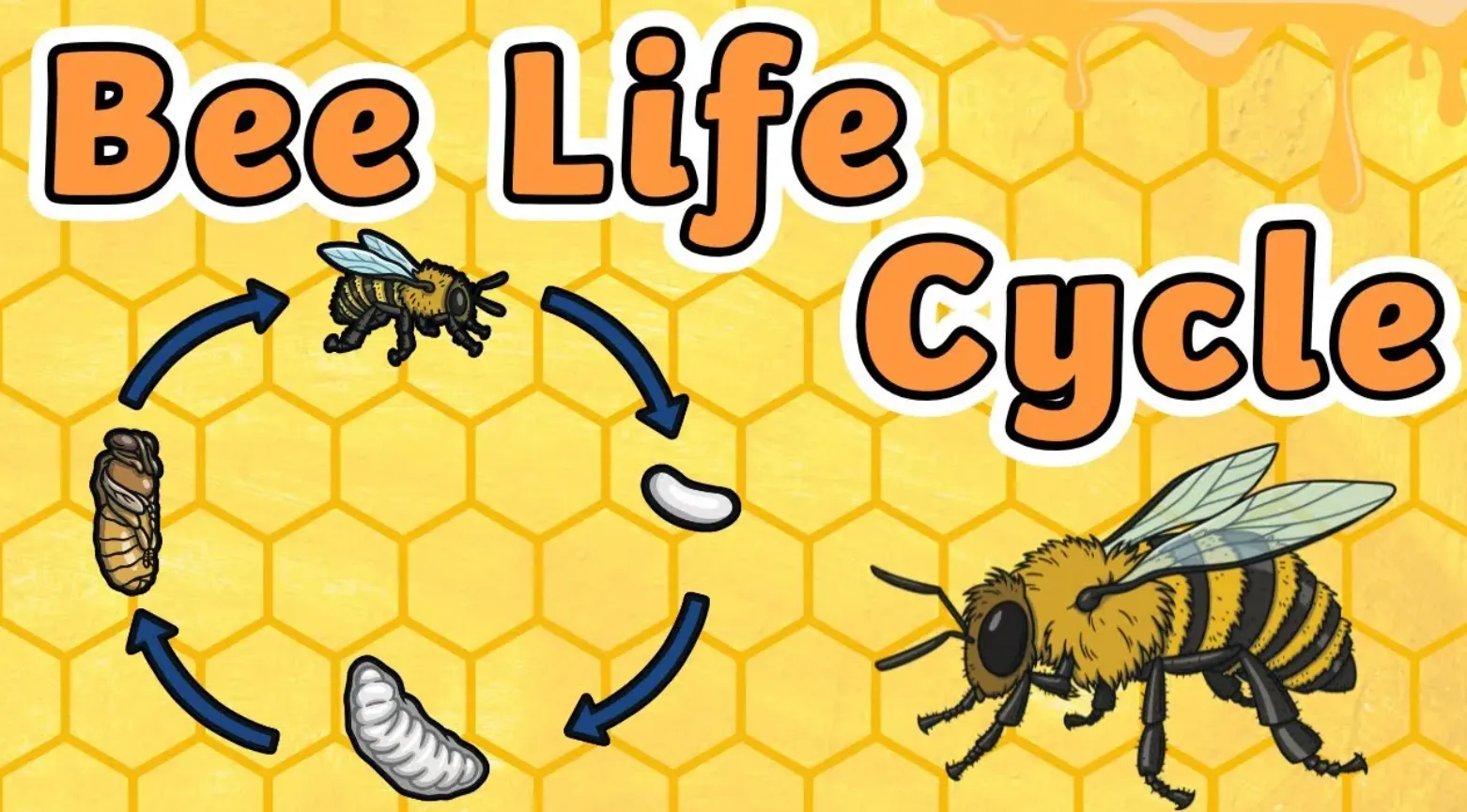
The honey bee’s life cycle is one of the most fascinating natural processes in the insect world. From tiny eggs to fully developed adult bees, every stage is carefully structured and essential to the colony’s survival. Honey bees are not just producers of honey; they play a crucial role in pollination, which directly supports global agriculture and biodiversity.
Understanding the life cycle helps us appreciate how organized and efficient a honey bee hive truly is. Each bee, whether a worker, drone, or queen, has a specific role that contributes to the colony’s survival.
Quick Answers (Most Common Questions)
1. How long is the life cycle of a honey bee?
The full life cycle ranges from 16 days (queen) to about 24 days (worker bee).
2. What are the stages of a honey bee’s life cycle?
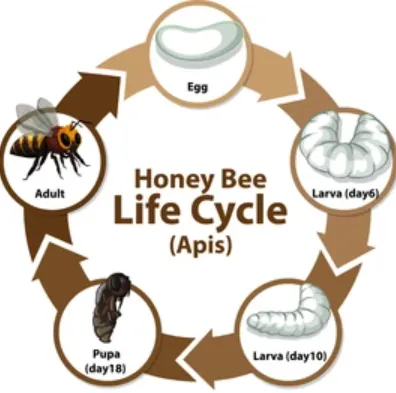
Egg → Larva → Pupa → Adult.
3. Which bee lives the longest?
The queen honey bee lives the longest, often up to 2–5 years.
Quick Life Cycle Table
| Stage | Duration (Days) | Description |
| Egg | 3 days | Laid by the queen in hexagonal cells |
| Larva | 5–6 days | Fed royal jelly or pollen/nectar |
| Pupa | 7–12 days | Transformation inside a sealed cell |
| Adult Bee | Varies | A worker, drone, or queen emerges |
The History Of Their Scientific Naming
The scientific naming of honey bees has evolved over centuries through biological classification systems:
- The western honey bee, scientifically known as Apis mellifera, was named by Carl Linnaeus in 1758.
- The term Apis means “bee,” while mellifera means “honey-bearing.”
- Early scientists mistakenly used Apis mellifica (honey-making), later corrected to reflect nectar collection.
- Honey bees belong to the family Apidae, which also includes species like bumble bees.
- Different subspecies exist globally, adapted to various climates and environments.
- Scientific naming helped distinguish honey bees from wild pollinators and solitary bees.
- Classification also assists honey bee supply companies in breeding and distributing specific bee types.
This naming system has been essential for research, conservation, and agriculture.
Their Evolution And Their Origin
Honey bees have a long evolutionary history that dates back over 100 million years. Fossil evidence shows that bees evolved from wasp-like ancestors that gradually shifted from hunting insects to feeding on nectar and pollen.
The earliest bees were solitary, but over time, some species developed social behaviors. This led to the formation of highly organized colonies, which we see today in the honey bee hive. The genus Apis emerged millions of years ago in tropical regions of Asia.
As climates changed, bees adapted and spread across Europe, Africa, and eventually the Americas. The western honey bee became the most widely distributed species due to its adaptability and efficiency in honey production.
Evolution also shaped their physical traits, such as:
- Specialized pollen baskets on their legs
- Long proboscis for nectar collection
- Complex communication systems like the waggle dance
Today, honey bees are vital pollinators in both natural ecosystems and agricultural systems. Their evolution reflects a perfect balance between survival, efficiency, and ecological contribution.
Important Things That You Need To Know
Honey bees are deeply connected to human life and industry. Here are some essential insights:
The honey bee is not just a pollinator but also a key player in agriculture. Many honey bee supply companies provide farmers and beekeepers worldwide with tools, hives, and bee colonies.
The western honey bee is the most commonly managed species due to its high honey production and adaptability. It is widely used in commercial pollination.
The queen honey bee is the heart of the colony. She controls reproduction and releases pheromones that regulate hive behavior.
A honey bee hive is a highly organized structure in which thousands of bees work together. Each bee has a defined role, ensuring efficiency.
When comparing bumble bees vs. honey bees, bumble bees are larger and live in smaller colonies, while honey bees produce honey and live in large, structured hives.
Even cultural elements like honey bee stamps reflect the global importance of bees, highlighting their role in nature and society.
Their main food and its collection process
Honey bees rely on two main food sources: nectar and pollen. These provide energy and nutrients essential for survival.
Food Sources:
- Nectar: Main energy source, converted into honey
- Pollen: Rich in protein, used for larval growth
- Water: Maintains hive temperature and digestion
- Royal Jelly: Special secretion fed to queen larvae
Collection Process:
- Worker bees leave the hive to forage for flowers.
- They use their long tongue (proboscis) to suck nectar.
- Nectar is stored in a special “honey stomach.”
- Pollen sticks to their hairy bodies and is collected in leg baskets.
- Bees communicate the location of food through the waggle dance.
- Back at the hive, nectar is passed to other bees and processed into honey.
- Water evaporation and enzyme action complete honey production.
This efficient system ensures a steady food supply for the entire colony.
Their life cycle and ability to survive in nature
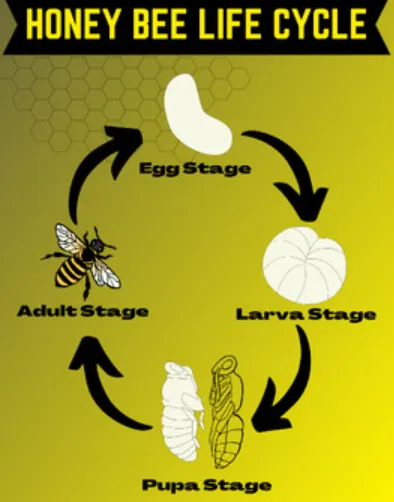
Egg Stage
The queen honey bee lays eggs in wax cells. Each egg is tiny and white, hatching after three days.
Larva Stage
Larvae are fed continuously. Worker larvae receive pollen and nectar, while future queens receive royal jelly.
Pupa Stage
Cells are sealed, and transformation begins. The larva develops wings, legs, and other body parts.
Adult Stage
Adult bees emerge and take on roles:
- Workers maintain the hive
- Drones mate with the queen
- Queens reproduce
Survival Abilities
- Strong colony organization
- Communication via pheromones
- Temperature control inside the hive
- Defense mechanisms against predators
These traits help honey bees survive in diverse environments.
Their Reproductive Process and raising their children
Honey bee reproduction is unique and highly organized.
Reproductive Process:
- The queen mates with multiple drones during a mating flight.
- She stores sperm for lifelong egg-laying.
- Fertilized eggs become workers or queens.
- Unfertilized eggs become drones.
Raising Young:
- Worker bees feed larvae continuously.
- Royal jelly determines if a larva becomes a queen.
- Cells are sealed during the pupal stage.
- New bees emerge fully developed.
Colony Growth:
- Queens can lay up to 2,000 eggs per day.
- Workers care for young, clean cells and regulate temperature.
This system ensures the colony remains strong and productive.
The importance of them in this Ecosystem
Pollination
Honey bees pollinate about 75% of flowering plants, including crops like fruits, vegetables, and nuts.
Biodiversity Support
They help maintain plant diversity, which supports wildlife and ecosystems.
Agricultural Impact
Farmers depend on bees for higher crop yields. Many industries rely on honey bee supply companies for pollination services.
Food Chain Stability
Plants pollinated by bees support entire food chains, including animals and humans.
Without honey bees, ecosystems would face a serious imbalance.
What to do to protect them in nature and save the system for the future
- Plant bee-friendly flowers in your garden
- Avoid harmful pesticides and chemicals
- Support local beekeepers and sustainable honey production
- Provide water sources for bees
- Protect natural habitats and forests
- Educate others about bee conservation
- Support policies that protect pollinators
- Encourage organic farming practices
Protecting bees ensures a sustainable future for agriculture and ecosystems.
Frequently Asked Questions (FAQs)
1. What is the life cycle of a honey bee?
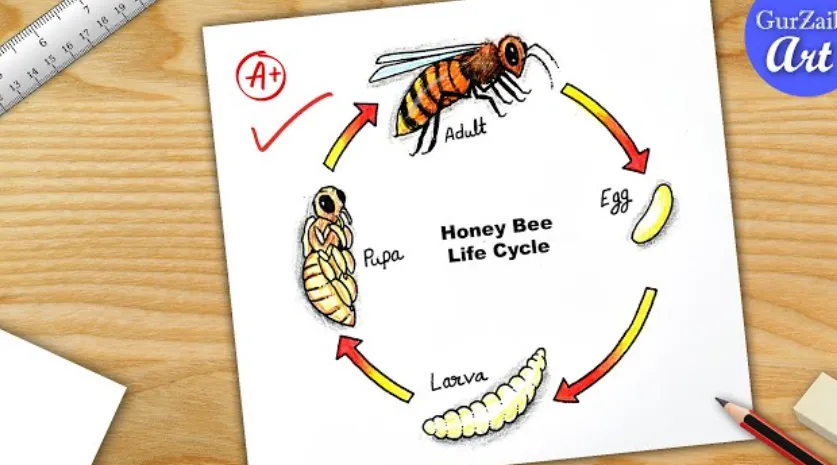
Egg → Larva → Pupa → Adult.
2. How long does a worker bee live?
About 5–6 weeks during active seasons.
3. What is the role of the queen honey bee?
She lays eggs and controls the hive.
4. What do honey bees eat?
Nectar, pollen, and royal jelly.
5. How do bees make honey?
By processing nectar and evaporating water.
6. What is the difference between a bumblebee and a honeybee?
Bumble bees are larger and don’t produce honey like honey bees.
7. Why are honey bees important?
They are essential pollinators for crops and ecosystems.
8. How can we help protect honey bees?
By planting flowers, reducing pesticides, and supporting conservation.
Conclusion
The honey bee’s life cycle is a remarkable journey that highlights nature’s precision and efficiency. From a tiny egg to a hardworking adult, each stage plays a vital role in maintaining the colony and supporting the environment.
Honey bees are more than just honey producers. They are essential pollinators that sustain agriculture, biodiversity, and global food systems. Their organized social structure, efficient food collection, and unique reproductive system make them one of the most important species on Earth.
However, they face increasing threats from habitat loss, pesticides, and climate change. Protecting them is not just an environmental responsibility—it is essential for human survival.
By understanding their life cycle and importance, we can take meaningful steps to preserve these incredible creatures for future generations.
Also Read: malaria life cycle