Admin
Admin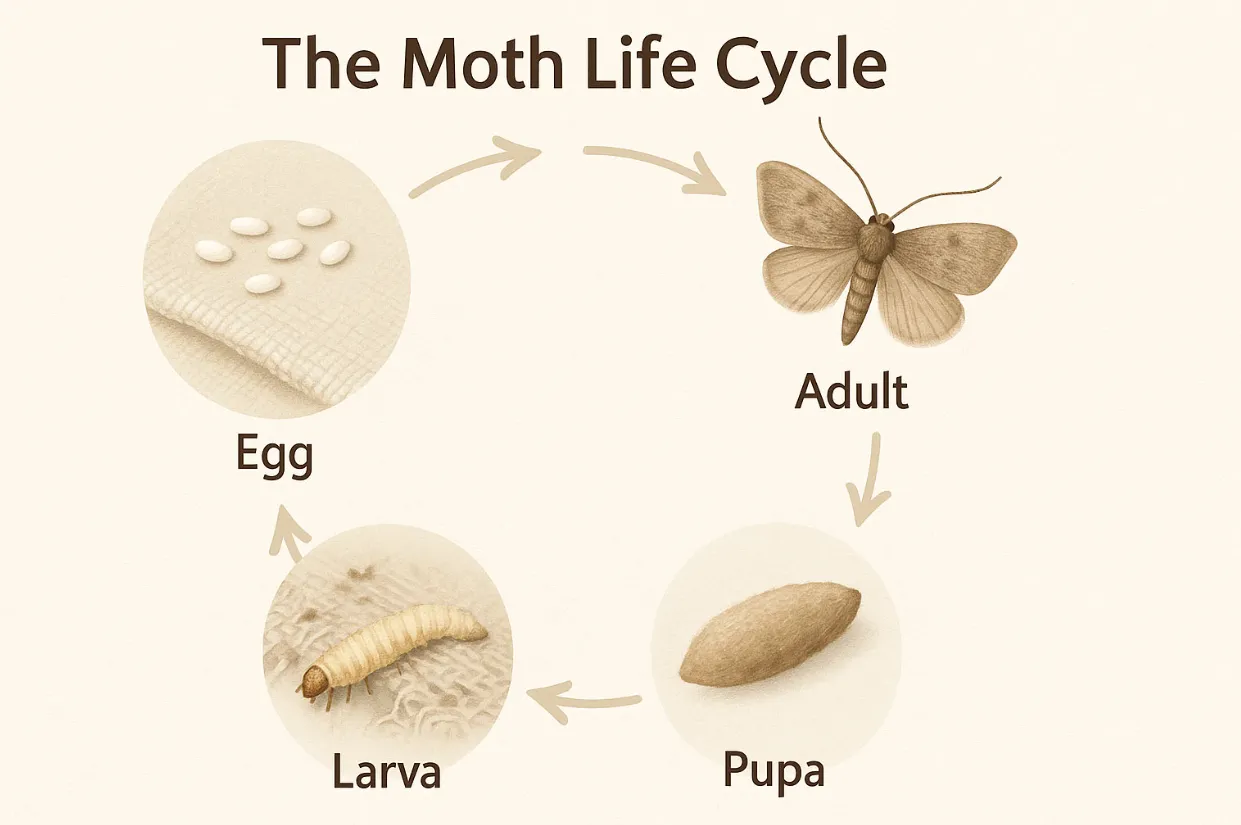
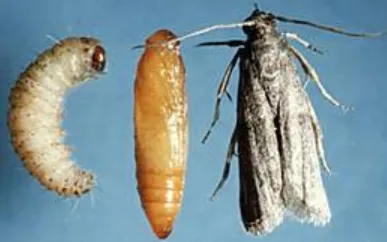
The grain moth life cycle explains how grain-infesting moths develop from tiny eggs into destructive larvae, then pupae, and finally adult moths. The term grain moth is often used to refer to stored-product moths that attack cereal grains, seeds, flour, cornmeal, pet food, nuts, and other dry foods. One of the most important species is the Angoumois grain moth or Sitotroga cerealella, which is strongly associated with whole grains such as rice, maize, wheat, barley, oats, sorghum, rye, and millet. Its larvae feed inside individual kernels, making early detection difficult.
In homes and food-storage areas, people may also confuse it with the Indianmeal moth or Plodia interpunctella, a common pantry moth whose larvae feed on stored grains, nuts, dried fruits, pet food, chocolate, seeds, and similar dry products. Unlike adult moths, the grain moth larvae cause most of the damage because they actively eat and contaminate food with silk, frass, and webbing.
Q: What is the grain moth life cycle?
A: The grain moth life cycle has four main stages: egg, larva, pupa, and adult moth.
Q: Which stage damages grain the most?
A: The larval stage causes the real damage because larvae feed inside or on grain and dry food products.
Q: How long does the grain moth life cycle take?
A: Under warm, favorable conditions, many stored-grain moths can complete development in about 4–8 weeks, depending on species, food, temperature, and humidity.
Quick Life Cycle Table
| Stage | What Happens | Typical Duration | Main Sign to Notice |
| Egg | Female lays eggs on or near grain/food | About 2–14 days in the pantry, many pantry moths | Almost invisible without close inspection |
| Larva | Larvae feed on grain, kernels, flour, seeds, or pet food | Around 4–5 weeks for Indianmeal moth; around 30 days in maize for Angoumois larvae at 25°C and 70% RH | Webbing, dust, holes, damaged kernels |
| Pupa | Larva transforms into an adult moth | Around 5–14 days, depending on species and temperature | Cocoons, hidden pupae, wandering larvae |
| Adult | Adults mate and lay eggs | Up to 15 days for Angoumois grain moth adults | Small moths flying near the grain or the pantry |
The History Of Their Scientific Naming, Evolution, and Their Origin
Scientific Naming of Grain Moths
The most recognized true grain moth is the Angoumois grain moth, scientifically named Sitotroga cerealella. It belongs to the order Lepidoptera, the insect order that includes moths and butterflies, and the family Gelechiidae. The species was described by Olivier in 1789, and older scientific synonyms include Alucita cerealella and Tinea hordei.
Origin of the Name “Angoumois Grain Moth”
The common name Angoumois grain moth is linked with Angoumois, a historical province of France, where serious grain damage was recorded. Although the name is French in origin, the species is now found across warmer regions of the world and has spread widely through the movement of stored grain and agricultural trade.
Evolution and Adaptation
Grain moths evolved as small, efficient insects adapted to dry plant material. The Angoumois grain moth is especially successful because its larvae develop hidden inside a single grain kernel. This protects them from predators, drying, and casual human inspection. Their life strategy is simple but powerful: find stored food, lay eggs near it, and let the larvae complete development on a protected food source.
Their Reproductive Process, Giving Birth, And Rising Their Children
Egg-Laying Instead of Giving Birth
A grain moth does not give birth to live young. Like other moths, it reproduces by laying eggs. Female moths place eggs directly on grain, between kernels, or near suitable dry food materials. In the Angoumois grain moth, eggs are laid singly or in groups, and the female may lay up to 200 eggs, although around 40 is considered more typical.
How Grain Moth Larvae Begin Life
After hatching, the tiny larvae immediately search for food. In Angoumois grain moths, the newly emerged larvae bore into a grain kernel and complete much of their growth inside it. This hidden feeding habit makes infestation difficult to notice until adults emerge or exit holes appear.
No Parental Care
Grain moths do not “raise” their children like mammals or birds. The female’s role is mainly to choose a suitable egg-laying site. Once eggs are laid, the larvae survive independently by feeding on the nearby food source.
Fast Reproduction in Warm Storage
Warm storage conditions can speed up reproduction. For example, the Indianmeal moth can lay hundreds of eggs, and its entire life cycle may be completed in 6–8 weeks under favorable conditions.
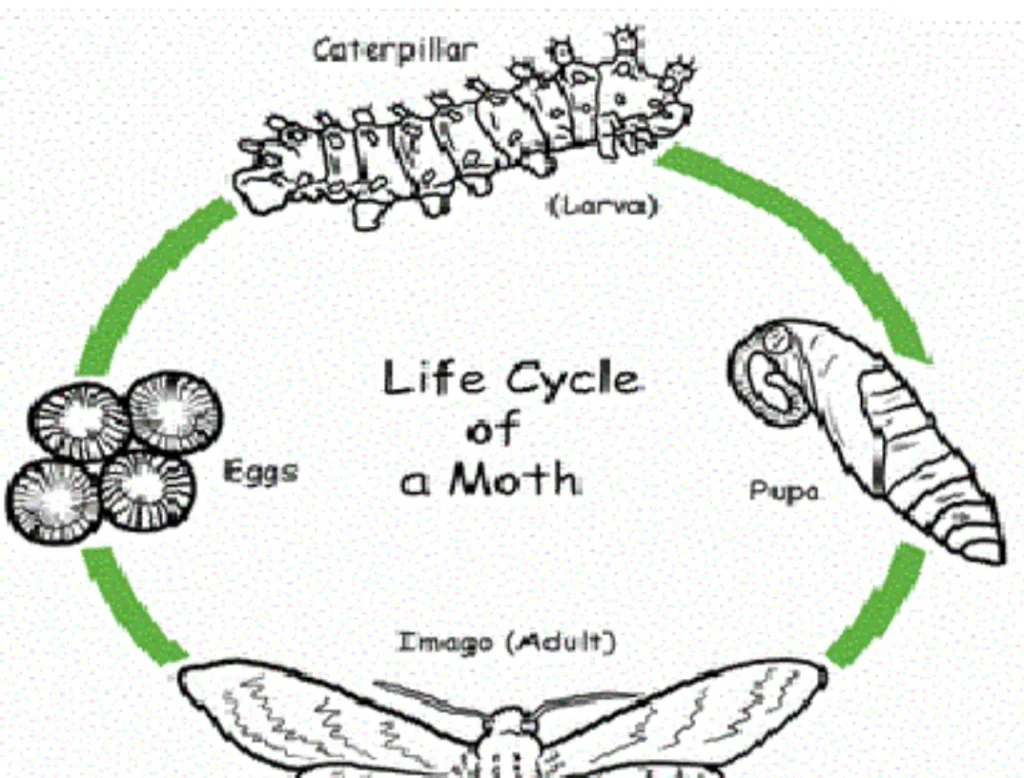
Stages of Grain Moth Life Cycle
1. Egg Stage
The egg stage begins when a female grain moth lays eggs near a suitable food source. Eggs are very small and can be difficult to see with the naked eye. In stored foods, they may be hidden among grain kernels, flour dust, packaging folds, or cracks in storage containers.
For Indian meal moths, eggs can hatch in 2–14 days. For Angoumois grain moths, hatching also depends strongly on temperature and humidity. Warmer conditions generally accelerate development, while low temperatures slow it down. Research on Sitotroga cerealella shows that temperature is a major factor affecting egg development and survival.
2. Larval Stage
The larval stage is the most destructive stage of the grain moth life cycle. Larvae are small caterpillars that eat stored food. Angoumois grain moth larvae feed internally inside whole grain kernels, especially maize, rice, wheat, barley, oats, sorghum, rye, and millet.
By contrast, Indianmeal moth larvae usually feed on broken grain, flour, nuts, dry pet food, dried fruit, chocolate, seeds, and other pantry products. They often create silk webbing and food clumps.
3. Pupal Stage
After feeding enough, the larva enters the pupal stage. During this stage, it transforms into an adult moth. In Angoumois grain moths, pupation often happens inside the grain kernel. Before emergence, the larva prepares a weak circular “window” in the seed coat so the adult can push out later.
In Indianmeal moths, mature larvae may crawl away from the food source and pupate in cracks, corners, walls, shelves, or packaging folds.
4. Adult Stage
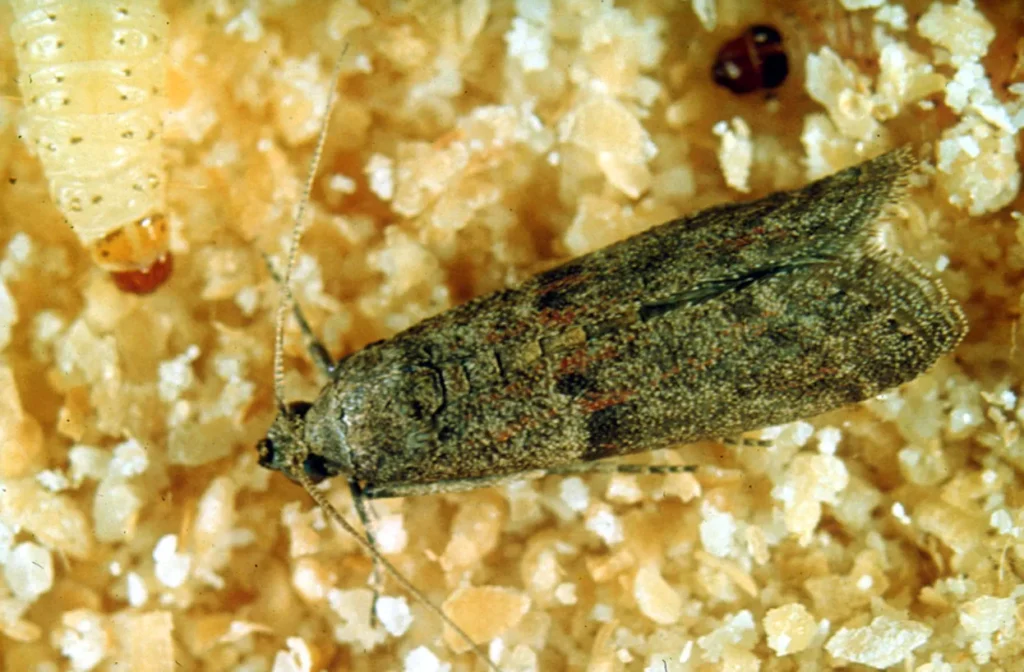
The adult moth is mainly a reproductive stage. Adults do not cause the main feeding damage; their job is to mate and lay eggs. Adult Angoumois grain moths are small, pale brown moths with narrow wings and long fringes. They may live up to about 15 days.
Their Main Diet, Food Sources, and Collection Process Explained
Main Diet of Grain Moths
The main diet of a grain moth depends on the species. The Angoumois grain moth prefers whole cereal grains. Its larvae can feed inside maize, rice, wheat, barley, oats, rye, pearl millet, and sorghum. Because the larva develops inside the kernel, the damage may remain hidden until the adult exits.
Food Sources in Homes and Storage Areas
In homes, grain moths and related pantry moths may infest:
- Rice
- Wheat
- Cornmeal
- Flour
- Breakfast cereal
- Bird seed
- Pet food
- Dry dog and cat food
- Nuts
- Seeds
- Dried fruits
- Chocolate
- Spices and powdered foods
The Indianmeal moth has a broad diet and is known to infest many plant-based dry foods, as well as pet and fish foods.
How They “Collect” Food
Grain moths do not collect and store food like ants or bees. Instead, the female lays eggs directly on or near food. When larvae hatch, they begin feeding immediately. This strategy saves energy because the young do not need to search far.
How Infestation Spreads
Infestation can spread through contaminated grain, infested packages, poor storage hygiene, damaged packaging, and warm, humid storage conditions. Once larvae develop, adults emerge and lay new eggs, repeating the cycle.
Important Things That You Need To Know
Understanding the grain moth life cycle is the key to preventing infestation. Many people notice adult moths first, but the real problem is usually hidden larvae. Adult moths flying around a pantry or grain bin are only a warning sign; the feeding damage has already happened inside stored food.
The grain moth is most closely linked with whole cereal grains, especially when discussing the Angoumois grain moth. This species differs from many pantry moths in that its larvae develop within individual kernels. That means a bag of grain may look normal from the outside while larvae are already feeding inside.
Grain moth larvae are the most important stage to identify. They may leave behind webbing, powdery dust, damaged kernels, clumped food, or round exit holes. In whole grains, the damage can be hidden until adults emerge.
Grain moth traps are useful for monitoring adult moth activity. Pheromone traps can help detect male moths and show whether an infestation is still active. However, traps alone cannot remove eggs and larvae hidden in food. Cleaning, disposal of infested products, airtight storage, and temperature treatment are more important for controlling the pest.
The phrase Indian grain moth is sometimes used informally, but many people actually mean the Indianmeal moth, a common pantry pest. The Indianmeal moth is not the same as the Angoumois grain moth, but both can be associated with dry stored foods. Correct identification helps choose the right control method.
How Long Does A Grain Moth Live
- The lifespan depends on the species. A true Angoumois grain moth adult may live up to about 15 days, while the full development from egg to adult depends on temperature, humidity, and grain type.
- The full life cycle is longer than the adult stage. People often ask how long a grain moth lives, but it is better to break the life cycle into egg, larva, pupa, and adult stages. The adult may live only a few days, but the immature stages can persist for weeks.
- Warm conditions speed up development. Stored-grain moths develop faster when temperatures are warm and food is available. Research on Sitotroga cerealella found that development is strongest around 25–30°C with moderate to high relative humidity, while survival drops at extreme temperatures.
- Cold conditions slow development. Lower temperatures can delay egg hatch, larval growth, and adult emergence. This is why cooling stored grain is often used as part of grain protection.
- Indianmeal moths may complete a life cycle in 6–8 weeks. Under favorable conditions, the Indianmeal moth can develop from egg to adult in about 6–8 weeks.
- Food quality matters. Larvae grow better when they have access to suitable grain, broken kernels, floury material, seeds, nuts, or other dry foods.
- Adult moths are short-lived but important. Even if adults do not feed much, they reproduce quickly. A single female can lay many eggs, so seeing a few adults may indicate a larger hidden infestation.
- Infestations can continue for months. If eggs, larvae, or pupae remain hidden in cracks or food packages, new adults may appear again even after the first cleaning.
- Airtight storage reduces survival. Keeping grains and dry foods in sealed glass, metal, or thick plastic containers limits access to food and helps break the cycle.
Grain Moth Lifespan in the Wild vs. in Captivity
Lifespan in the Wild
In natural or semi-natural settings, grain moths may live around fields, harvested crops, grain residues, and storage structures. Their survival depends on temperature, humidity, food availability, predators, and seasonal conditions. The Angoumois grain moth can attack grains before or after harvest, especially where kernels are exposed or stored poorly.
Lifespan in Captivity or Storage
In storage areas, warehouses, grain bins, laboratories, and pantries, grain moths may survive better because food is concentrated and protected from the weather. If the area is warm and food remains undisturbed, several generations may develop. In favorable indoor conditions, related stored-product moths such as Indianmeal moths can complete development in weeks and continue reproducing.
Which Environment Supports Longer Survival?
Captive or storage environments often support longer infestation persistence because food is stable, predators are fewer, and the temperature may remain suitable. However, good hygiene, airtight containers, low temperature, and removal of infested food can quickly reduce survival.
Importance of Grain Moth Life Cycle in this Ecosystem
Part of the Food Web
Although grain moths are considered pests in agriculture and homes, they are still part of the food web. Spiders, beetles, parasitoid wasps, birds, reptiles, and other small predators can eat their eggs, larvae, pupae, and adults.
Natural Decomposition Role
In unmanaged environments, insects that feed on seeds and dry plant material help break down organic matter. Grain moth larvae contribute to the natural recycling of plant-based materials, although this role becomes harmful when they invade stored human food.
Indicator of Storage Conditions
The presence of grain moth larvae often indicates problems in storage hygiene, moisture, packaging, or grain condition. In this way, the moth acts as a biological warning sign that stored food is vulnerable.
Agricultural Importance
The Angoumois grain moth matters economically because it damages cereal grains and can reduce food quality, seed viability, and market value. Since larvae feed within kernels, infestation may go unnoticed until the damage becomes obvious.
What to do to protect them in nature and save the system for the future
Protect Natural Predators
- Encourage natural predators such as spiders, birds, and beneficial insects in outdoor ecosystems.
- Avoid unnecessary broad-spectrum pesticide use in natural areas.
- Support ecological balance rather than trying to eliminate every insect.
Use Eco-Friendly Grain Protection
- Store grain properly rather than relying solely on chemicals.
- Keep grain dry, clean, and well-aerated.
- Use sealed containers for household dry foods.
Reduce Food Waste
- Check stored grains regularly.
- Remove infested materials responsibly.
- Compost only when safe and where pests will not spread back into storage areas.
Use Grain Moth Traps Wisely
- Grain moth traps can help monitor adult moth activity.
- Use traps as detection tools, not as the only control method.
- Combine traps with cleaning and airtight storage.
Support Safe Farming and Storage Practices
- Promote good post-harvest handling.
- Keep storage rooms clean and dry.
- Use temperature management and inspection to reduce infestation without harming the wider environment.
Fun & Interesting Facts About Grain Moth Life Cycle
- Grain moth larvae are more damaging than adult moths because larvae do the feeding.
- The Angoumois grain moth can complete much of its development hidden inside a single grain kernel.
- Adult moths are often the first stage people notice, but they are usually a sign of an older, hidden infestation.
- Indianmeal moth larvae can feed on many pantry foods, including nuts, dried fruit, cereal, pet food, and chocolate.
- A small round hole in a grain kernel may show where an adult Angoumois grain moth emerged.
- Warm storage speeds up the grain moth life cycle, while cooler grain slows development.
- Grain moth traps are mainly used to monitor adults, not to kill larvae inside food.
- Some grain moth larvae produce silk that causes food to clump together.
- The adult stage is short, but reproduction can be fast.
- A clean pantry can still attract grain moths if eggs or larvae are introduced into packaged food.
Frequently Asked Questions (FAQs)
Q: What is the grain moth life cycle?
A: The grain moth life cycle includes egg, larva, pupa, and adult. The larva is the main feeding and damaging stage.
Q: Are grain moths harmful to humans?
A: Grain moths are not dangerous like biting insects, but they contaminate stored food with larvae, silk, frass, and damaged particles. Infested food should usually be discarded.
Q: What are grain moth larvae?
A: Grain moth larvae are small, caterpillar-like, immature moths. They feed on grain, flour, seeds, pet food, nuts, dried fruits, and other dry food materials.
Q: Do grain moth traps remove infestation completely?
A: No. Grain moth traps help detect and monitor adult moths, but they do not remove eggs, larvae, or pupae hidden inside food. Cleaning and removing infested food are necessary.
Q: Is the Angoumois grain moth the same as the Indianmeal moth?
A: No. The Angoumois grain moth, Sitotroga cerealella, is often associated with whole cereal grains. The Indianmeal moth is Plodia interpunctella, a common pantry pest that feeds on many dry stored foods.
Conclusion
The grain moth life cycle is a simple but highly effective four-stage process: egg, larva, pupa, and adult. The most damaging stage is the larval stage, because larvae feed on stored grain, seeds, flour, pet food, and other dry materials. The Angoumois grain moth is especially difficult to detect because its larvae develop inside individual grain kernels. In contrast, related pantry pests such as the Indianmeal moth often create visible silk webbing and food clumps.
Understanding the life cycle helps with prevention. Adult moths are only the visible warning; the real problem is usually hidden eggs and larvae. The best protection is clean storage, dry grain, airtight containers, regular inspection, proper disposal of infested food, and careful use of grain moth traps for monitoring. When managed wisely, stored food stays safer while the wider ecosystem remains balanced.
Also Read: chickens life cycle