Admin
Admin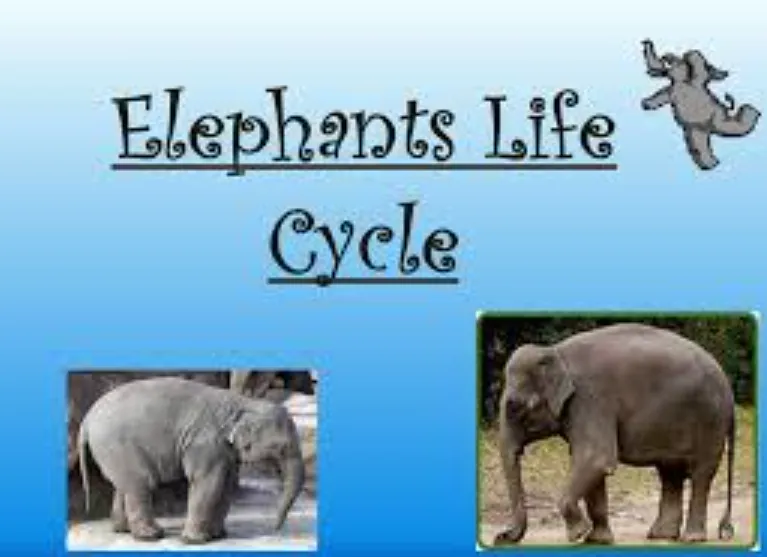
The elephant life cycle is one of the most fascinating natural journeys in the animal kingdom. Elephants are the largest living land mammals, known for their powerful bodies, long trunks, strong memory, complex emotions, and deep family bonds. They live mainly in Africa and Asia, across habitats such as savannas, forests, grasslands, wetlands, and dry landscapes. Scientists recognize three living elephant species: the African savanna elephant, the African forest elephant, and the Asian Elephant.
Unlike many animals, elephants grow slowly and depend on family care for many years. A baby elephant, called a calf, is born after a very long pregnancy of about 18 to 22 months, with 22 months commonly described as the longest gestation period among mammals.
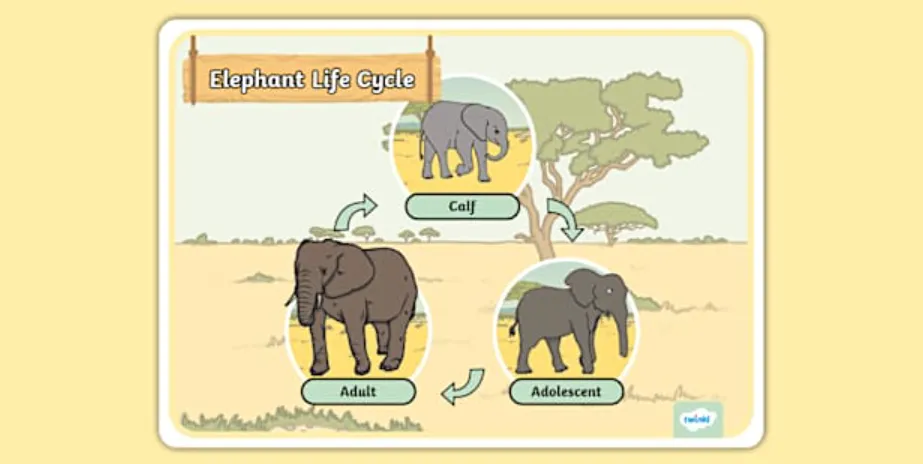
An elephant’s life cycle usually includes calf, juvenile, adolescent, and adult stages. Female elephants often stay with their family herd for life, while males usually leave when they reach puberty. This social structure deeply connects the Elephant’s life cycle to learning, protection, migration, feeding habits, and survival skills.
Quick Answers: Most Common Questions
Q: How many stages are in the elephant life cycle?
A: The elephant life cycle is commonly divided into four main stages: calf, juvenile, adolescent, and adult.
Q: How long is an elephant pregnant?
A: A female elephant is pregnant for about 18 to 22 months, which is the longest pregnancy period among mammals.
Q: How long do elephants live?
A: Many elephants can live around 60 to 70 years in the wild, while some individuals may live longer under special conditions.
Quick Life Cycle Table
| Stage | Age Range | Main Features |
| Calf | Birth to 2 years | Drinks mother’s milk, stays close to mother, protected by the herd |
| Juvenile | 2 to 10 years | Learns feeding, walking routes, social behavior, and survival skills |
| Adolescent | 10 to 18 years | Males begin leaving the herd; females learn family leadership roles |
| Adult | 18+ years | Fully grown, may reproduce, migrate, lead, protect, and shape ecosystems |
| Old Age | 50+ years | Slower movement, worn teeth, high ecological and social knowledge |
The History of Their Scientific Naming, Evolution, and Origin
Scientific Naming of Elephants
The word Elephant is linked to the biological family Elephantidae. Today, living elephants are placed mainly under two genera: Loxodonta for African elephants and Elephas for Asian elephants.
The African savanna elephant is scientifically known as Loxodonta africana, the African forest elephant as Loxodonta cyclotis, and the Asian Elephant as Elephas maximus. The name Elephas maximus means “greatest elephant,” reflecting the animal’s size and importance.
Evolution and Origin
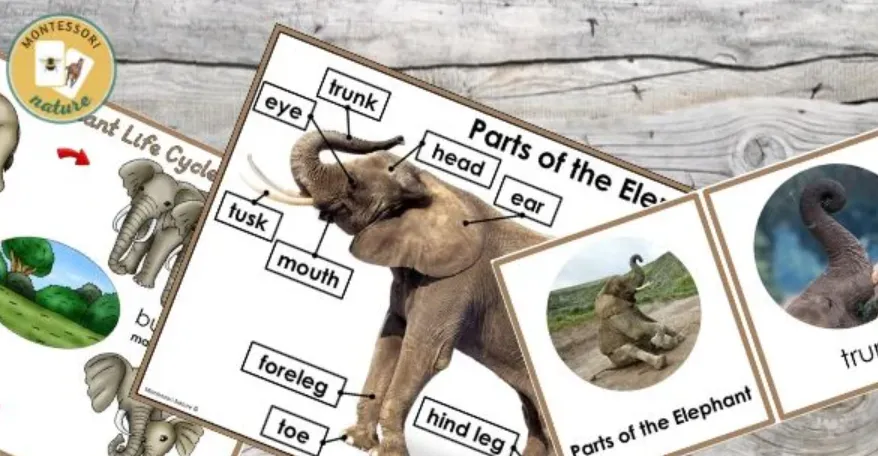
Elephants belong to the order Proboscidea, a group that once included extinct relatives such as mammoths and mastodons. Their trunk evolved into a highly flexible organ that combined the upper lip and nose.
Modern elephants developed specialized features for survival: large ears for heat control, tusks for digging and defense, thick skin for protection, and strong social intelligence for group living.
How Elephants Spread Across the World
Elephants once had a much wider natural range than they do today. Over time, climate shifts, habitat changes, human expansion, and hunting reduced their distribution. Now, wild elephants are mainly found in parts of Africa and Asia, and many populations are fragmented.
Their Reproductive Process, Giving Birth, And Rising Their Children
Mating and Reproductive Maturity
Female elephants usually become capable of reproduction in adolescence, although the exact age can vary by species, habitat, health, and food availability. Males often mature later and must compete with older bulls before they can successfully mate.
Adult male elephants may enter a condition called musth, during which testosterone levels rise, and mating behavior becomes more pronounced. During this period, males may travel long distances to find receptive females.
Pregnancy and Birth
An elephant’s pregnancy is extremely long, usually around 18 to 22 months. This long development period allows the calf’s brain, trunk, body, and senses to develop before birth. A female usually gives birth to one calf, although twins are very rare.
The newborn calf may weigh 90-120 kg, depending on the species and individual condition. Soon after birth, the calf attempts to stand, walk, and stay close to its mother.
Raising Their Children
Elephant parenting is not only the mother’s responsibility. The entire female herd often helps protect and guide the calf. These helpers are sometimes called allomothers.
Young elephants learn by watching older elephants. They learn where to find water, which plants are safe to eat, how to respond to danger, how to use the trunk properly, and how to communicate through sound, smell, touch, and body language.
Stages of Elephant Life Cycle
1. Calf Stage
The calf stage begins at birth and usually lasts until around two years of age. During this time, the baby elephant depends heavily on its mother’s milk, warmth, protection, and guidance.
A newborn calf does not fully control its trunk immediately. At first, it may swing the trunk awkwardly, step over it, or use its mouth more than its trunk. Over time, it learns how to drink water, pick up grass, touch other elephants, and explore the environment.
The herd forms a protective circle around the calf when danger appears. Lions, hyenas, or humans can threaten young calves, so group protection is essential.
2. Juvenile Stage
The juvenile stage usually begins after the calf becomes more independent. The young Elephant starts eating more solid plant material, although it may continue nursing for several years.
This stage is full of learning. Juveniles practice walking long distances, bathing, dusting, feeding, social greeting, and herd communication. Female juveniles often stay close to mothers, aunts, sisters, and grandmothers.
Young males may become more playful and physical. They may push, spar, and test strength with other young males.
3. Adolescent Stage
The adolescent stage is a major transition. Female elephants usually remain in the family group, learning future roles as mothers and leaders. Male elephants begin spending more time away from the herd and may eventually join bachelor groups.
This stage is important for emotional and social development. Elephants must learn dominance rules, mating behavior, migration patterns, and risk avoidance.
Adolescent males may be curious and bold, which can bring them into conflict with people, crops, roads, or settlements.
4. Adult Stage
The adult stage begins when elephants reach full maturity. Adult females may reproduce and support the family herd. Older females, especially matriarchs, guide the herd using memory of water sources, safe routes, feeding areas, and danger zones.
Adult males often live alone or in small male groups. They may travel widely, especially during musth.
Adult elephants are powerful ecosystem shapers. Their feeding, walking, digging, and seed dispersal influence the structure of forests, grasslands, and wetlands.
Their main diet, food sources, and collection process are explained
Elephants are herbivores, meaning they eat plant-based food. Their diet changes with season, habitat, rainfall, and food availability.
Main Diet of Elephants
Elephants commonly eat:
- Grasses
- Leaves
- Tree bark
- Roots
- Fruits
- Shrubs
- Twigs
- Branches
- Seeds
- Aquatic plants
African elephants may eat more grasses in savanna areas, while forest elephants often consume more fruit, leaves, and forest vegetation. Asian elephants feed on grasses, bamboo, leaves, fruits, and bark, and sometimes on crops such as bananas, rice, and sugarcane when their natural habitat is disturbed.
Food Collection Process
The trunk is the Elephant’s most important feeding tool. It works like a hand, a nose, a drinking tube, and a sense of smell.
Elephants use their trunks to pull grass, break branches, strip bark, pick fruit, smell water, and lift food into their mouths. Their tusks help dig for roots, remove bark, and access minerals.
Daily Food and Water Needs
An adult elephant may consume around 100 kg of food per day, and in some cases, African elephants may require up to 150 kg per day. They also need large amounts of water, especially during hot, dry seasons.
How Long Does an Elephant Live
The lifespan of an elephant depends on species, habitat quality, food availability, water access, disease, poaching risk, human conflict, and living conditions.
- Wild elephants commonly live around 60 to 70 years. Some may die earlier because of drought, injury, disease, poaching, or conflict with people.
- Asian elephants may live up to 80 years, while African elephants may reach about mid-70s under favorable conditions.
- Teeth strongly affect lifespan. Elephants replace molars several times during life. When the final set wears down, feeding becomes difficult, and older elephants may become weak.
- Habitat quality matters. Elephants with access to clean water, safe migration routes, and rich plant food have better survival chances.
- Family support improves calf survival. Young elephants protected by experienced mothers and matriarchs are more likely to survive threats.
- Poaching reduces lifespan. Elephants killed for ivory, meat, or conflict do not reach natural old age.
- Captivity does not always mean a longer life. Poor enclosure space, hard surfaces, stress, obesity, and foot problems can reduce health and lifespan.
- Females often benefit from herd life. Older females carry valuable memories about water holes, migration routes, and danger signs.
- Males face different risks. Adult bulls may travel alone, compete with other males, enter farms, or cross human settlements, increasing danger.
- Climate change can reduce survival. Longer droughts, hotter seasons, and reduced water availability increase stress on elephant populations.
In simple terms, an elephant can live a long life, but only when it has space, water, food, safety, and social stability.
Elephant Lifespan in the Wild vs. in Captivity
Elephant Lifespan in the Wild
In the wild, elephants may live 60 to 70 years, especially when they live in protected habitats with ample food and water. Wild elephants also benefit from natural movement, social structure, mating behavior, mud bathing, dusting, and long-distance migration.
However, wildlife poses many risks. Poaching, habitat loss, drought, crop conflict, and injuries can shorten their lives. Calves are also more vulnerable to predators and starvation.
Elephant Lifespan in Captivity
In captivity, lifespan varies greatly. Some elephants live long lives in high-quality sanctuaries or conservation-based environments. However, elephants kept in poor conditions may face stress, obesity, weak muscles, foot disease, and abnormal behavior.
Because elephants are highly intelligent and social, they need large spaces, proper herd contact, mental stimulation, soft ground, bathing areas, and professional veterinary care.
Which Is Better?
The best condition is not simply “wild” or “captivity.” The best condition is a safe, natural, spacious, socially healthy environment where elephants can move, feed, communicate, and live with dignity.
Important Things That You Need To Know
When searching for the elephant life cycle, people often see related terms such as Elephant, white Elephant, white elephant gift, white elephant gift ideas, drunk Elephant, strawberry elephant, and elephant ear plant. These terms are not all about the animal, so it is important to understand the difference.
The word Elephant refers to the real animal—an intelligent, social, plant-eating mammal found in Africa and Asia. This article focuses on the biological life cycle of elephants, including birth, growth, reproduction, diet, lifespan, and ecological role.
A white elephant is not usually a separate species of Elephant. In many cultures, it can refer to a rare pale elephant or a symbolic phrase for something valuable but difficult to maintain. Today, white elephant gift ideas and white elephant gifts often refer to a party gift-exchange game, not wildlife biology.
Drunk Elephant is a skincare brand name, not an elephant behavior topic. Similarly, elephant ear plant refers to large-leaf ornamental plants, not elephant food or elephant anatomy. Strawberry elephant may appear as a decorative, toy, or creative phrase, but it is not a recognized species of Elephant.
So, when learning about the elephant life cycle, always separate real animal facts from commercial, cultural, or decorative uses of the word “elephant.”
Importance of the Elephant in this Ecosystem
Elephants Are Ecosystem Engineers
Elephants are often called ecosystem engineers because their movement and feeding behavior reshape landscapes. They break branches, open paths, dig into the soil, create access to water, and influence plant growth.
Seed Dispersal
Elephants eat fruits and spread seeds through dung. This helps forests regenerate and allows many plant species to grow in new places. Asian elephants are especially important for seed dispersal, forest trails, clearings, and vegetation balance.
Water Creation and Access
During dry seasons, elephants may dig for water using tusks, trunks, and feet. These water holes can also help other animals survive.
Grassland and Forest Balance
In savannas, elephants reduce dense woody vegetation, helping maintain open grasslands. In forests, they create trails and gaps that allow sunlight to reach the ground.
Support for Other Wildlife and People
Elephant habitats also support birds, insects, reptiles, mammals, plants, and local communities. Tourism connected with elephants can also support conservation-based livelihoods when managed responsibly.
Without elephants, many ecosystems would become less diverse, less balanced, and less resilient.
What to do to protect them in nature and save the system for the future
1. Protect Natural Habitats
- Stop unnecessary forest clearing, grassland destruction, and wetland loss.
- Maintain protected areas where elephants can feed, breed, and migrate safely.
- Restore degraded habitats with native plants and water sources.
2. Create Safe Wildlife Corridors
- Elephants need large spaces and seasonal movement routes.
- Wildlife corridors help connect fragmented populations.
- Corridors reduce conflict by guiding elephants away from farms, highways, and settlements.
3. Stop Poaching and Illegal Ivory Trade
- Strong anti-poaching patrols are essential.
- Ivory demand must be reduced through awareness and law enforcement.
- Communities should be supported so conservation becomes beneficial rather than burdensome.
4. Reduce Human-Elephant Conflict
- Use safe crop protection methods, such as early warning systems, buffer crops, watch towers, and bee fence approaches.
- Compensate farmers fairly when crops are lost.
- Avoid killing elephants in retaliation.
5. Support Ethical Conservation
- Choose responsible wildlife tourism.
- Avoid attractions that exploit elephants for entertainment.
- Support sanctuaries and conservation groups that prioritize animal welfare, habitat conservation, and scientific management.
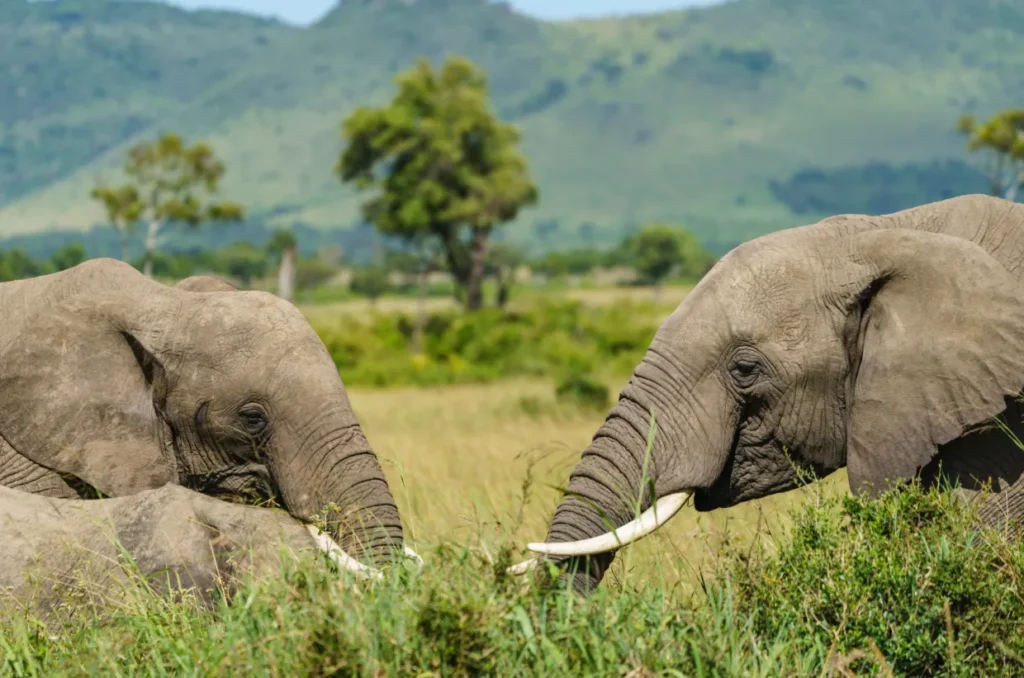
Fun & Interesting Facts About Elephant Life Cycle
- Elephants have the longest pregnancy of any mammal, lasting about 18 to 22 months.
- A baby elephant is called a calf.
- Elephant calves may drink several liters of milk each day during early growth.
- A calf learns trunk control slowly and may look clumsy in the first weeks.
- Female elephants often remain with their birth herd for life.
- Male elephants usually leave the family herd when they reach puberty.
- Elephant herds are often led by an experienced female called a matriarch.
- Elephants communicate using rumbles, touch, smell, posture, and low-frequency sounds.
- Their trunks contain many muscles and can lift both heavy and light objects.
- Elephants use mud and dust as natural sunscreen and insect protection.
- Elephants can recognize family members and remember migration routes.
- Their dung supports insects, plants, and soil health.
- Elephants may mourn dead companions, showing deep emotional intelligence.
- African elephants usually have larger ears than Asian elephants.
- Not all Asian elephants have large visible tusks.
Frequently Asked Questions (FAQs)
Q: What is the elephant life cycle?
A: The elephant life cycle is the full journey of an elephant from birth to adulthood and old age. It includes the calf, juvenile, adolescent, and adult stages.
Q: How long does a baby elephant stay with its mother?
A: A baby elephant stays very close to its mother for the first few years. Female calves may remain in the family herd for life, while males usually leave when they become older.
Q: What do elephants eat during their life cycle?
A: Elephants eat grass, leaves, bark, roots, fruits, shrubs, branches, and seeds. Their diet changes by habitat and season.
Q: How many babies does an elephant give birth to?
A: A female elephant usually gives birth to one calf at a time. Twins are possible but very rare.
Q: Why is the Elephant’s life cycle important?
A: The elephant life cycle is important because elephants help maintain ecosystems through seed dispersal, vegetation control, water access, trail creation, and habitat shaping.
Conclusion
The elephant life cycle is a slow, intelligent, and highly social journey from a vulnerable calf to a powerful adult. Every stage depends on family learning, protection, food, water, space, and memory. Unlike many animals, elephants do not grow quickly or live alone easily. Their survival is connected to the strength of the herd and the health of the ecosystem.
Elephants are more than just large animals. They are seed dispersers, water finders, forest shapers, and grassland managers. Their presence supports many other species and helps maintain balance in nature.
However, habitat loss, poaching, climate stress, and human-elephant conflict continue to threaten their future. Protecting elephants means protecting forests, grasslands, water systems, biodiversity, and future generations. A safe world for elephants is also a healthier world for people and nature.
Also Read: eel life cycle