Admin
Admin
The dog’s life cycle explains how a dog grows from a newborn puppy into a young dog, then an adult, and finally a senior companion. Dogs are domestic mammals scientifically known as Canis lupus familiaris or Canis familiaris, depending on the classification system used. They belong to the Canidae family, which also includes wolves, foxes, jackals, and coyotes.
Unlike many wild animals, dogs have developed a very close relationship with humans. Their life cycle is strongly influenced by care, food, shelter, exercise, vaccination, training, and regular veterinary support. A puppy raised with proper nutrition and socialization usually becomes a healthier and more confident adult dog.
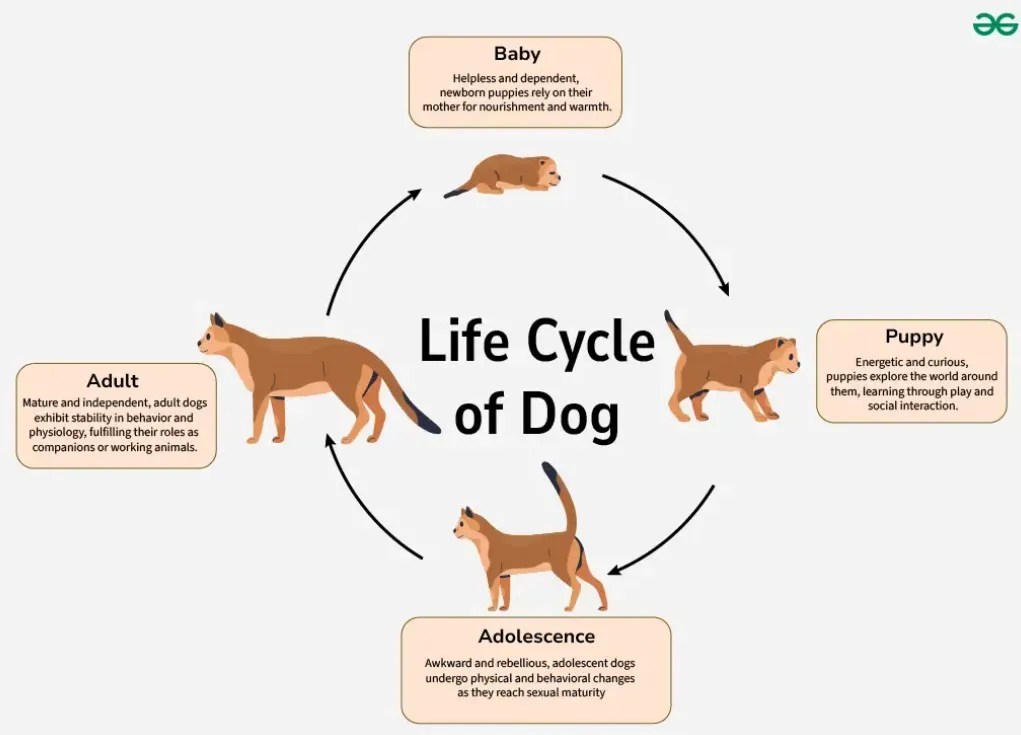
The life cycle of a dog can be divided into four simple stages: puppy, adolescent, adult, and senior. The timing of each stage depends on breed, size, genetics, and health condition. Small dogs often mature faster and live longer, while giant breeds may grow slowly but have shorter average lifespans. A large 2024 study found that dog lifespan is affected by body size, face shape, sex, and breed background.
Q: What are the main stages of the dog’s life cycle?
A: The main stages are puppy, adolescent, adult, and senior.
Q: How long do dogs usually live?
A: Many dogs live around 10 to 13 years, but smaller breeds may live longer, and giant breeds often have shorter lifespans.
Q: What affects a dog’s life cycle the most?
A: Genetics, breed size, nutrition, exercise, veterinary care, safe housing, and responsible ownership all play important roles.
Quick Life Cycle Table
| Life Stage | Approximate Age | Main Changes | Care Needs |
| Newborn Puppy | 0–2 weeks | Eyes and ears closed, fully dependent on the mother | Warmth, mother’s milk, gentle handling |
| Young Puppy | 2–12 weeks | Walking, playing, and learning social behavior | Weaning, vaccines, and early socialization |
| Adolescent Dog | 3–18 months | Fast growth, high energy, and behavior testing | Training, exercise, and a balanced diet |
| Adult Dog | 1–7 years | Full physical strength and stable behavior | Routine care, exercise, and dental care |
| Senior Dog | 7+ years | Slower movement, age-related health risks | Vet checks, softer exercise, comfort care |
The History of Their Scientific Naming, Evolution, and Origin
Scientific Naming of Dogs
The domestic dog is commonly classified as Canis lupus familiaris, meaning it is considered a subspecies of the gray wolf, Canis lupus. Some taxonomic systems also use Canis familiaris as the species name for the domestic dog. Both names are used in scientific and educational contexts, but Canis lupus familiaris clearly shows the dog’s close evolutionary link to wolves.
Evolution from Wolves
Dogs are believed to have developed from ancient wolf-like ancestors. Over thousands of years, early humans and wolves likely formed a relationship around food, protection, and hunting. The friendlier animals had a better chance of living near humans, and this gradually shaped the early dog.
Origin and Domestication
Dogs are among the earliest domesticated animals. Evidence shows that they have lived with humans for more than 12,000 years, and some modern research suggests the process may have started even earlier. Their origin is linked with hunter-gatherer societies, long before modern farming and cities became common.
Their Reproductive Process, Giving Birth, And Rising Their Children
Mating and Pregnancy
Female dogs usually go through a heat cycle, also called estrus, when they can become pregnant. After mating, pregnancy in dogs lasts about two months, commonly around 63 days, though the exact timing may vary slightly by breed and individual health.
During pregnancy, the mother dog needs safe shelter, clean water, balanced food, and veterinary attention. Overfeeding or giving random supplements can be harmful, so a veterinarian should guide care.
Giving Birth to Puppies
The birth process in dogs is called whelping. A mother dog may give birth to a small or large litter depending on her breed, age, size, and health. Small breeds often have fewer puppies, while large breeds may have bigger litters.
Newborn puppies are helpless at birth. They cannot see or hear properly and depend fully on their mother for warmth, milk, cleaning, and protection. The first milk, called colostrum, is very important because it helps support the puppy’s early immune protection.
Raising Puppies
Mother dogs naturally nurse and clean their puppies during the early weeks. Puppies usually begin exploring, walking, and interacting as they grow. Around three to four weeks, they may start tasting soft food while still drinking milk.
Human care is also important. Puppies need gentle socialization, a clean environment, safe handling, and proper veterinary care. Early training should be kind, simple, and consistent because this stage strongly shapes adult behavior.
Stages of a Dog’s Life Cycle
Puppy Stage
The puppy stage begins at birth and continues for several months. In the first two weeks, puppies mostly sleep and drink milk. Their eyes and ears open gradually, and they slowly begin to respond to their surroundings.
From three to twelve weeks, puppies become more curious. This is one of the most important periods for socialization. Positive exposure to people, safe sounds, gentle handling, and simple routines helps puppies grow into confident adult dogs.
Adolescent Stage
The adolescent stage is similar to the teenage phase in humans. Dogs may become more energetic, playful, stubborn, or easily distracted. This stage can begin around 3 to 6 months and continue for 12 to 18 months or longer in larger breeds.
Training is very important during this stage. Dogs need patience, structure, exercise, and mental stimulation. Without proper guidance, they may develop habits such as chewing, jumping, barking, or leash-pulling.
Adult Stage
The adult stage is when dogs reach physical and emotional maturity. Adult dogs usually have stable energy, stronger muscles, and more predictable behavior. However, their needs still depend on breed and lifestyle.
A working breed may need more activity, while a small companion breed may need shorter but regular exercise. Adult dogs need balanced food, dental care, grooming, parasite prevention, and regular health checks.
Senior Stage
The senior stage begins at different ages depending on breed size. Small dogs may become senior later, while large and giant breeds may show age-related signs earlier. Senior dogs may sleep more, move more slowly, gain or lose weight, or develop joint, dental, heart, or kidney issues.
This stage requires softer care. Regular vet visits, comfortable bedding, gentle walks, and easy-to-digest food can improve quality of life. Senior dogs still need love, attention, and mental stimulation.
Important Things That You Need To Know
When learning about the dog’s life cycle, it is also useful to understand common dog-related topics that owners often search for. There are many types of dogs, including working, herding, toy, sporting, guard, and companion breeds. Each type has different energy levels, grooming needs, and behavior patterns.
Many people ask, “Can dogs eat strawberries?” In general, strawberries are safe for most dogs when washed, cut into small pieces, and given in moderation. They contain natural sugar, so they should be treated as an occasional snack rather than a main food.
Another common question is, can dogs eat bananas? Bananas can also be safe in small amounts. They provide nutrients like potassium and vitamin B6, but they are sugary, so too much can upset a dog’s diet.
The term “gabapentin for dogs” is used in veterinary medicine. Veterinarians may prescribe it for pain, seizures, or anxiety-related situations, but owners should never give it without a vet’s instruction. Its use in dogs is often considered off-label, so proper professional guidance is necessary.
People also search for hypoallergenic dogs. No dog is truly 100% allergy-free, but some breeds may shed less or produce fewer allergens in the home. Regular grooming, cleaning, and choosing the right breed can help allergy-sensitive families.
Their main diet, food sources, and collection process are explained
Main Diet of Dogs
Dogs are often described as omnivorous carnivores. This means they belong to the order Carnivora, but they can digest both animal- and some plant-based foods. A healthy dog diet usually includes protein, fat, carbohydrates, vitamins, minerals, and clean water.
Most pet dogs eat commercial dog food, home-prepared meals guided by a veterinarian, or a combination of both. Good-quality dog food is usually balanced for age, size, and activity level.
Food Sources
Common dog food sources include meat, fish, eggs, rice, oats, vegetables, and small amounts of safe fruits. Puppies need food made for growth, while adult dogs need maintenance food. Senior dogs may need diets that support digestion, joint health, and weight management.
Some human foods are unsafe for dogs. Grapes, raisins, chocolate, onions, garlic, alcohol, and foods with xylitol should be avoided. Safe fruits like bananas and strawberries should only be occasional treats, not daily meal replacements.
Collection Process
Domestic dogs do not usually collect food like wild animals. Humans provide their food. However, stray or free-ranging dogs may search through garbage, hunt small animals, or accept food from people.
This is why responsible feeding matters. Clean food, safe storage, fresh water, and portion control help dogs stay healthy throughout every life stage.
How Long Does A Dog Live
A dog’s lifespan depends on many factors. There is no single age that fits every dog, but research and veterinary experience show clear patterns.
- Average lifespan: Many dogs live around 10 to 13 years, but this varies by size, breed, health, and lifestyle.
- Small dogs often live longer: Small breeds such as Chihuahuas, toy poodles, and dachshunds may live into their mid-teens when well cared for.
- Large and giant dogs often live shorter lives: Great Danes, mastiffs, and other giant breeds may age faster and often have shorter average lifespans.
- Body shape matters: A 2024 study found that lifespan can be influenced by body size and face shape. Flat-faced breeds may face higher health risks linked to breathing and heat tolerance.
- Sex may play a small role: Some studies suggest that female dogs live slightly longer on average than male dogs, though the difference is not always large.
- Healthy weight is important: Obesity can reduce quality of life and may shorten lifespan. Weight control supports the heart, joints, breathing, and overall energy.
- Veterinary care increases survival chances: Vaccination, parasite prevention, dental care, and early disease detection help dogs live healthier lives.
- Exercise supports long-term health: Daily movement helps maintain muscle, reduce stress, and prevent unhealthy weight gain.
- Mental health also matters: Dogs need companionship, play, training, and a safe emotional environment. Boredom and isolation can lead to stress and behavior problems.
- Breed genetics are important: Some breeds are more likely to develop certain inherited health problems, so responsible breeding and early screening are important.
The best way to support a longer life is to provide balanced nutrition, routine veterinary care, safe housing, daily exercise, and kind human companionship.
Dogs’ Life Cycle Lifespan in the Wild vs. in Captivity
Dogs in the Wild or Free-Ranging Conditions
Domestic dogs are not truly wild animals in the same way as wolves or foxes. When people say “wild dogs,” they often mean stray, feral, or free-ranging dogs. These dogs may live without steady human care.
Their lifespan is often shorter because they face hunger, injury, untreated disease, parasites, traffic accidents, harsh weather, and conflict with humans or other animals. Puppies born in such conditions may have a lower survival rate because they lack shelter, vaccination, and proper food.
Dogs in Human Care
Dogs living in homes usually have better chances of reaching old age. They receive regular meals, clean water, shelter, vaccines, and emergency treatment when sick or injured. Responsible ownership also includes exercise, grooming, training, and companionship. The AVMA highlights lifelong care, nutrition, water, shelter, veterinary care, exercise, and companionship as key parts of responsible pet ownership.
Main Difference
The biggest difference is protection. A cared-for dog has humans to manage risks. A free-ranging dog must survive alone, which makes every stage of the life cycle more difficult.
Importance of the Dog’s Life Cycle in this Ecosystem
Role in Human Society
Dogs play an important role in human life. They work as companions, guard animals, service dogs, rescue dogs, herding dogs, therapy dogs, and detection dogs. Their close bond with humans makes them one of the most influential domestic animals in the world.
Role in Local Ecosystems
Dogs can affect ecosystems in both positive and negative ways. Working dogs can help protect livestock, support search-and-rescue efforts, and assist people in rural communities. However, unmanaged free-ranging dogs may disturb wildlife, spread disease, or compete with native predators.
Importance of Responsible Management
Understanding the dog’s life cycle helps people manage dogs more responsibly. Puppies need socialization, adult dogs need training and exercise, and senior dogs need comfort and health monitoring.
When communities support vaccination, sterilization, adoption, and humane care, dogs can live healthier lives while reducing risks to wildlife and public health. This balance helps protect both dogs and the wider ecosystem.
What to do to protect them in nature and save the system for the future
Provide Responsible Ownership
- Feed dogs properly and give them clean water every day.
- Provide safe shelter from heat, cold, rain, and traffic.
- Do not abandon unwanted puppies or adult dogs.
- Train dogs with kindness and patience.
- Give them daily exercise and mental stimulation.
Support Vaccination and Health Care
- Keep vaccines up to date to prevent serious diseases.
- Use parasite prevention as advised by a veterinarian.
- Take sick or injured dogs for treatment early.
- Avoid giving human medicine without veterinary advice.
- Maintain dental care and a healthy body weight.
Control Stray Dog Population Humanely
- Support humane sterilization programs.
- Encourage adoption instead of buying from irresponsible breeders.
- Help local shelters with food, care, or awareness.
- Report cruelty or neglect where legal systems allow.
- Promote community education about dog welfare.
Protect Wildlife from Unmanaged Dogs
- Keep pet dogs under control outdoors.
- Avoid letting dogs chase birds, deer, livestock, or small wild animals.
- Use leashes in sensitive natural areas.
- Secure garbage so stray dogs are not attracted to it.
- Support local rules that protect both dogs and wildlife.
Educate Future Pet Owners
- Teach children and families how to care for dogs safely.
- Explain the full life cycle before someone adopts a puppy.
- Share accurate information about diet, behavior, and health.
- Encourage people to choose dogs that fit their lifestyle.
- Promote kindness toward both pets and street animals.
Fun & Interesting Facts About Dogs’ Life Cycle
- Puppies are born with closed eyes and ears, so they depend completely on their mother at first.
- A dog’s sense of smell is extremely powerful, which is why they are used in search and rescue and detection work.
- Dogs can learn human routines, including meal time, walking time, and bedtime.
- Small dogs often live longer than large dogs, although care and genetics also matter.
- Puppies learn bite control through play, especially with their littermates and mother.
- Senior dogs can still learn new habits, but they may need slower training and more patience.
- Dogs use body language, such as tail movement, ear position, posture, and facial expression, to communicate.
- Different types of dogs were bred for different jobs, such as hunting, herding, guarding, pulling, and companionship.
- Dogs form strong emotional bonds with humans and often recognize familiar voices and routines.
- A healthy life cycle depends on humans because domestic dogs rely heavily on responsible care.
Frequently Asked Questions (FAQs)
Q: What is the dog’s life cycle?
A: The dog’s life cycle is the full growth journey of a dog from newborn puppy to adolescent, adult, and senior dog.
Q: How many stages are in the dog’s life cycle?
A: There are four main stages: puppy, adolescent, adult, and senior.
Q: Can dogs eat strawberries?
A: Yes, most dogs can eat strawberries in small amounts. They should be washed, cut into small pieces, and served as an occasional treat.
Q: Can dogs eat bananas?
A: Yes, dogs can eat bananas in moderation. Bananas are a good source of nutrients, but they also contain natural sugar, so they should not be overfed.
Q: What is gabapentin for dogs?
A: Gabapentin for dogs is a medicine that veterinarians may prescribe for certain pain, seizure, or anxiety-related conditions. It should only be used under veterinary guidance.
Conclusion
The dog’s life cycle is a beautiful journey from a helpless newborn puppy to a loyal adult and, finally, a gentle senior dog. Each stage has different needs, and responsible care makes a major difference in health, behavior, and lifespan.
Dogs are not only pets; they are companions, helpers, protectors, and important members of many human communities. Their growth depends on balanced food, clean water, exercise, training, socialization, shelter, and regular veterinary care.
Understanding the life cycle also helps people make better decisions about adoption, diet, breed choice, senior care, and humane population control. Whether someone owns a puppy, an adult dog, or a senior dog, the goal should always be the same: give the dog a safe, healthy, and loving life while protecting the wider environment around them.
Also Read: chickens life cycle