Admin
Admin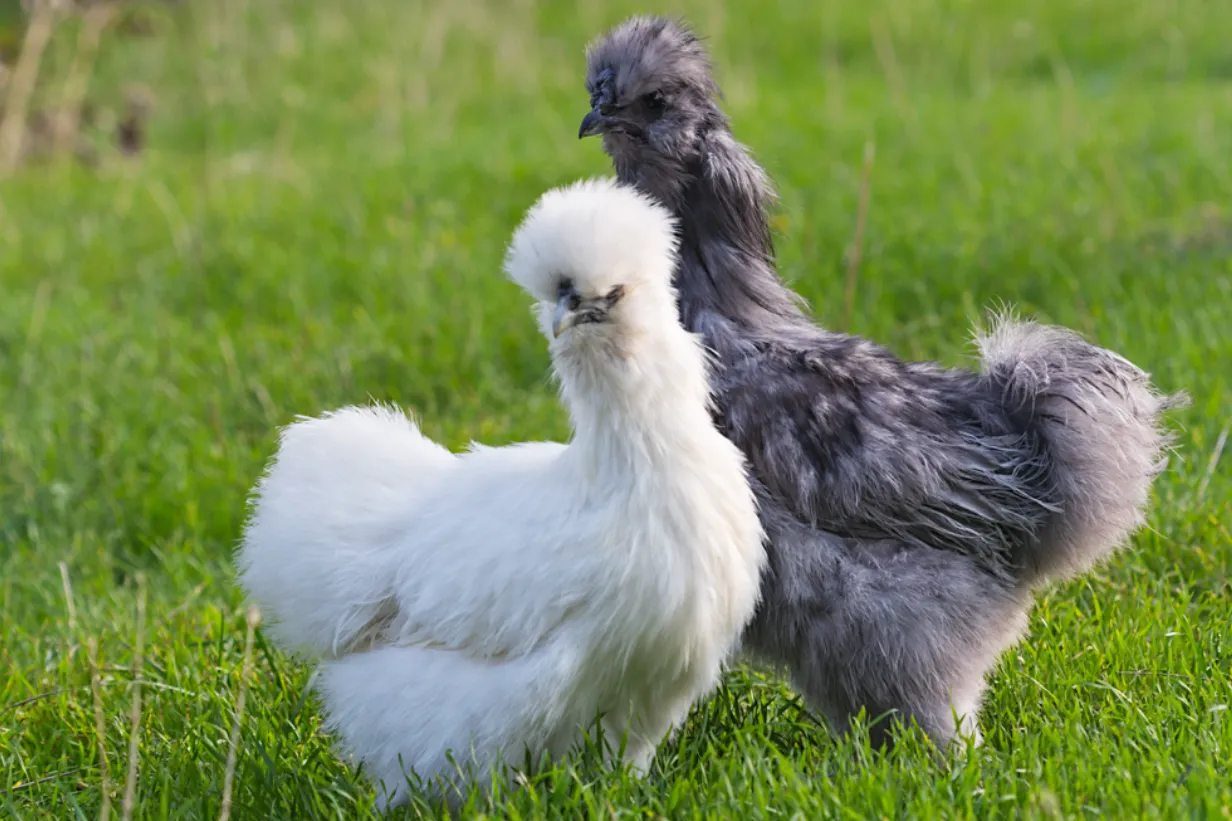
The chicken’s life cycle is one of the most familiar yet fascinating natural processes in the animal world. A chicken begins life inside a fertilized egg, develops as an embryo for about 21 days, hatches as a chick, grows into a juvenile bird, and finally becomes a mature hen or rooster capable of reproduction. This cycle is important not only for backyard farming but also for biology, food systems, agriculture, and ecosystem balance.
Scientifically, the domestic chicken is commonly known as Gallus gallus domesticus. It is closely linked to the red junglefowl, a wild bird native to South and Southeast Asia. Modern chickens have been shaped by thousands of years of domestication, selective breeding, and human care. Today, they are raised worldwide for eggs, meat, pest control, manure, and even companionship. FAO notes that the global chicken population exceeded 33 billion birds in 2020, underscoring the deep connection between chickens and human food systems.
Q: How long is the chicken’s life cycle from egg to adult?
A: A fertilized chicken egg usually takes about 21 days to hatch. After hatching, chicks grow through brooder and juvenile stages and often reach sexual maturity around 18–22 weeks, depending on breed, nutrition, and environment.
Q: How long do chickens live?
A: Backyard hens may live about 6–8 years, while many flocks produce eggs well for 3–4 years. Commercial birds often have shorter production lives because they are managed for meat or egg efficiency.
Q: What do chickens eat during their life cycle?
A: Chickens are omnivores. They eat grains, seeds, insects, greens, small animals, and balanced poultry feed. Proper protein, minerals, vitamins, grit, and clean water are essential for healthy growth and egg production.
Quick Life Cycle Table
| Stage | Age/Time | What Happens | Main Needs |
| Fertilized Egg | Day 0 | An egg is laid after fertilization | Warmth, clean nest, correct humidity |
| Embryo Development | Days 1–21 | A chick develops inside an egg | Stable incubation, turning until the final days |
| Hatching Chick | Around Day 21 | Chick breaks the shell using the egg tooth | Warm brooder, water, starter feed |
| Young Chick | 0–6 weeks | Fast feather and body growth | Heat, protein-rich starter, safety |
| Juvenile / Grower | 6–18 weeks | Bones, feathers, and muscles mature | Grower feed, space, predator protection |
| Pullet / Cockerel | 18–22 weeks | Near sexual maturity | Balanced diet, calm environment |
| Adult Hen / Rooster | 5–6 months onward | Egg laying, mating, and flock behavior | Layer feed, calcium, roosting, nest boxes |
| Older Chicken | 3+ years | Egg production slows | Care, health checks, low-stress living |
The History of Their Scientific Naming
The scientific naming of chickens is connected to their wild ancestor and their long relationship with humans.
- The domestic chicken is widely identified as Gallus gallus domesticus. This name places chickens in the genus Gallus, which includes junglefowl. NatureServe lists the scientific name as Gallus gallus domesticus (Linnaeus, 1758).
- The word Gallus is Latin in origin and is commonly associated with roosters or domestic fowl. The species name gallus connects the chicken to the red junglefowl, its main wild ancestor.
- Some references also use Gallus domesticus or simply Gallus gallus, because domestic chickens are very closely related to wild red junglefowl. Britannica explains that chickens are primarily descended from the wild red junglefowl and notes that there has been debate over the exact scientific classification.
- In practical poultry science, hen, rooster, pullet, cockerel, and chick are not scientific names; they describe age, sex, or life stage.
This naming history matters because it shows that chickens are not just farm animals. They are part of a wider bird lineage shaped by evolution, ecology, and domestication.
Their Evolution And Their Origin
The origin of chickens begins with wild junglefowl. Most scientists agree that the red junglefowl of South and Southeast Asia is the primary ancestor of domestic chickens. University of Wisconsin Extension notes that the Southeast Asian red junglefowl is generally considered the main wild ancestor. At the same time, genetic evidence also suggests influence from other junglefowl species, such as the grey junglefowl.
Evolution gave junglefowl several survival traits that still appear in modern chickens. They scratch the ground for food, roost above ground at night, live in social groups, communicate with calls, and respond quickly to threats. These behaviors helped wild ancestors survive in forests, grasslands, and human-edge habitats.
Domestication likely happened gradually. Wild junglefowl may have been attracted to human settlements because of crops, spilled grains, insects, and waste, which created easy feeding opportunities. Over time, people selected birds that were calmer, more productive, easier to handle, and better suited for egg or meat production.
Modern research continues to refine the story. Large genetic studies show that chicken domestication involved complex ancestry, not a simple single-line history. Domestic chickens spread through trade, migration, farming, and cultural exchange. They became important in Asia, Europe, Africa, and later the Americas.
Today’s chicken breeds are extremely diverse. Some, like Leghorns, are known for egg production. Others, like Cornish cross broilers, are bred for rapid meat growth. Heritage breeds, bantam chickens, and silkie chickens illustrate how human preferences have shaped body size, feathers, temperament, egg color, and climate adaptation.
Important Things That You Need To Know
When people search for the chicken’s life cycle, they often also want practical answers about breeds, food, lifespan, flying ability, and care. These related points help you better understand chickens.
First, how long chickens live depends on breed, care, disease pressure, predators, and whether they are raised for backyard life or commercial production. A well-managed backyard chicken may live several years, but peak egg production usually happens earlier in life.
Second, what chickens eat is a key question because it directly affects growth, egg production, immunity, feathers, and survival. Chickens are not strict vegetarians. They naturally eat grains, seeds, insects, tender greens, worms, and small creatures. Balanced poultry feed remains important because it provides consistent amounts of protein, calcium, vitamins, and minerals.
Third, can chickens fly? Most domestic chickens can fly only short distances. They may flap up to a roost, a fence, a low branch, or a coop entrance, but heavy meat breeds are usually poor flyers. Smaller birds and bantam chickens often fly better than large breeds.
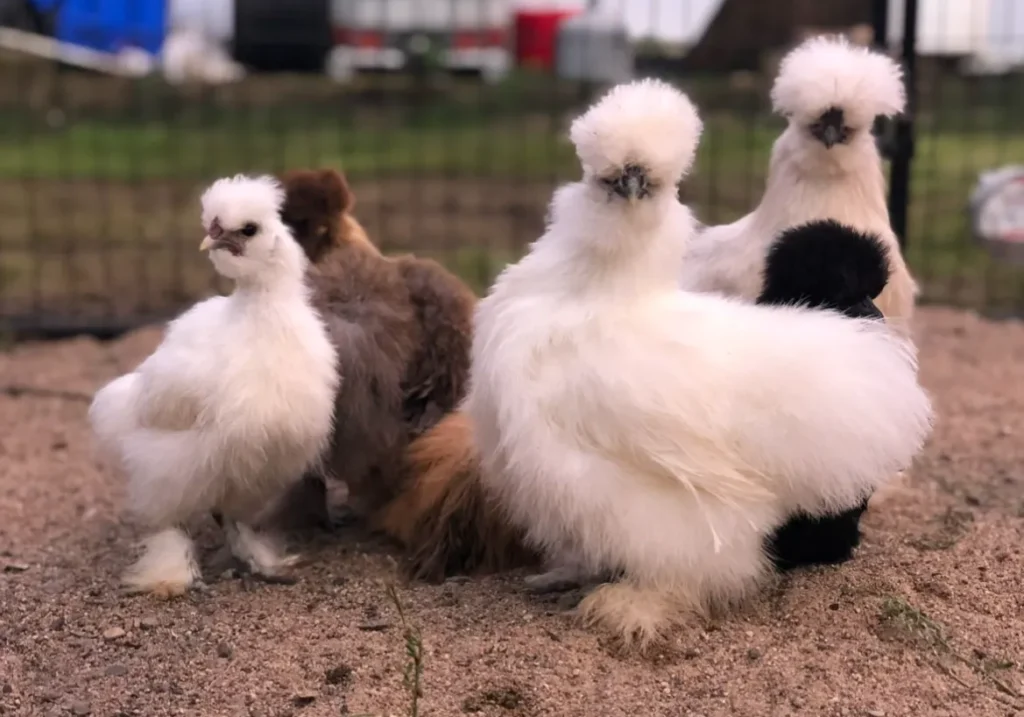
Fourth, types of chickens vary widely. Some are egg layers, some are meat birds, some are dual-purpose breeds, and some are ornamental. Silkie chickens are famous for their fluffy feathers, calm nature, and broody behavior. They are often kept as pets or natural mothers.
Understanding these related topics makes the chicken’s life cycle easier to manage, especially for farmers, students, homesteaders, and backyard poultry keepers.
Their main food and its collection process
Chickens are natural foragers and omnivores. This means they collect food from both plant and animal sources. In nature or free-range systems, they spend much of the day scratching soil, turning leaf litter, pecking seeds, catching insects, and searching for soft greens.
- Grains and seeds: Chickens eat corn, wheat, barley, rice, millet, sorghum, and other grains. These foods provide energy for movement, body heat, and egg production.
- Insects and worms: Beetles, termites, ants, grasshoppers, larvae, and earthworms are natural sources of protein. Protein helps chicks grow muscles and feathers.
- Green plants: Tender grass, weeds, leafy vegetables, and herbs add fiber, moisture, pigments, and micronutrients.
- Kitchen and garden scraps: Chickens may eat vegetable peels, fruit pieces, cooked rice, and garden leftovers, but these should not replace balanced feed.
- Commercial feed: Starter, grower, and layer feeds are designed for different life stages. Extension guidance commonly separates feeding into starter, grower, and layer phases because chicks, pullets, and adult hens have different nutritional needs.
- Grit and calcium: Chickens need grit to help the gizzard grind food. Laying hens also need calcium for strong eggshells.
Their food collection process is simple but efficient. They use sharp eyesight to detect movement, scratch with their feet to uncover hidden food, peck with precision, and swallow small particles quickly. This behavior also helps soil mixing and pest control.
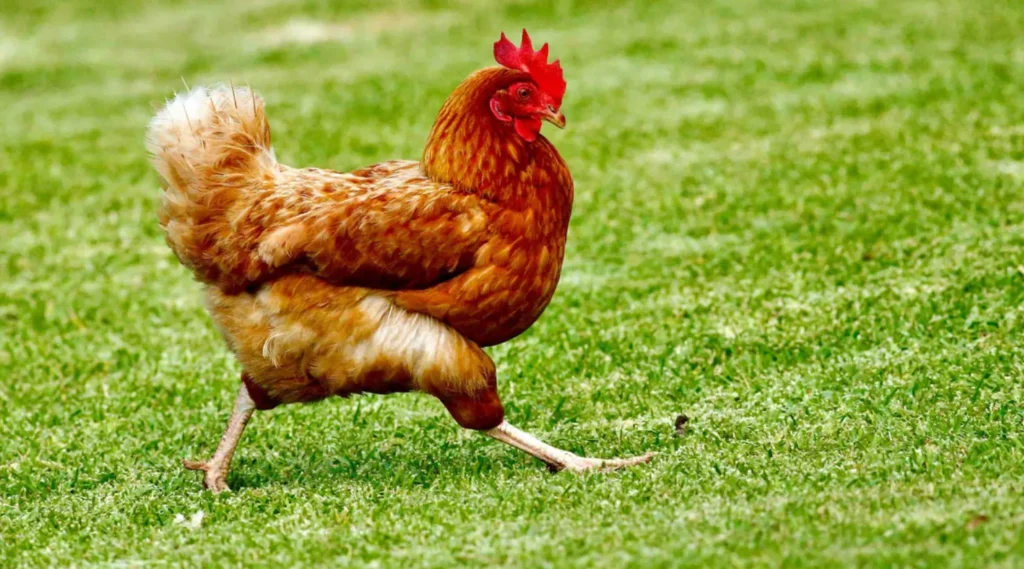
Their life cycle and ability to survive in nature
Egg Stage
The life cycle begins when a hen lays a fertilized egg. The embryo develops inside the egg if the temperature, humidity, and oxygen are suitable. A chicken egg generally needs about 21 days of incubation before hatching.
Chick Stage
After hatching, a chick is fragile but active. It needs warmth, clean water, starter feed, and protection from predators. Chicks grow quickly, develop feathers, learn to peck, and follow the mother hen or heat source.
Juvenile Stage
From about 6 weeks onward, young chickens become stronger. They practice scratching, dust bathing, roosting, and flock communication. Their survival depends on shelter, food, water, and learning the social order.
Adult Stage
Adult chickens survive through flock behavior. They give alarm calls, roost at night, forage during the day, and maintain a pecking order. Roosters may guard the flock, while hens choose safe nesting areas.
Natural Survival Ability
Chickens can survive in semi-natural environments, but domestic breeds are more vulnerable than wild junglefowl. Predators, disease, extreme weather, and food scarcity can reduce survival. Their best natural tools are quick reaction, group warning calls, strong legs, scratching ability, camouflage in some breeds, and roosting behavior.
Their Reproductive Process and raising their children
Chicken reproduction is a highly organized biological process.
- Mating: A rooster mates with a hen, and sperm can fertilize the yolk after ovulation. Fertilization happens before the shell forms.
- Egg formation: A hen’s body forms an egg in about 24–26 hours. This includes yolk release, albumen formation, shell membrane development, shell hardening, and laying.
- Egg laying: Hens do not need a rooster to lay eggs, but eggs will not hatch unless fertilized.
- Broodiness: Some hens become broody, meaning they sit on eggs to hatch them. Broody hens keep eggs warm, turn them, and protect the nest.
- Incubation: Fertile eggs usually hatch after around 21 days. During this time, the embryo develops organs, feathers, a beak, legs, and internal systems.
- Hatching: The chick uses an egg tooth to break the shell. This process can take hours and requires strength.
- Mother care: A mother hen teaches chicks to eat, drink, hide, respond to warning calls, and stay warm under her body.
- Independence: Chicks gradually become independent as feathers grow and body temperature control improves. In backyard settings, human care often replaces some natural mothering.
Good reproduction depends on breed health, nutrition, clean nesting areas, correct male-to-female ratio, disease prevention, and low stress.
The importance of them in this Ecosystem
Natural Pest Control
Chickens eat insects, larvae, ticks, beetles, and worms. In gardens and farmyards, they can naturally reduce some pest populations. Their scratching also exposes hidden insects and breaks pest life cycles.
Soil Fertility
Chicken manure contains nitrogen, phosphorus, potassium, and organic matter. When composted properly, it can improve soil fertility and support plant growth. Fresh manure should be handled carefully because it can be too strong for plants and may carry pathogens.
Food Web Role
Chickens are both consumers and prey. They eat plants and small animals, while predators such as foxes, hawks, snakes, raccoons, dogs, and wild cats may hunt them. This places chickens inside a wider ecological food chain.
Human Food Systems
Chickens provide eggs and meat for millions of people. FAO highlights chickens as a major poultry species worldwide, with commercial layers capable of laying over 300 eggs per year under high-performance systems. In contrast, indigenous hens may lay fewer eggs depending on breed and management.
Biodiversity and Breed Value
Different types of chickens carry valuable genetic traits. Some tolerate heat, some resist disease better, some are good mothers, and some are adapted to local environments. Protecting heritage and indigenous breeds helps preserve genetic diversity for future farming.
What to do to protect them in nature and save the system for the future
- Protect natural and backyard habitats: Chickens need safe spaces for foraging, dust bathing, nesting, and roosting. A good poultry house should protect birds from the weather and predators while allowing natural behaviors.
- Use predator-safe housing: Lock chickens inside at night, use strong wire, cover gaps, and keep chicks in secure brooders.
- Maintain clean water and feed: Dirty water and moldy feed can cause disease. Feed should be stored in a dry, cool place.
- Avoid overstocking: Too many chickens in a small area causes stress, feather pecking, disease spread, manure buildup, and poor growth.
- Support local and heritage breeds: Indigenous and heritage chickens often carry useful survival traits such as heat tolerance, broodiness, and stronger foraging ability.
- Practice biosecurity: limit contact with sick birds, clean equipment, quarantine new birds, and prevent contamination from wild birds.
- Compost manure properly: Well-managed manure supports soil health, but poor handling can pollute water and spread pathogens.
- Reduce unnecessary antibiotic use: follow veterinary guidance rather than prescribing medication at random. Prevention through hygiene and nutrition is better than overuse.
- Educate chicken keepers: Farmers, students, and backyard owners should learn the full life cycle of chickens before raising them.
- Balance production and welfare: A future-friendly poultry system should produce food while respecting bird health, natural behavior, and environmental safety.
Frequently Asked Questions (FAQs)
Q1: What are the main stages of the chicken’s life cycle?
A: The main stages are fertilized egg, embryo, hatching chick, young chick, juvenile, pullet or cockerel, adult hen or rooster, and older chicken.
Q2: How long does a chicken egg take to hatch?
A: A fertilized chicken egg usually hatches after about 21 days under proper incubation conditions. Temperature, humidity, egg quality, and turning affect hatch success.
Q3: When do hens start laying eggs?
A: Many hens begin laying around 18–22 weeks of age, though breed, nutrition, daylight, and health can change the timing.
Q4: How long do chickens live in backyard flocks?
A: Many backyard hens may live 6–8 years, but their strongest egg production usually happens during the first few laying years.
Q5: What do chickens eat naturally?
A: Chickens naturally eat seeds, grains, insects, worms, greens, fruit, and small animals. They also need balanced poultry feed, grit, minerals, and clean water.
Q6: Can chickens fly?
A: Most chickens can fly only short distances. Small breeds and bantam chickens may fly better, while heavy meat breeds usually fly poorly.
Q7: Are silkie chickens different from normal chickens?
A: Silkie chickens are domestic chickens known for soft, fluffy feathers, dark skin, calm behavior, and strong broodiness. They follow the same basic life cycle but are often kept as ornamental or pet chickens.
Q8: Why are chickens important to humans and nature?
A: Chickens provide eggs, meat, manure, pest control, and income. In ecosystems, they recycle nutrients, eat insects, and serve as part of the food web.
Conclusion
The chicken’s life cycle is a complete journey from egg to embryo, to chick, to juvenile, to adult, and to an older bird. Each stage has unique needs, including warmth, nutrition, safety, clean water, and proper space. Chickens are scientifically connected to the red junglefowl, and thousands of years of domestication have created many useful and beautiful breeds.
Understanding this life cycle helps farmers, students, and backyard keepers raise healthier birds. It also explains why chickens matter in food production, soil fertility, pest control, and biodiversity. Whether you are learning about what chickens eat, comparing types of chickens, or asking how long chickens live, the key lesson is simple: chickens thrive when their natural behaviors and biological needs are respected. A sustainable future for chickens depends on good care, responsible breeding, clean environments, and balanced farming systems.
Also Read: life cycle of head lice